

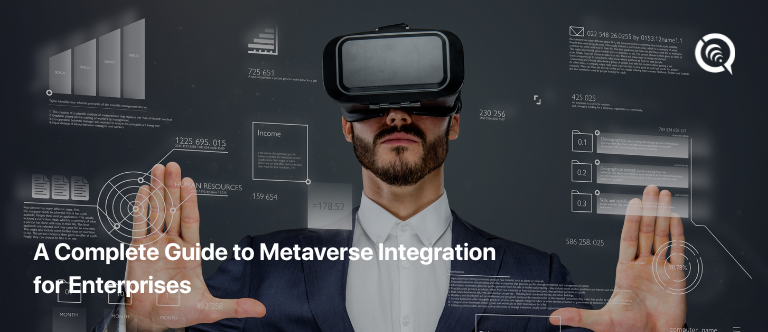
The business world is shifting faster than ever, and the rise of immersive digital environments has opened the door to a new frontier. If you want to understand how this emerging landscape fits into your organization, this guide on metaverse integration for enterprises will walk you through everything you need to know.
You will learn what the metaverse really means for business, how leading companies are already using it, and how you can build a practical roadmap for adoption. This is not hype. It is a new layer of enterprise technology that blends physical and digital experiences to unlock value at scale.
Whether your goal is digital transformation, new customer experiences, automation, or hybrid collaboration, the metaverse is quickly becoming a strategic priority for forward thinking enterprises.
Understanding the Metaverse in an Enterprise Context
Enterprises sometimes struggle to define the metaverse because it is not a single technology. It is a fusion of immersive environments, virtual collaboration, 3D workspaces, digital twins, AI driven interactions, and interoperable enterprise platforms. When you pull these components together, you get an ecosystem that mirrors real world processes in a virtual layer.
This makes metaverse integration for enterprises far more powerful than consumer focused platforms. Your organization can create spaces where teams collaborate, customers interact with products, and operations run through intelligent simulations. The metaverse becomes an extension of your enterprise technology stack.
Companies across industries are experimenting with proof of concepts. Automotive manufacturers are using digital twins to simulate production lines. Retail brands are designing virtual stores that mirror physical locations. Healthcare providers are training doctors through immersive simulations. Even finance companies are using virtual environments to enhance client engagement. These are not future predictions. These cases are already happening.
You benefit because the metaverse removes physical constraints. Instead of relying on traditional dashboards and tools, your teams can experience operations in 3D, interact with data, and collaborate in real time. This elevates productivity, decision making, and innovation.
Technologies like WebXR, enterprise metaverse solutions, blockchain, AI powered avatars, and cloud streaming are pushing the boundaries further. As new platforms emerge, enterprises are finding opportunities to improve workflows, enhance engagement, and accelerate digital transformation.
In short, the metaverse represents the next evolution of enterprise technology. It complements existing systems and enables more dynamic, immersive, and scalable business environments.
Why Enterprises Are Accelerating Metaverse Adoption
There is a misconception that the metaverse is only useful for gaming and entertainment. In reality, enterprise adoption has been increasing steadily because organizations see clear operational and strategic value.
Businesses are embracing enterprise metaverse solutions to improve teamwork, streamline processes, and deliver more engaging customer experiences. Many leaders view the metaverse as a natural extension of remote work and hybrid collaboration, especially after global shifts in work culture. Teams can meet in immersive virtual rooms, interact with 3D prototypes, and solve problems more effectively than in traditional video calls.
From an innovation perspective, the metaverse allows companies to test ideas before deploying them in the real world. Imagine simulating a warehouse workflow, designing new product SKUs, or testing a marketing campaign in a virtual environment. These capabilities help save time, reduce costs, and minimize risks.
Customer facing applications are even more compelling. Enterprises can offer immersive product demos, digital storefronts, virtual service centers, and even metaverse ready loyalty systems. These experiences give customers more control and transparency, which increases satisfaction and retention.
Another major reason enterprises are accelerating adoption is the rise of advanced enterprise platforms. Tools now integrate with CRM, ERP, IoT systems, and AI engines. This means companies can extract real time data and feed it into immersive dashboards that mimic real world operations.
The business landscape is also becoming more competitive. When companies realize that their competitors are testing virtual collaboration hubs or digital twins, they feel pressure to modernize. Staying ahead requires embracing technology that provides long term scalability and agility.
Enterprises know the metaverse is not a trend. It is a strategic advantage, and early adopters are already seeing measurable improvements across operational efficiency, customer experience, and innovation.
Key Business Use Cases for Enterprise Metaverse Integration
Enterprises want use cases that add real value, not flashy concepts. Fortunately, metaverse technology already supports multiple high impact business applications. These metaverse business use cases are shaping how modern organizations operate.
Virtual collaboration is one of the most common examples. Companies are creating 3D meeting spaces where employees interact with immersive presentations, prototypes, and workflows. This improves remote engagement and helps global teams collaborate seamlessly.
Training and simulation is another major use case. Industries like manufacturing, aviation, healthcare, and logistics rely on precise training environments. The metaverse enables safe, repeatable, and cost efficient training that replicates real world conditions.
Product development is becoming faster as design teams collaborate inside virtual environments. Engineers can manipulate digital models, analyze components, and run stress simulations without physical prototypes. This accelerates go to market timelines.
Digital twin technology is transforming operations. Enterprises can build virtual replicas of factories, supply chains, retail stores, or equipment. These models allow teams to monitor systems, predict failures, test improvements, and optimize performance.
Customer experience is another growth area. Retailers are launching virtual stores, financial organizations are creating metaverse branches, and education institutions offer virtual classrooms. These applications increase interaction and accessibility.
Now, let’s break down these use cases in detail.
1.Virtual Collaboration and Hybrid Workspaces
As hybrid work becomes the norm, enterprises need more advanced ways to connect remote teams. Virtual collaboration hubs solve this challenge by offering immersive 3D environments that mimic in person interactions.
Instead of static video calls, teams move through a virtual workspace, interact with 3D widgets, and hold dynamic brainstorming sessions. These environments create a sense of presence and help improve communication.
A typical enterprise metaverse platform integrates directly with productivity tools like Slack, Teams, and project management systems. As a result, teams can check project boards, annotate prototypes, and visualize workflows without switching between apps.
One major benefit is that metaverse workspaces reduce meeting fatigue. Immersive environments keep employees more engaged compared to standard conferencing tools. Collaboration feels more natural and interactive.
Companies like Accenture have already deployed large scale virtual campuses for onboarding and training thousands of employees. Their approach shows that metaverse platforms can scale globally while maintaining unified organizational culture.
Recruitment is also evolving. Some companies have experimented with virtual interview rooms and immersive job fairs. These setups offer candidates a more interactive experience and give enterprises access to wider talent pools.
For organizations looking to strengthen team culture, metaverse workspaces support virtual town halls, social events, and interactive leadership sessions. These experiences help employees feel more connected even when geographically dispersed.
When integrated correctly, metaverse collaboration becomes a core part of enterprise communication and digital transformation.
2.Training, Learning, and Immersive Simulations
Training environments inside the metaverse are proving to be more effective than traditional e learning methods. They provide hands on, realistic simulations without the risks of actual operations.
Manufacturing companies are using VR training modules to teach workers how to operate complex machinery. Healthcare institutions run surgical simulations that allow trainees to practice without endangering patients. Airlines simulate cockpit scenarios so pilots can prepare for emergency situations.
The benefit is not only safety. The metaverse makes training measurable. Real time analytics show learner progress, skill gaps, and performance metrics. This helps HR teams refine training programs and boost efficiency.
Enterprises can also replicate environments that would otherwise be too costly to construct. For example, logistics companies simulate warehouse operations to optimize layouts and reduce bottlenecks.
Soft skills training is another growing category. Employees can participate in virtual roleplay scenarios to practice leadership communication, negotiation, conflict management, and customer service interactions.
What makes metaverse based learning truly effective is personalization. Intelligent avatars, AI assistants, and adaptive environments adjust difficulty levels automatically based on user performance. Employees learn faster because the system responds to their needs.
Companies that invest in immersive training see major improvements in employee retention and productivity. Studies show that people retain nearly 75 percent of information through immersive experiences compared to around 10 percent through traditional learning.
As metaverse training becomes more sophisticated, enterprises will use it to build a smarter, more adaptable workforce.
3.Product Development, Prototyping, and Digital Twins
Enterprises lose time and resources when prototypes fail or when communication breaks down between design and engineering teams. Metaverse technologies solve this by allowing everyone to collaborate inside a unified digital workspace.
Designers and engineers can inspect 3D product models, adjust components, and run simulations instantly. This eliminates multiple rounds of physical prototyping and reduces errors. The result is faster innovation and lower costs.
Digital twins amplify these capabilities. A digital twin is a virtual representation of a physical asset like equipment, a building, or an entire production line. When connected to IoT sensors, these twins display real time operational data.
This helps enterprises monitor equipment health, predict maintenance requirements, and identify inefficiencies before they become serious problems. It is one of the most powerful use cases in metaverse integration for enterprises.
Consider the automotive industry. Manufacturers use full scale digital twins of production lines to test workflow changes before implementing them. This saves millions in trial and error costs.
Retailers create digital twins of stores to test product layouts, customer flows, and promotional strategies. Logistics companies use 3D simulations to optimize routing and reduce fuel consumption.
Because virtual and real world data sync continuously, digital twins provide a level of operational visibility that traditional dashboards cannot. Enterprises that adopt them gain a competitive advantage through higher uptime, fewer bottlenecks, and better strategic planning.
Product development becomes faster, smarter, and more aligned with business goals.
4.Customer Experience, Marketing, and Engagement
Enterprises are using the metaverse to transform customer engagement. Instead of static websites or mobile apps, brands now offer immersive experiences that improve customer satisfaction and loyalty.
Virtual showrooms allow customers to explore products in 3D. Fashion brands have launched virtual fitting rooms where users try on clothing using avatars. Automotive companies showcase vehicles in virtual studios where customers can interact with features in real time.
Marketing campaigns are becoming experiential. Instead of watching ads, customers experience them. Brands host virtual concerts, events, and product launches that drive deeper emotional connection.
Service based industries are also benefiting. Banks and insurance companies are creating virtual service centers where customers meet advisors through avatars. Real estate companies offer virtual tours of properties before clients visit in person.
The ability to personalize experiences is one of the biggest advantages. AI powered avatars customize recommendations, guide customers through environments, and offer tailored support.
Retailers that integrate metaverse experiences with loyalty programs unlock powerful engagement opportunities. Customers earn points for participating in virtual events, exploring new features, or sharing content.
Enterprises can also gather real time behavioral analytics. Understanding customer movement, interaction patterns, and preferences helps refine marketing strategies.
The result is a more interactive, emotionally engaging, and data driven customer experience.
Metaverse Integration Framework for Enterprises
Before adopting metaverse solutions, enterprises need a clear integration framework. Without proper planning, the initiative can become expensive and fragmented. The goal is to align immersive technologies with business objectives and existing systems.
A practical metaverse integration framework includes the following components:
- Strategic Alignment
Start by defining clear goals. Are you aiming to improve collaboration, reduce training costs, enhance customer engagement, or transform operations through digital twins? Your objectives will shape platform selection and implementation.
- Technology Evaluation
Assess tools such as 3D engines, XR devices, AI engines, IoT systems, cloud platforms, and blockchain solutions. Ensure compatibility with your current enterprise tech stack.
- Platform Integration
Enterprises often choose modular platforms that connect with CRM, ERP, analytics engines, and HR systems. Look for APIs and interoperability features to ensure seamless workflows.
- Data, Identity, and Security
Security is one of the biggest concerns for enterprises. Define policies for authentication, data handling, digital identity management, and virtual asset governance. Compliance must match industry standards.
- Pilot Programs
Start small. Deploy pilot projects for collaboration, training, or digital twin simulations. Use insights to refine your metaverse strategy for enterprises.
- Scaling and Optimization
Once pilots succeed, expand adoption across departments. Integrate analytics to measure performance and ROI. Continuously optimize the virtual environments to improve efficiency and user experience.
This framework ensures metaverse integration is structured, measurable, and aligned with organizational growth.
Metaverse Implementation Guide for Enterprises
A structured implementation guide helps enterprises transition from strategy to execution. Here is a step by step roadmap you can follow for smooth deployment.
- Define Business Use Cases
Select use cases that align with key priorities. Virtual training, collaboration hubs, and product simulations are strong starting points.
- Choose the Right Platform
Pick an enterprise metaverse platform with scalability, security, AI integration, and compatibility with existing systems. Evaluate vendors based on track record, ecosystem, and support.
- Build or Acquire 3D Assets
Your virtual environments need accurate models, avatars, layouts, and data connectors. Enterprises may outsource asset creation or use internal teams.
- Integrate Core Systems
Connect the metaverse with CRM, ERP, HRMS, analytics dashboards, and IoT data streams. These integrations maximize value and create continuous feedback loops.
- Run Internal Testing
Test platform stability, usability, and performance. Gather employee feedback and refine workflows.
- Deploy in Phases
Roll out to specific departments before scaling organization wide. Ensure training and onboarding for employees.
- Measure Results
Track KPIs like training efficiency, collaboration metrics, customer engagement rates, and cost savings. These insights guide optimization.
A clear implementation plan ensures your metaverse adoption for businesses is smooth, secure, and impactful.
Case Study Table: Enterprise Metaverse Adoption
| Industry | Use Case | Business Impact |
| Manufacturing | Digital twin production line | 20 percent reduction in downtime |
| Retail | Virtual shopping experiences | 35 percent lift in customer engagement |
| Healthcare | Immersive medical training | Faster skill acquisition and fewer training risks |
| Education | Virtual classrooms | Higher student participation and lower operational costs |
| Finance | Virtual advisory rooms | Improved client satisfaction and onboarding efficiency |
Frequently Asked Questions
- How can enterprises benefit from metaverse integration?
Metaverse platforms help enterprises improve collaboration, optimize operations, enhance training, and deliver immersive customer experiences. The technology reduces costs, accelerates innovation, and strengthens digital transformation initiatives.
- Is the metaverse secure for enterprise use?
Yes, modern platforms support encrypted communication, identity verification, access control, and compliance frameworks. Like any digital system, proper governance and cybersecurity policies are essential.
- Do enterprises need VR headsets to use the metaverse?
Not always. Many enterprise metaverse platforms run on desktop, mobile, or web browsers. VR headsets enhance immersion but are not mandatory for every use case.
- What is the ROI of metaverse adoption?
ROI varies based on use case. Training simulations reduce costs significantly, digital twins increase operational efficiency, and immersive customer experiences boost revenue and retention.
- Which industries use the metaverse the most?
Manufacturing, retail, healthcare, education, finance, and technology companies are leading adopters. Their applications range from virtual training to digital twins and customer engagement.
Conclusion
The metaverse is no longer a futuristic concept. It is an active, evolving layer of enterprise technology that reshapes how organizations collaborate, innovate, and serve customers. When you look at the benefits, it is clear why global enterprises are accelerating adoption.
You gain more than immersive environments. You gain streamlined operations, deeper customer engagement, faster product development, and better decision making. These advantages help you stay competitive in a world where digital transformation is essential.
The key is building a strategy rooted in business outcomes, not trends. By following a structured integration framework and a clear implementation roadmap, your enterprise can adopt metaverse technology with confidence. Start small, learn from pilot programs, and scale across your organization once you understand what works.
As enterprise metaverse platforms continue to evolve, early adopters will enjoy long term advantages. The companies that embrace immersive technology today are the ones that will lead their industries tomorrow.
If your organization is ready to explore the next stage of digital evolution, metaverse integration offers endless possibilities for growth, innovation, and transformation.
Follow us on Linkedin | Instagram | Facebook or explore more insights at https://www.applogiq.org/