

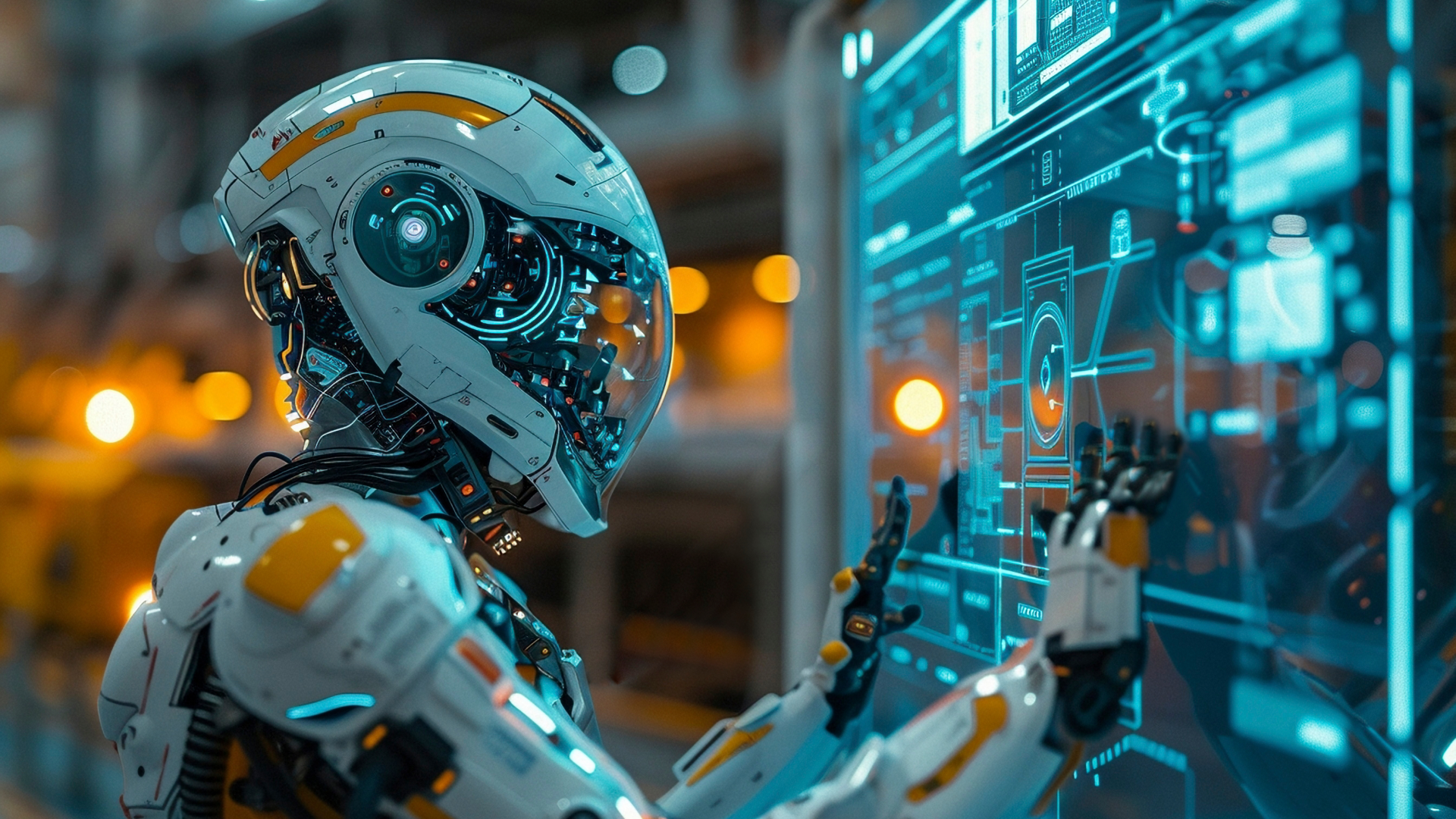
Artificial Intelligence (AI) and robotics are swiftly advancing fields that are progressively merging. AI focuses on creating intelligent agents—systems endowed with the capability to reason, learn from past experiences, and operate independently. These systems are designed to mimic human cognitive functions and can autonomously execute a range of tasks.
Robotics, on the other hand, deals with the engineering of robots—physical entities capable of sensing and interacting with their environment, and performing tasks based on their processing abilities. The fusion of AI with robotics is ushering in a new era of sophisticated machines. These enhanced robots are not only smarter and more capable but also highly adaptable across various sectors.
Employed in diverse applications such as manufacturing, healthcare, transportation, and security, these advanced machines are revolutionizing industries by performing complex tasks, improving efficiency, and reducing human error. This convergence is setting the stage for innovative solutions that promise to reshape our future.
How AI and Robotics Work Together
AI and robotics collaborate in several impactful ways.
Control Robots
AI algorithms serve as the brain behind robotic control systems, enabling precise manipulation and movement. This advanced control allows robots to undertake intricate tasks that require high levels of dexterity, such as walking, navigating stairs, or manipulating objects. By embedding AI into robotics, machines can execute complex sequences of actions autonomously, enhancing their utility in environments like advanced manufacturing floors or during intricate surgical procedures where precision and adaptability are critical.
Perceive the world around them
AI also enhances a robot's ability to perceive its environment. Through processing data from various sensors, including cameras and microphones, AI helps robots interpret and react to their surroundings. This sensory processing capability enables robots to navigate complex environments, recognize objects, and interact with humans more naturally. Such capabilities are increasingly important in fields like autonomous driving and customer service, where understanding and responding to dynamic conditions are crucial.
Learn and adapt
AI enables robots to learn from their experiences and improve over time. By using machine learning algorithms, robots can refine their algorithms based on past actions and outcomes, thereby optimizing their performance for future tasks. This capacity for self-improvement is particularly valuable in adaptive settings where conditions change unpredictably, such as in predictive maintenance for industrial equipment or in software bots learning from user interactions to provide better service in future interactions.
Challenges of AI and Robotics
The integration of AI and robotics significantly enhances operational efficiency across various industries. By automating routine and repetitive tasks, robots can perform these duties faster and with greater precision than humans. This automation not only speeds up production processes but also reduces the potential for human error, leading to more consistent and reliable outputs. As a result, human workers are liberated from monotonous tasks, allowing them to dedicate more time to creative and strategic roles that require human insight and decision-making. This shift not only boosts productivity but also enhances job satisfaction by allocating more engaging and fulfilling work to human employees.
Ethical Concerns
Robots equipped with AI can perform tasks in environments that are unsafe for humans, such as extreme temperatures, toxic atmospheres, or high-risk zones prone to accidents. This capability significantly reduces the risk of injuries and fatalities in the workplace. For example, robots can handle hazardous materials, perform high-altitude repairs, or carry out deep-sea operations—all without jeopardizing human safety. By taking on such dangerous roles, robots help create a safer work environment, which in turn minimizes downtime due to accidents and enhances the overall wellbeing of human workers.
Safety Concerns
AI-driven robots are programmed to execute tasks with unparalleled precision and accuracy, elevating the quality of both products and services. In sectors like manufacturing, robots can assemble parts with exact alignment and uniformity, reducing the incidence of defects and increasing product reliability. Similarly, in the service sector, robots can deliver consistently high-quality customer interactions, tailored to meet individual preferences and needs. The ability to maintain high standards of quality consistently helps businesses improve customer satisfaction and build a stronger reputation for excellence.
Technical Challenges
AI and robotics are pioneering new frontiers in human-machine interaction, leading to the invention of innovative products and services. These advancements are transforming traditional industries and creating new market opportunities. For instance, in healthcare, robotic surgical assistants allow for more precise and less invasive operations, while in the automotive industry, AI-powered autonomous vehicles are reshaping transportation. The collaboration between humans and intelligent machines is also fostering more personalized and interactive consumer experiences, setting the stage for a future where the integration of AI and robotics continuously evolves to meet changing human needs.
Conclusion
The fusion of AI and robotics is giving rise to a new era of machines that are smarter, more proficient, and remarkably versatile, a development that AppLogiQ is at the forefront of. These advanced machines are finding applications across diverse fields, promising to transform everyday life and redefine standard work practices. As we stand on the brink of this technological revolution, AppLogiQ recognizes the importance of addressing the accompanying challenges. Ensuring the safe and ethical use of AI and robotics is crucial. It involves tackling issues related to privacy, security, and ethical decision-making to prevent misuse and ensure these technologies contribute positively to society, enhancing both safety and quality of life.