

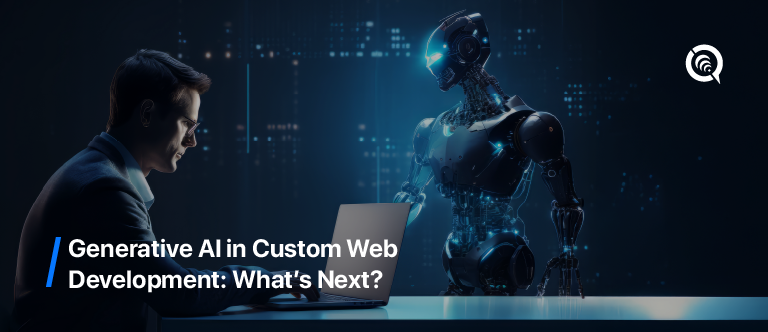
The Rise of Generative AI in Web Development
Generative AI has been making waves in nearly every industry, and custom web development is no exception. The technology’s ability to produce human-like text, generate images, write code, and even create interactive prototypes is reshaping how developers and businesses approach building websites.
Think about it: not long ago, building a high-quality website meant dozens of hours spent writing code from scratch, designing every pixel manually, and running multiple rounds of testing. Now, with AI tools like GitHub Copilot, ChatGPT, and Midjourney, you can create functional code snippets, design layouts, and even auto-generate content in a fraction of the time.
Generative AI is more than a productivity booster. It is fundamentally changing the creative process. Developers can offload repetitive tasks, focus on strategic design, and deliver tailored digital experiences faster. Businesses can launch products earlier, iterate quickly, and adapt to market demands without sacrificing quality.
This shift is not a passing trend. It is part of a larger movement toward AI-assisted development environments that are smarter, faster, and more collaborative than anything we’ve seen before. The question is: what comes next?
How Generative AI is Reshaping Custom Web Development
The impact of generative AI on web development goes beyond simple automation. It changes how developers think, plan, and execute projects.
AI-Powered Code Generation
Generative AI models trained on massive codebases can write functional code with minimal input. You provide a description like “create a responsive navigation bar” and get back production-ready HTML, CSS, and JavaScript. While these outputs often need fine-tuning, they significantly cut down on boilerplate work.
Smarter Design and Prototyping
AI-driven design tools like Figma’s AI features or Uizard can instantly create UI elements based on plain text prompts. This makes prototyping faster and allows non-designers to contribute more effectively to the creative process.
Personalized User Experiences
AI can dynamically generate content, recommendations, and layouts based on user behavior. Imagine a website that reconfigures its navigation based on a visitor’s past actions or customizes product recommendations in real time.
Faster Testing and Debugging
Generative AI tools can scan code for vulnerabilities, suggest fixes, and even run automated test cases. This reduces human error and accelerates quality assurance cycles.
Content Creation at Scale
From blog posts to product descriptions, AI can generate SEO-optimized content tailored to different audience segments, freeing up content teams to focus on strategy.
This combination of speed, personalization, and intelligence is turning custom web development into a more agile, user-focused process.
The Benefits and Risks of AI in Web Development
| Area | Benefits | Risks/Challenges |
| Productivity | Faster coding, automated design, rapid prototyping | Over-reliance on AI for basic coding skills |
| Cost | Reduced need for large development teams | Hidden costs for AI tool subscriptions |
| Quality | AI-assisted QA and bug detection | AI-generated code may contain inefficiencies or security flaws |
| Creativity | More time for strategic thinking | Risk of homogenized designs/content |
| Data Handling | Personalized experiences | Privacy and compliance concerns |
What’s Next for Generative AI in Custom Web Development?
Fully AI-Integrated Development Environments (AI-IDEs)
The next generation of development platforms will not just suggest code but actively collaborate with developers. Imagine an AI that understands your entire project architecture, proposes optimizations, and anticipates scalability issues before they arise.
Autonomous Web Applications
In the near future, AI could create and maintain entire websites with minimal human oversight. These systems could update content, optimize SEO, and adapt layouts automatically based on analytics data.
Multi-Modal AI Design Tools
Current AI tools handle either code, text, or images well. The next evolution will combine all three, allowing developers to create websites using voice commands, visual sketches, and natural language prompts in a single interface.
Real-Time Personalization Engines
Generative AI will enable websites to offer hyper-personalized experiences for each visitor, adjusting layouts, colors, and even tone of content instantly based on real-time data.
AI-Driven Accessibility Improvements
Future AI systems could automatically ensure compliance with WCAG guidelines, generate accessible descriptions, and adapt interfaces for people with disabilities without manual intervention.
Real-World Examples of AI in Web Development
- GitHub Copilot: Helps developers by suggesting context-aware code completions.
- Framer AI: Generates complete, responsive websites from plain text prompts.
- Uizard: Turns sketches into working UI prototypes in minutes.
- Midjourney + DALL·E: Used for creating custom imagery and design elements.
These tools are just the beginning. Expect more industry-specific AI applications to emerge, each addressing unique development needs.
How Businesses Can Prepare for the AI-Driven Future of Web Development
Upskill Your Team
Encourage developers to learn AI-assisted coding and design tools. The more familiar they are, the better they can leverage AI without losing quality control.
Adopt AI Incrementally
Start with low-risk areas like content generation or design prototyping before integrating AI into mission-critical development tasks.
Focus on Human-AI Collaboration
AI should enhance, not replace, human creativity. Encourage your team to treat AI as a partner, not a substitute.
Establish Governance and Guidelines
Set policies for AI use, code reviews, and data privacy to maintain quality and compliance.
Stay Ahead of Trends
AI is evolving fast. Attend industry events, read research papers, and experiment with emerging tools to stay competitive.
FAQs
- Will AI replace web developers?
Not entirely. AI will handle repetitive and boilerplate tasks, but human creativity, problem-solving, and oversight remain essential. - Is AI-generated code safe?
It can be, but it requires review. AI tools sometimes produce insecure or inefficient code that needs optimization. - Can AI design an entire website?
Yes, AI tools can generate full websites today, but they often need human refinement for branding, UX, and performance. - How does AI affect SEO in web development?
AI can automate keyword research, generate SEO-friendly content, and optimize technical SEO elements, but strategic oversight is still crucial. - What skills should developers focus on in the AI era?
Problem-solving, system architecture, AI tool mastery, and ethical coding practices will become more valuable than memorizing syntax.
Conclusion: Embracing the AI-Driven Future
Generative AI is not just a passing fad in custom web development. It is the start of a transformation that will shape how websites are built, tested, and maintained for years to come.
The next phase will bring smarter, more autonomous tools, deeper personalization, and multi-modal development capabilities. Developers who embrace these tools will find themselves delivering better products in less time. Businesses that prepare now will be ahead of the curve, ready to leverage AI for both efficiency and creativity.
Your role in this future is clear: stay informed, experiment with AI tools, and integrate them thoughtfully into your workflows. Generative AI is not here to replace you. It is here to make your work faster, smarter, and more impactful.
External Link Suggestions:
Author Bio
Written by Dhanasekar, a Senior Web Solutions Strategist at AppLogiQ, where he helps businesses harness emerging technologies to build scalable, high-performance digital products. With a strong focus on AI-driven solutions, he blends technical expertise with creative strategy to deliver custom web development projects that stand out. When he’s not exploring the latest in generative AI, he’s mentoring developers and speaking at industry events on the future of web innovation.
Follow us on Linkedin | Instagram | Facebook or explore more insights at https://www.applogiq.org/