

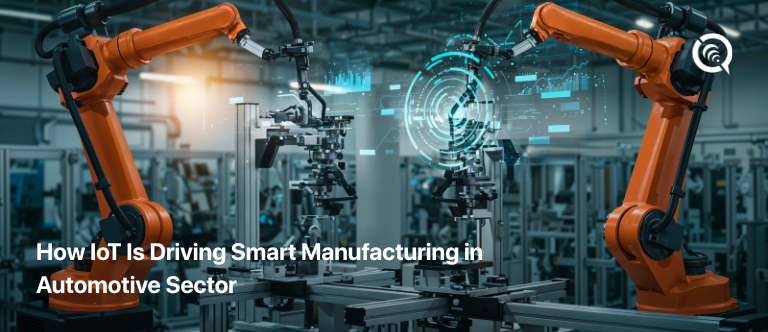
The automotive industry is evolving faster than ever before. Manufacturers are facing intense pressure to reduce production costs, improve quality, shorten delivery timelines, and meet sustainability targets. At the same time, customer expectations are rising, vehicles are becoming more complex, and electric mobility is reshaping production models. Traditional manufacturing methods are no longer enough to handle this level of complexity.
This is where IoT in automotive manufacturing is transforming the industry.
IoT enables automotive manufacturers to connect machines, systems, tools, and people through real-time data. Instead of reacting to problems after they occur, you can predict issues, optimize processes, and make smarter decisions across the entire production lifecycle.
In this blog, you will learn how IoT is driving smart manufacturing in the automotive sector, the core technologies behind it, real-world applications, benefits, challenges, and why IoT has become essential for future-ready automotive manufacturing.
Understanding IoT in Automotive Manufacturing
IoT, or the Internet of Things, refers to a network of physical devices embedded with sensors, software, and connectivity that allows them to collect and exchange data. In automotive manufacturing, these devices include machines, industrial robots, conveyor belts, tools, quality inspection systems, vehicles, and environmental sensors.
IoT in automotive manufacturing creates a connected factory environment where machines continuously communicate their status, performance, and conditions. This real-time visibility eliminates blind spots in production and allows manufacturers to monitor operations with greater accuracy.
Instead of relying on manual reports or delayed data, IoT provides continuous insights that help you prevent downtime, improve efficiency, and maintain consistent quality.
Why Smart Manufacturing Is Essential for the Automotive Sector
Automotive manufacturing is one of the most complex industrial processes in the world. A single vehicle consists of thousands of components sourced from multiple suppliers and assembled through tightly synchronized production lines. Any disruption can result in costly delays or quality issues.
Smart manufacturing addresses these challenges by using digital technologies to create flexible, intelligent, and data-driven production systems.
Key Drivers Behind Smart Manufacturing Adoption
Automotive manufacturers are adopting IoT in automotive manufacturing to address:
- Rising operational and labor costs
- Increased competition from electric vehicle manufacturers
- Demand for faster time-to-market
- Need for customization without compromising efficiency
- Strict quality, safety, and environmental regulations
IoT enables manufacturers to respond quickly to these challenges while maintaining productivity and profitability.
Core Technologies Behind IoT in Automotive Manufacturing
The success of IoT in automotive manufacturing depends on a strong technology foundation. IoT is not a single tool but an ecosystem of technologies working together to create intelligent manufacturing environments.
Sensors and Smart Industrial Devices
Sensors are the foundation of IoT systems. In automotive manufacturing, sensors are embedded in machines, robots, tools, and production lines to monitor critical parameters such as temperature, vibration, pressure, speed, torque, and energy consumption.
These sensors continuously collect real-time data that reflects actual machine conditions. Even small deviations in vibration or temperature can indicate wear or potential failure. With sensor-based monitoring, you gain early warnings before issues escalate into breakdowns.
Edge Computing for Faster Response
Automotive factories generate massive amounts of data every second. Edge computing processes this data close to the source instead of sending everything to the cloud.
This enables:
- Instant decision-making
- Faster machine response
- Reduced network congestion
For example, if unsafe conditions are detected, machines can be stopped immediately without waiting for cloud instructions. Edge computing is critical for safety, quality control, and high-speed production environments.
Industrial Connectivity and Communication Networks
Connectivity ensures that machines, sensors, and systems communicate seamlessly. Automotive manufacturers rely on industrial Ethernet, wireless networks, IoT gateways, and private 5G networks to enable uninterrupted data flow.
Reliable connectivity is essential for synchronizing production lines, coordinating robots, and enabling real-time monitoring. Without stable communication, IoT systems cannot deliver consistent value.
Cloud Platforms and Data Management
Cloud platforms provide scalable storage and computing power for IoT data. They enable centralized monitoring across multiple plants, support long-term data analysis, and integrate with enterprise systems.
In IoT in automotive manufacturing, cloud platforms support benchmarking, performance tracking, and continuous improvement across global operations.
Advanced Analytics and Artificial Intelligence
Data becomes valuable only when it is analyzed. Advanced analytics and AI transform raw IoT data into actionable insights.
These technologies support:
- Predictive maintenance planning
- Root cause analysis for defects
- Production optimization
- Demand forecasting
AI models continuously learn from data, improving accuracy and decision-making over time.
System Integration and Cybersecurity
IoT platforms integrate with MES, ERP, quality management, and supply chain systems to ensure insights lead to action. At the same time, cybersecurity frameworks protect sensitive data and manufacturing systems from threats.
Together, these technologies form the backbone of IoT in automotive manufacturing.
Predictive Maintenance and Reduced Downtime
Unplanned downtime is one of the biggest cost drivers in automotive manufacturing.
IoT-enabled predictive maintenance uses sensor data to monitor machine health continuously. When abnormal patterns appear, maintenance teams are alerted before a breakdown occurs.
This approach allows you to:
- Reduce unexpected equipment failures
- Schedule maintenance efficiently
- Extend equipment lifespan
- Improve overall equipment effectiveness
Predictive maintenance powered by IoT in automotive manufacturing ensures smoother production and lower maintenance costs.
Real-Time Production Monitoring and Optimization
Traditional production monitoring relies on delayed reports, limiting your ability to respond quickly.
IoT-enabled systems provide real-time visibility into production output, machine utilization, cycle times, downtime reasons, and bottlenecks. Managers can identify inefficiencies instantly and take corrective action.
Real-time monitoring improves productivity, reduces waste, and supports continuous improvement initiatives across automotive plants.
Quality Control and Defect Prevention
Quality is critical in automotive manufacturing. Even minor defects can lead to recalls and reputational damage.
IoT-based quality systems use sensors and vision technologies to inspect components during production. Defects are detected early, preventing faulty parts from progressing further in the process.
Using IoT in automotive quality control results in reduced scrap, less rework, consistent standards, and improved customer satisfaction.
Smart Robotics and Flexible Automation
Robots are essential in automotive plants, but IoT makes them smarter and more adaptable.
Connected robots communicate with machines and systems in real time. They adjust operations based on production data, enabling flexible automation that supports model changes and customization.
This flexibility helps manufacturers respond quickly to changing demand without compromising efficiency.
Supply Chain Visibility and Inventory Optimization
Automotive manufacturing depends heavily on just-in-time inventory.
IoT devices track materials and components across the supply chain, providing real-time visibility into inventory levels and shipment status. This helps prevent shortages, reduce excess inventory, and improve supplier coordination.
IoT in automotive manufacturing strengthens supply chain resilience and reduces production delays.
Energy Management and Sustainable Manufacturing
Energy consumption is a major operational cost.
IoT systems monitor energy usage across machines and facilities, helping identify inefficiencies and reduce waste. Optimized energy usage lowers costs and supports sustainability goals.
This makes IoT in automotive manufacturing a key enabler of green manufacturing initiatives.
Worker Safety and Smart Work Environments
Automotive factories involve heavy machinery and complex operations.
IoT devices monitor environmental conditions, machine behavior, and worker movements to detect unsafe situations in real time. Early alerts help prevent accidents and improve workplace safety.
Safer environments also boost worker confidence and productivity.
IoT in Electric Vehicle Manufacturing
The shift toward electric vehicles has added new manufacturing challenges.
EV battery production requires precise monitoring of temperature, voltage, and assembly conditions. IoT ensures consistent quality, safety, and compliance.
IoT in automotive manufacturing helps traditional plants transition smoothly to EV production without major disruptions.
Challenges in Implementing IoT in Automotive Manufacturing
Despite its benefits, IoT implementation comes with challenges:
- Integration with legacy equipment
- Cybersecurity risks
- Initial investment and ROI evaluation
With proper planning and experienced partners, these challenges can be managed effectively.
Best Practices for Successful IoT Adoption
To maximize value, automotive manufacturers should:
- Define clear business goals
- Start with pilot projects
- Focus on scalable solutions
- Invest in analytics and security
- Partner with experienced IoT providers
These practices ensure long-term success with IoT in automotive manufacturing.
The Future of IoT in Automotive Manufacturing
The future points toward fully connected, intelligent factories.
AI-driven automation, private 5G networks, digital twins, and autonomous production systems will further enhance efficiency and flexibility. IoT in automotive manufacturing will continue to be the foundation of this transformation.
Conclusion
IoT has become the backbone of smart manufacturing in the automotive sector. It enables real-time visibility, predictive maintenance, improved quality, enhanced safety, and sustainable operations.
By adopting IoT in automotive manufacturing, you position your organization for long-term success in an increasingly competitive industry.
Ready to Build a Smarter Automotive Manufacturing Operation?
If you want to modernize your automotive manufacturing processes and unlock the full potential of IoT-driven smart manufacturing, connect with our experts today.
FAQ’s
1. What is IoT in automotive manufacturing?
IoT in automotive manufacturing refers to the use of connected sensors, machines, and systems to collect real-time production data. This data helps manufacturers monitor equipment performance, improve efficiency, and make faster, data-driven decisions. It enables smarter, more connected factory operations.
2. How does IoT improve efficiency in automotive factories?
IoT improves efficiency by enabling real-time production monitoring, predictive maintenance, and automated quality checks. It helps identify bottlenecks early, reduce downtime, and optimize resource usage. This leads to smoother operations and higher productivity.
3. Can IoT help reduce manufacturing downtime?
Yes, IoT helps reduce downtime by continuously monitoring machine health and detecting early signs of failure. Predictive alerts allow maintenance teams to fix issues before breakdowns occur. This minimizes unexpected stoppages and production delays.
Follow us on LinkedIn | Instagram | Facebook or explore more insights at https://www.applogiq.org/