

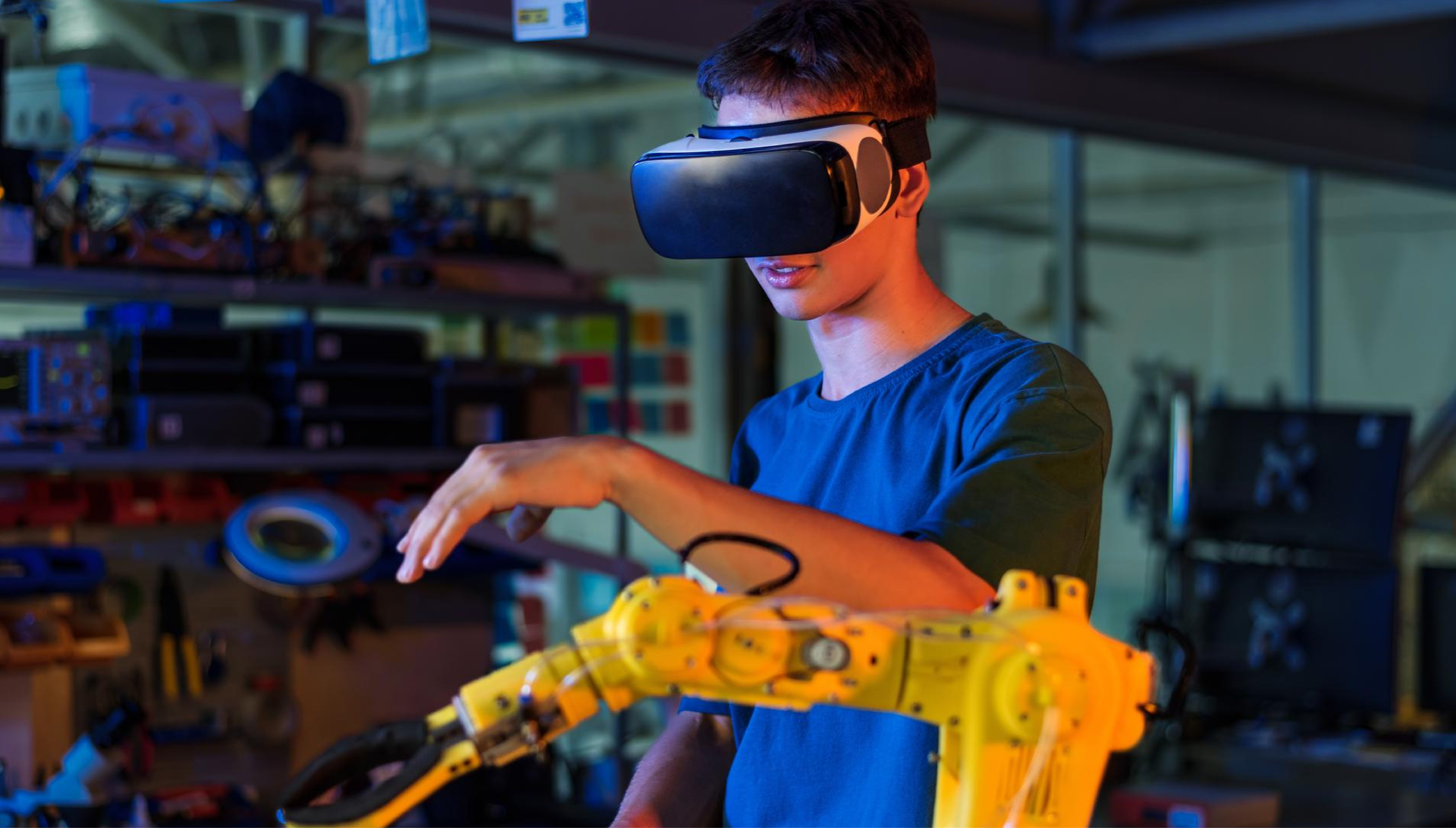
The automotive industry has always innovated the way people experience driving. While many AI features have been added to enhance safety and the overall driving experience, Augmented Reality (AR) in automotive is the next big thing. According to 'Market Research Future,' the automotive AR market size, which was valued at $1.2 billion in 2022, is expected to grow at a compounded annual growth rate (CAGR) of 40.70% to reach $25.93 billion by 2032.
Augmented reality in vehicles is the need of the hour. With its clear advantages for the manufacturing and service processes, AR has already established itself as a significant part of the automotive industry over the past few years. Its popularity and use cases are only increasing with time, completely transforming the industry.
Augmented Reality in the Automotive Industry
At its heart, augmented reality (AR) applications in the automotive industry capitalize on the technology's ability to overlay digital information and graphics onto the real-world view of a user. This enhances the driving experience by enriching how drivers receive and process information, keeping them informed and alert. Beyond the safety features of AR in automotive settings, it also significantly improves manufacturing efficiency—from prototyping to providing a standout virtual experience for potential buyers.
In cars, augmented reality can project crucial data directly onto the windshield, including speed, navigation directions, collision warnings, and more. This allows drivers to access vital information while keeping their eyes on the road.
Furthermore, automakers and mechanics are leveraging AR to assist with design and repairs. They use 3D models to identify and address prototype flaws, which improves workflow efficiency. As these practices continue to develop, they promise to exponentially increase productivity within the automotive industry.
AR changing the Automotive Industry
Augmented Reality (AR) is revolutionizing the automotive industry, enhancing various facets from design and manufacturing to sales and marketing. Here are some of the most significant impacts AR has introduced that are transforming the car business:
Improving Design and Prototyping
Designing and prototyping automobiles are traditionally complex and expensive processes, often requiring the construction of physical models and numerous iterations. AR simplifies this by enabling the creation of detailed 3D designs and prototypes, allowing for rapid identification and correction of design flaws before physical models are built. This not only saves substantial costs associated with physical prototyping but also significantly reduces the time spent in the design phase.
Streamlining Manufacturing
In manufacturing, AR introduces real-time data sharing and collaboration, making it possible to quickly address flaws in design or execution. This technology allows team members to monitor progress in a detailed, magnified view of the real environment, effectively overseeing the workflow at a micro level. The result is a more streamlined manufacturing process that is both cost-efficient and less cumbersome.
Enhancing Quality Control
Quality control is crucial in the automotive industry, where even minor oversights can lead to significant issues. Traditional quality control methods are time-consuming and often inadequate for detecting small defects. AR technology enables precise testing and quality checks, greatly reducing the time required for these processes and allowing more time for enhancements and corrections.
Efficient Worker Training
Training with AR is more straightforward and cost-effective. Complex designs are easily demonstrated through AR models, facilitating better understanding without the need for physical prototypes. This advanced training capability extends even to scenarios that cannot be replicated with physical models.
Improving Repair and Maintenance
For repair and maintenance, AR can quickly identify minor issues without physical inspections, allowing engineers to suggest fixes through detailed 3D models. This capability accelerates the repair process, especially for complex issues once diagnosed.
Revolutionizing Marketing and Sales
Marketing and advertising in the automotive sector require significant investment, often complicated by the lengthy process needed to educate potential buyers about technical details and features. AR and other immersive technologies can drastically shorten the sales cycle. Immediate solutions include:
Interactive AR Car Displays: Virtual showrooms or experience centers are crucial for mimicking the physical showroom experience. These simulations recreate the showroom environment virtually, complemented by AR enhancements that allow users to explore car details from home.
3D AR Car Customization: Allowing users to customize and assemble their vehicles virtually can greatly enhance marketing and sales efforts. This feature not only improves customer engagement but also significantly boosts sales potential by catering to individual preferences and specifications.
In summary, AR is setting a new standard in the automotive industry, offering innovative solutions that streamline operations, enhance training, improve quality, and redefine customer interactions. As this technology evolves, its role in driving the automotive sector forward will undoubtedly expand.
Best Example of AR in Automotive
Leading automotive brands like Tesla, Ford, Kia, and others are increasingly incorporating Augmented Reality (AR) into various facets of their operations, from manufacturing and marketing to sales and post-sales support. Let's explore some notable instances:
BMW
At CES 2023, BMW introduced its i-Vision Dee concept vehicle, a testament to AR's potential in automotive design. This mid-size sedan features innovative E-Ink technology that allows the exterior color to change, offering dynamic styling options without permanent paint. The car's most revolutionary feature is its AR-enabled windshield, which can display everything from basic driving information to immersive virtual environments, directly within the driver’s line of sight.
Mercedes-Benz
Mercedes-Benz stands out as a pioneer in adopting AR and Virtual Reality (VR) across the automotive industry. Early on, it introduced an interactive virtual showroom and developed apps for at-home previews of its vehicle interiors. Mercedes-Benz's use of Extended Reality (XR)—which includes AR, VR, and Mixed Reality—spans the entire vehicle lifecycle from design and prototyping to testing and assembly. The brand also utilizes these technologies for enhancing staff training and the sales experience.
Volkswagen
Volkswagen has progressively expanded its AR initiatives. In 2015, it launched the Race Trainer project to teach racing skills on circuits using AR. By 2020, the company had integrated an AR heads-up display (HUD) in its ID line of electric vehicles, projecting navigation cues, lane markings, and vital vehicle information directly into the driver's field of vision. In 2022, Volkswagen announced a significant partnership with Microsoft to utilize HoloLens 2 AR glasses, aimed at improving road safety by providing drivers with real-time traffic information and hazard warnings.
Tesla
Tesla continues to explore AR technologies to enhance its offerings. Leaks have indicated that AR capabilities were being tested with Tesla’s renowned autopilot system several years back. While Tesla has been relatively quiet about unveiling new AR technologies recently, its longtime industry partner, WayRay, announced plans to introduce an advanced reality display tailored for future Tesla models, highlighting ongoing innovation in this space.
These examples underscore how AR is reshaping the automotive industry, enhancing everything from vehicle design and manufacturing processes to driver experience and safety.
Way Ahead
The increasing adoption of AR in the automotive industry is set to significantly enhance the driver's experience, potentially boosting the sector's overall growth. Here are some exciting AR technologies to watch:
AR in Self-Driving Cars
As self-driving cars become more prevalent, AR is becoming indispensable. It enables owners to monitor and control their vehicles remotely, making timely decisions even when they are not physically behind the wheel.
AR in Modern Driving Manuals
Innovative AR driving manuals are being developed to help new car owners familiarize themselves with their vehicles comprehensively. This ensures they can leverage all features to the fullest, enhancing their driving experience.
AR is revolutionizing the automotive industry, influencing everything from manufacturing and design to post-sales services. As customer demands evolve, AR continues to advance, offering new solutions to enrich the driving experience. If you're looking to incorporate AR into your automotive business, consider the AppLogiQ Platform. We provide robust tools to create seamless car AR experiences that can be integrated across your digital platforms, physical showrooms, and the entire customer journey. Schedule a free demo today to discover how we can assist you in transforming your business with AR technology.