

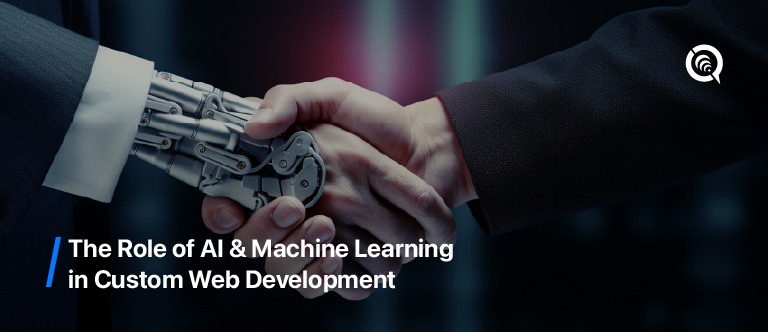
Artificial Intelligence (AI) and Machine Learning (ML) are no longer just futuristic buzzwords. They are shaping the present and future of custom web development. If you think about the websites you visit daily, from e-commerce giants to SaaS platforms, you’ll notice one common thread: they’re becoming smarter, more predictive, and highly personalized.
This transformation is driven by AI and ML. They allow businesses to move beyond static web pages and create dynamic, data-driven digital experiences that keep users engaged. Whether it’s smarter chatbots, automated content recommendations, or predictive analytics, AI and ML are redefining how businesses approach web development.
In this blog, you’ll discover how AI and machine learning influence every stage of custom web development, why they matter, and how to leverage them for your business growth.
AI-Powered Personalization in Web Development
AI has taken personalization from a nice-to-have to a must-have. Modern users expect websites to feel like they were built for them, not the masses. With AI and ML, personalization has moved beyond showing related products—it now predicts, recommends, and adapts in real time.
Recommendation Engines and Predictive Design
Recommendation engines are one of the most visible applications of AI in web development. Platforms like Netflix, Spotify, and Amazon rely on machine learning to analyze browsing history, past purchases, and even session duration.
For custom web development, this means you can:
- Build dynamic product pages that adjust automatically to each visitor’s behavior
- Offer personalized dashboards in SaaS applications that prioritize frequently used features
- Create predictive design flows that anticipate a user’s next move and make navigation seamless
The impact is significant. Websites using AI-driven recommendations often report 20–30% higher conversions compared to static pages.
Personalized Content and User Journeys
Content personalization goes beyond product suggestions. AI tools analyze demographic data, geolocation, and browsing patterns to deliver customized landing pages, blog feeds, or offers.
For example:
- An e-learning platform can recommend courses based on a student’s progress.
- An online store can display seasonal promotions depending on the user’s location.
- A B2B website can adapt CTAs depending on whether the visitor is a first-time reader or a returning client.
By tailoring the user journey, AI keeps people engaged longer and builds loyalty. Businesses also benefit from better ROI on content marketing and ad spend.
Intelligent Automation in Web Development
One of the most practical benefits of AI and ML in custom web development is automation. Developers often spend hours on repetitive tasks that don’t directly contribute to innovation. Intelligent automation changes that.
AI in Testing and Code Generation
Testing is essential but time-consuming. AI-powered tools now run automated tests across multiple browsers and devices, identifying bugs before a human tester ever sees them.
Even better, platforms like GitHub Copilot or TabNine use ML to suggest and sometimes write code snippets. This doesn’t replace developers, but it accelerates workflows, reduces syntax errors, and ensures cleaner codebases.
This is particularly valuable for startups and SMBs who want fast deployment without sacrificing quality.
Automating SEO and Content Management
SEO and content management are critical but often tedious. AI-driven tools can:
- Auto-generate meta tags and descriptions
- Suggest target keywords based on real-time trends
- Create product descriptions that scale with your catalog
- Monitor content performance and suggest improvements
For content-heavy websites, this automation saves hours of manual work and helps maintain consistency. It also ensures you stay competitive in fast-changing search engine rankings.
Enhancing Web Security with AI & ML
Cybersecurity is one of the biggest concerns in web development. Traditional security measures are often reactive, addressing issues after they occur. AI and ML shift this approach by detecting threats proactively.
Machine learning algorithms can analyze traffic patterns and flag unusual activity. For example, if a botnet attempts a brute-force attack, AI can detect the anomaly and block it in real time. Similarly, ML can help identify fraudulent transactions in e-commerce platforms by comparing them against millions of data points.
Some key AI-powered security applications include:
- Real-time threat detection
- Fraud prevention
- Automated patching
- Behavioral analytics for user authentication
By integrating AI into security protocols, developers create websites that adapt to evolving threats, protecting both businesses and users. In a time when cyberattacks are increasing, this proactive approach is non-negotiable.
Smarter User Experience with AI
User experience (UX) is the backbone of web development. AI helps developers design smarter, more intuitive interfaces. Take chatbots as an example. AI-powered chatbots can handle customer queries 24/7, providing instant answers while learning from each interaction to improve responses over time.
AI also supports UX design by analyzing user behavior. Heatmaps, eye-tracking, and session recordings powered by AI help developers understand how users interact with websites. These insights inform better layouts, smoother navigation, and optimized content placement.
On top of that, AI voice search and natural language processing (NLP) are transforming accessibility. Websites now cater to voice commands, making navigation easier for users with disabilities and those who prefer hands-free browsing.
The bottom line: AI ensures that websites aren’t just functional, but delightful to use. And in today’s competitive digital world, UX can be the difference between a customer who stays and one who bounces.
Machine Learning in Data-Driven Web Development
Web development is increasingly data-driven. Machine learning plays a crucial role in extracting insights from user data and turning them into actionable strategies.
For instance, ML models can predict user churn by analyzing patterns in engagement. If users are likely to abandon a platform, businesses can intervene with special offers, personalized emails, or product updates.
ML also powers A/B testing at scale. Instead of running one test at a time, machine learning can analyze multiple variations simultaneously, accelerating the optimization process.
Another exciting application is predictive analytics. By analyzing historical data, ML can forecast demand, helping e-commerce businesses manage inventory better. Similarly, content-based businesses can predict which topics will trend and prepare content ahead of time.
Ultimately, machine learning makes custom web development smarter, more strategic, and aligned with real business goals.
Frequently Asked Question
- How is AI used in web development?
AI is used for personalization, automation, data analysis, UX design, and security. It helps websites become smarter, more efficient, and user-friendly.
- Can AI replace web developers?
No. AI assists developers by automating routine tasks, but creativity, strategy, and complex problem-solving still require human expertise.
- Is AI in web development expensive?
It depends on the scope. While initial integration may cost more, AI saves money long-term through automation, reduced errors, and better conversions.
- How does machine learning improve websites?
Machine learning improves websites by analyzing data to personalize content, predict user behavior, optimize UX, and strengthen security.
- Do small businesses benefit from AI in web development?
Yes. Small businesses can use AI-powered chatbots, SEO tools, and personalization features to compete with larger players.
Conclusion
AI and machine learning are no longer futuristic extras, they are core drivers of innovation in custom web development. From personalized experiences and automated workflows to predictive analytics and proactive security, these technologies are reshaping how websites are built and how users interact with them.
The businesses that embrace AI today will set the standard for tomorrow. A website is no longer just a digital storefront, it’s a living, learning platform that can adapt to users in real time. Whether it’s anticipating customer needs, streamlining operations, or protecting sensitive data, AI and ML give you the competitive edge to thrive in a digital-first world.
But adopting AI in web development is not just about having the right tools, it’s about having the right partner. That’s where AppLogiQ comes in. With expertise in building intelligent, scalable, and secure custom web applications, AppLogiQ helps businesses future-proof their digital presence. They don’t just deliver websites, they deliver growth-focused platforms that evolve with your users and your business goals.
If you’re ready to take your digital strategy to the next level, consider how AI and machine learning can power your next project. And with the right partner like AppLogiQ, you can be confident your website will not only perform but also innovate.
The future of web development is here. The question is: will your business lead the change or lag behind?
Author Bio
Ashok is a seasoned digital strategist and web solutions specialist at AppLogiQ. With years of experience in guiding businesses through their digital transformation journeys, he focuses on helping brands leverage custom web development to achieve scalable growth. At AppLogiQ, Ashok works closely with clients to craft tailored web solutions that align with long-term business goals, ensuring performance, security, and seamless user experiences. When he’s not exploring emerging tech trends, she enjoys writing thought-leadership content to empower businesses in making smarter digital decisions.
Follow us on Linkedin | Instagram | Facebook or explore more insights at https://www.applogiq.org/