Headspace App Development Cost: Features, Timeline & Pricing (2026 Guide)
15 mins read
|vicknesh
Key Takeaways
Headspace App Development Meditation apps are becoming a strong digital wellness opportunity as demand for accessible mental health solutions continues to grow.
The cost to develop a meditation app like Headspace typically depends on features, platform, technology stack, design complexity, and development location. This guide breaks down the estimated cost, key features, development timeline, and technology considerations.
Starting with an MVP helps healthcare startups validate demand, control initial costs, and expand the platform based on real user feedback.
Development costs can vary significantly, with a Headspace App Development Cost-like app ranging from $12,000 to $75,000+ depending on features, AI, integrations, and complexity.
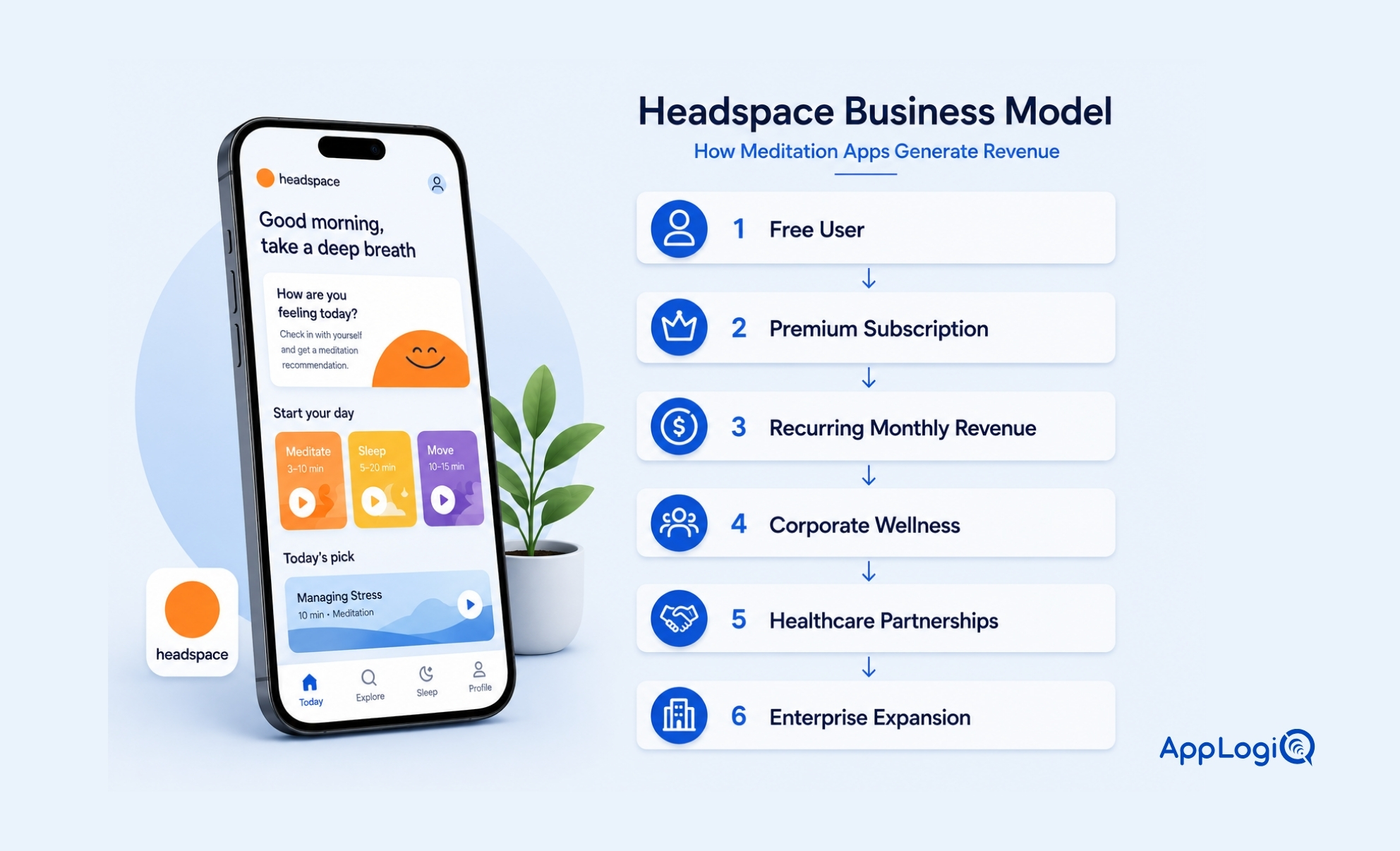
Multiple revenue streams, including subscriptions, corporate wellness, in-app purchases, and healthcare partnerships, can support sustainable growth.
Headspace App Development Cost in 2026
Mental wellness has become one of the fastest-growing sectors in digital healthcare Headspace App Development. Rising stress levels, increasing awareness of emotional well-being, and widespread smartphone adoption have transformed meditation apps from niche wellness tools into mainstream healthcare solutions. Today, millions of users rely on digital platforms to reduce stress, improve sleep quality, manage anxiety, and develop healthier daily habits.
Among the leaders in this space, Headspace has established itself as one of the world's most successful meditation applications by combining guided meditation, mindfulness courses, sleep stories, breathing exercises, focus music, and AI-driven personalization into a subscription-based platform.
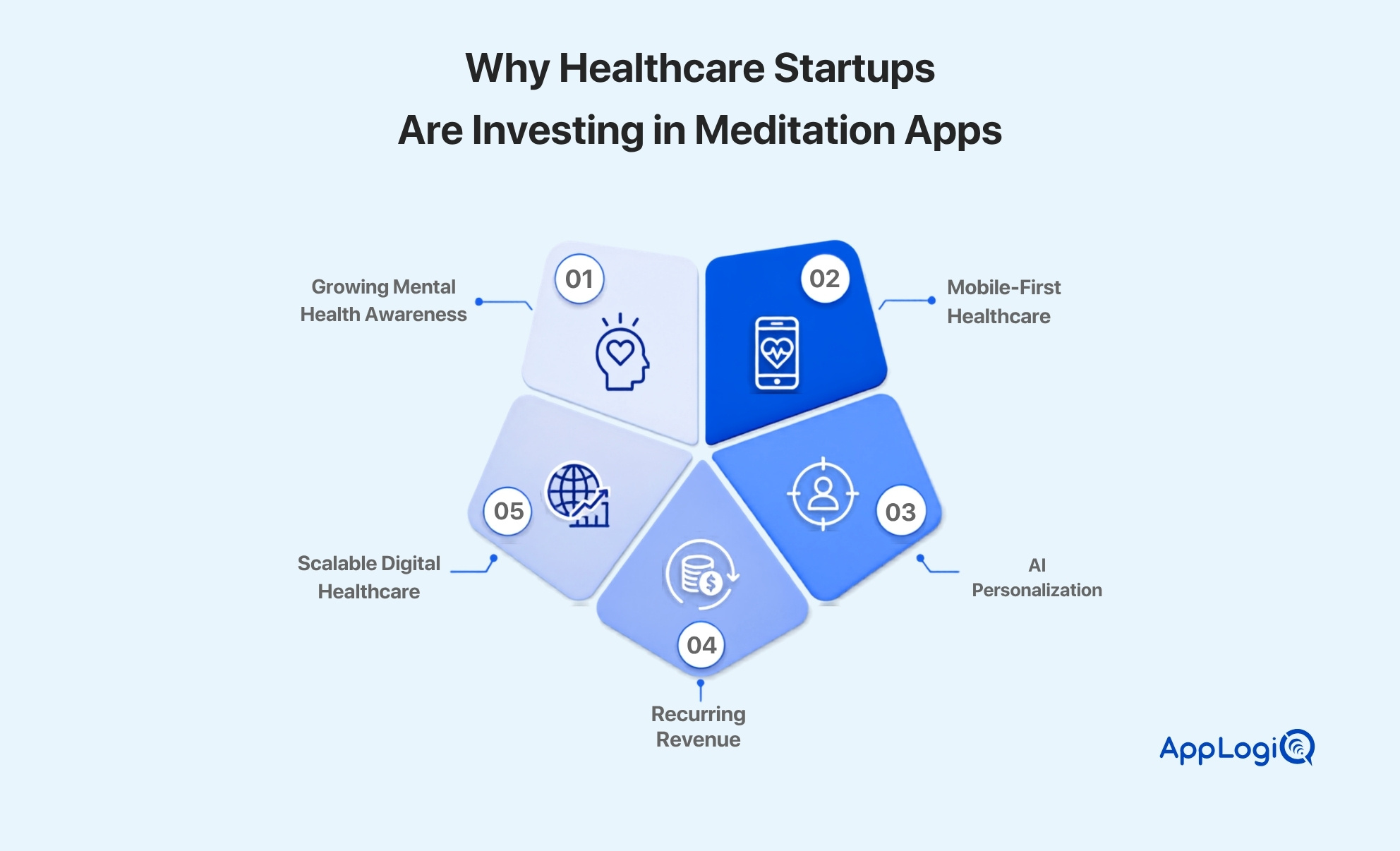
For healthcare startups, this presents an exceptional opportunity. The global demand for digital mental health solutions continues to grow, creating a favorable environment for businesses looking to launch innovative meditation and wellness applications.
However, developing an application comparable to Headspace requires much more than attractive UI design. It involves scalable cloud infrastructure, intelligent recommendation engines, subscription management, secure authentication, analytics, wearable integrations, and high-quality content that keeps users engaged over the long term.
In this comprehensive guide, we'll explore the Cost to Develop a Meditation App Like Headspace in 2026, the essential features, AI capabilities, development timeline, pricing considerations, monetization strategies, and business benefits for healthcare startups planning to enter the digital wellness market in 2026.
The digital mental health market has evolved rapidly over the past decade. Consumers now expect personalized wellness experiences that combine meditation, sleep improvement, mood tracking, and AI-powered recommendations within a single application.
Healthcare startups can capitalize on this trend by building meditation platforms that offer recurring subscription revenue, global scalability, and seamless integration with modern digital health ecosystems.
The Growing Demand for Meditation Apps for Headspace App Development
Digital health is shifting from reactive treatment to preventive care. Rather than seeking support only after health issues arise, users are increasingly adopting applications that help them maintain emotional well-being and healthy daily routines.
Meditation applications support however this shift by offering guided sessions, breathing exercises, sleep improvement programs, focus training, and stress management techniques that users can access whenever they need them.
According to the World Health Organization (WHO), mental health remains one of the most important components of overall health, emphasizing the importance of accessible mental wellness resources.
Similarly, the National Institutes of Health (NIH) has published research demonstrating that mindfulness-based interventions can help reduce stress and improve emotional well-being when practiced consistently.
These findings reinforce the growing role of meditation apps as valuable tools within the broader digital healthcare ecosystem.
2026 Market Overview Headspace App Development
The global meditation and mental wellness industry continues to experience strong growth due to several interconnected trends:
Growth Driver
Business Impact
Rising mental health awareness
Higher demand for wellness apps
AI-powered personalization
Better user engagement
Wearable device adoption
Richer health insights
Corporate wellness programs
B2B partnership opportunities
Subscription economy
Recurring revenue streams
Telehealth expansion
Integrated digital healthcare
According to Grand View Research, the digital mental health market is expected to continue expanding through 2030 as healthcare providers and technology companies invest in AI-powered wellness solutions.
Why This Matters for Healthcare Startups
Healthcare startups entering the digital wellness market are not simply building another mobile application—they are creating scalable healthcare products that can improve patient well-being while generating sustainable recurring revenue.
A modern meditation platform can serve multiple customer segments:
Individuals seeking stress relief
Employers offering corporate wellness
Healthcare providers
Insurance partners
Wellness coaches
Educational institutions
This diversification creates multiple monetization opportunities beyond individual subscriptions.
Ready to Build a Meditation App Like Headspace?
Whether you're launching a digital health startup or expanding your healthcare platform, AppLogiQ helps organizations build secure, scalable, and AI-powered meditation applications tailored to modern user expectations.
Why Headspace Became a Global Leader & Business Opportunities for Healthcare Startups
Following the rapid growth of digital mental health, one company has consistently remained at the forefront of mindfulness technology—Headspace. What began as a meditation-focused application has evolved into a comprehensive digital wellness platform serving millions of users across multiple countries. Its success is not the result of guided meditation alone; it stems from a carefully designed product strategy, personalized user experience, evidence-informed content, and a sustainable subscription-based business model.
For healthcare startups planning to build a meditation application, understanding why Headspace App Development succeeded is just as important as understanding how much it costs to develop a similar platform.
This section explores Headspace's business model, competitive advantages, market opportunities, and the lessons healthcare startups can apply when developing a next-generation AI-powered meditation platform.
What Is Headspace?
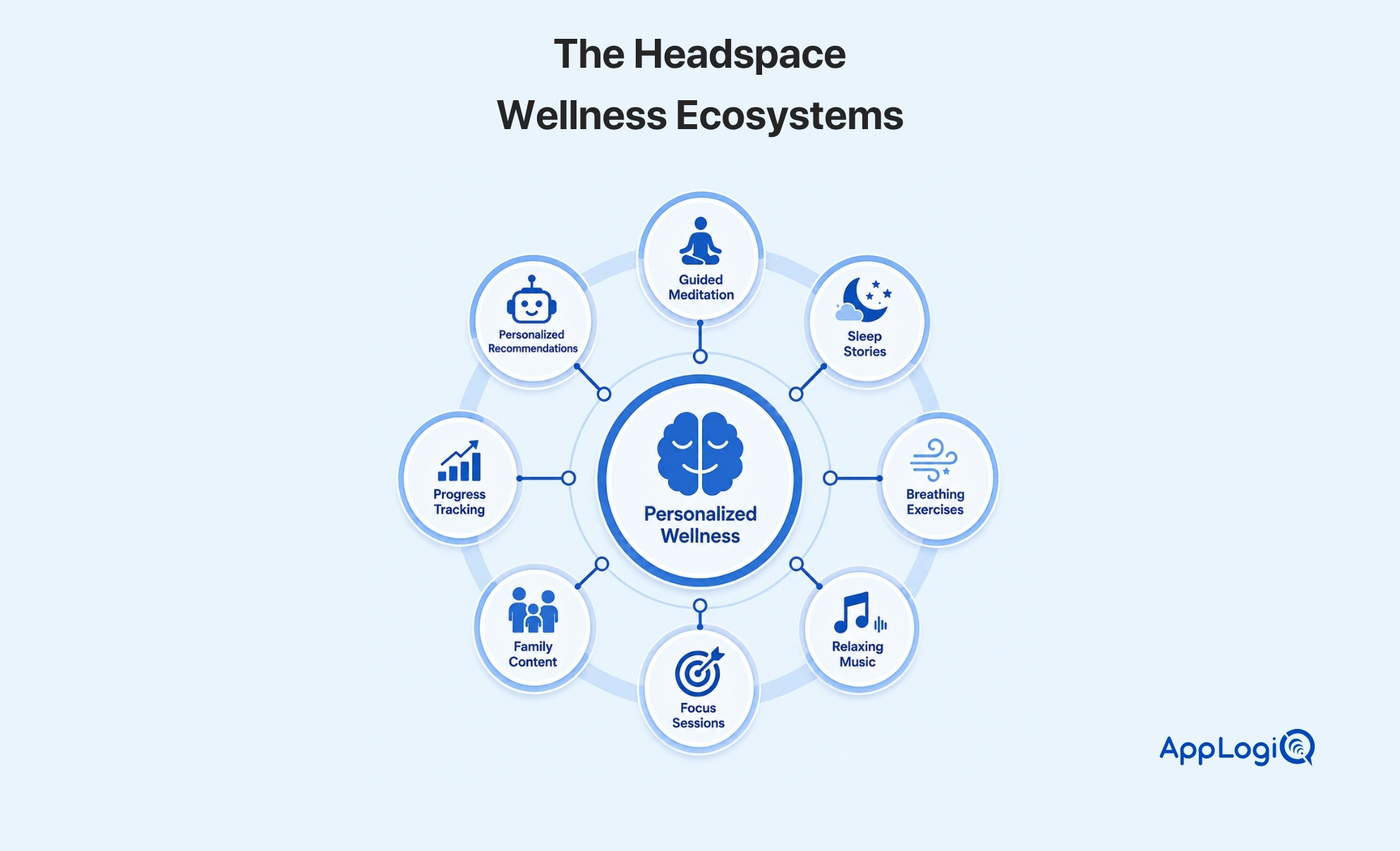
Headspace is a subscription-based meditation and mindfulness application designed to help users improve mental well-being through guided meditation, breathing exercises, sleep support, stress management programs, focus sessions, and mindfulness education.
Since its launch, the platform has expanded beyond meditation to include:
Guided mindfulness courses
Sleep stories
Relaxing music
Focus playlists
Breathing exercises
Kids' meditation
Workplace wellness
Personalized daily recommendations
Unlike traditional wellness applications that simply provide audio content, Headspace App Development delivers structured wellness journeys that encourage long-term habit formation and daily engagement.
Why Headspace Became One of the World's Most Successful Meditation Apps
Several factors contributed to Headspace's global success.
1. Exceptional User Experience Headspace App Development cost
The application removes complexity from meditation.
Users can:
Complete onboarding in minutes.
Select wellness goals.
Receive recommended meditation sessions.
Track progress automatically.
Continue personalized meditation journeys daily.
A frictionless onboarding experience significantly improves user retention.
2. Science-Informed Content
Modern users expect wellness recommendations backed by credible research.
According to the National Institutes of Health (NIH), mindfulness-based interventions have demonstrated benefits for stress reduction, emotional regulation, and psychological well-being.
This transforms meditation into part of a broader digital healthcare ecosystem.
Multilingual Content
Healthcare startups serving global markets should support multiple languages from launch.
Accessibility
Include:
Voice navigation
Closed captions
Adjustable text sizes
High-contrast themes
Improving accessibility expands your addressable market.
Market Gap Analysis
Although meditation apps continue to grow, several opportunities remain underserved.
Current Limitation
Opportunity for Startups
Generic recommendations
AI-powered personalization
Limited healthcare integration
Connected digital health ecosystem
Static wellness plans
Adaptive AI coaching
Limited enterprise reporting
Employer analytics dashboards
Basic progress tracking
Predictive wellness insights
These gaps create opportunities for startups to deliver differentiated products.
Frequently Asked Questions
How much does it cost to develop an app like Headspace?
The Headspace App like development cost typically ranges from $12,000 to $75,000+, depending on app complexity, supported platforms, AI features, UI/UX design, third-party integrations, and compliance requirements.
How long does it take to build a meditation app?
Core features include user registration, guided meditation sessions, sleep stories, progress tracking, push notifications, subscription management, audio streaming, and an admin dashboard.
What are the essential features of a meditation app?
Core features include user registration, guided meditation sessions, sleep stories, progress tracking, push notifications, subscription management, audio streaming, and an admin dashboard.
Can AI improve a meditation app?
Yes. AI can personalize meditation recommendations, analyze user behavior, provide mood-based suggestions, automate wellness journeys, and improve user retention through intelligent recommendations.
Which technology stack is best for developing a meditation app?
A common modern stack includes Flutter or React Native for the frontend, Node.js or NestJS for the backend, PostgreSQL for the database, AWS or Google Cloud for hosting, and Stripe for subscription payments.
How do meditation apps make money?
Most meditation apps generate revenue through premium subscriptions, in-app purchases, corporate wellness programs, healthcare partnerships, online courses, and live coaching sessions.
Is HIPAA compliance required for a meditation app?
If your app stores, processes, or shares protected health information (PHI) on behalf of covered healthcare entities in the United States, HIPAA compliance may be required. General wellness apps that do not handle regulated health data typically have different compliance obligations.
Why should healthcare startups build a meditation app in 2026?
Growing awareness of mental wellness, increasing adoption of digital health solutions, AI-powered personalization, and expanding corporate wellness initiatives make meditation apps an attractive opportunity for healthcare startups seeking recurring revenue and long-term user engagement.
You May Also Like
More Related Articles
Discover our services designed for excellence in your product development journey.