Healthcare App Development Cost in the Middle East | 2026 Complete Guide
15 mins read
|vicknesh
Key Takeaways
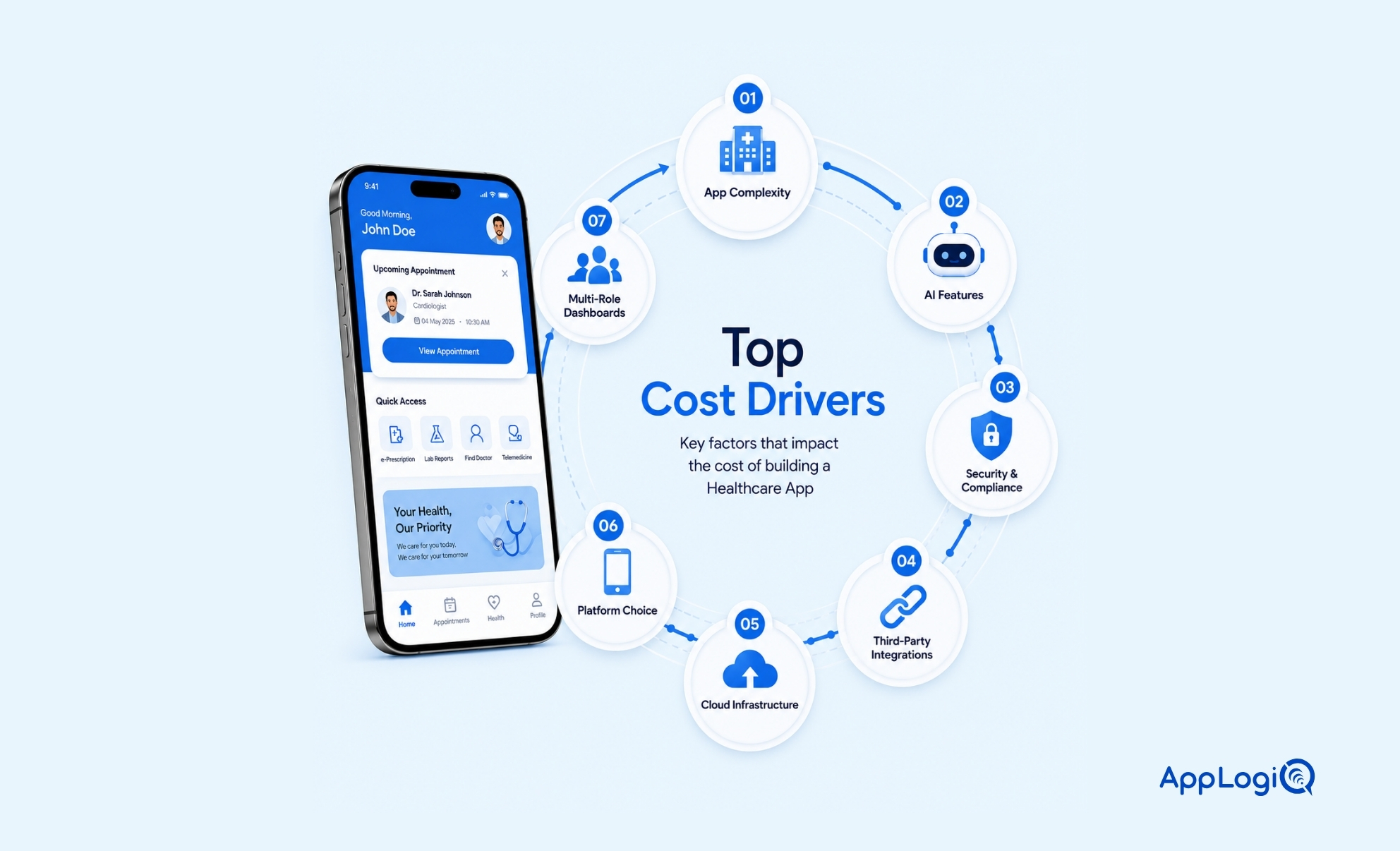
Healthcare app development costs in the Middle East vary significantly based on app complexity, features, integrations, compliance requirements, and technology choices.
Basic healthcare apps may cost around $12,000–$40,000, while advanced and enterprise healthcare platforms can reach $160,000–$300,000+.
Development complexity is the biggest cost driver, particularly when applications require EHR/EMR integration, AI, telemedicine, wearables, or hospital systems.
Healthcare apps typically take 3–6 months for an MVP, while complex enterprise platforms can require 12–18 months.
Security and regulatory compliance are essential because healthcare applications handle sensitive patient information and require strong authentication, encryption, access controls, and monitoring.
AI can enhance healthcare applications through symptom checking, clinical decision support, medical imaging, predictive analytics, chatbots, and automated documentation.
Third-party integrations significantly affect cost and development time, especially EHR/EMR, laboratory, pharmacy, insurance, payment, video consultation, and wearable integrations.
Launching an MVP first can reduce initial investment while allowing businesses to validate their concept before adding advanced capabilities such as AI, analytics, and remote patient monitoring.
The UAE and Saudi Arabia present strong opportunities for healthcare technology, with Saudi Arabia identified as the region's largest digital health market and the UAE as a fast-growing market.
A scalable technology architecture is important for long-term growth, allowing healthcare platforms to add AI, multilingual capabilities, wearable integrations, and regional compliance requirements without rebuilding the entire application.
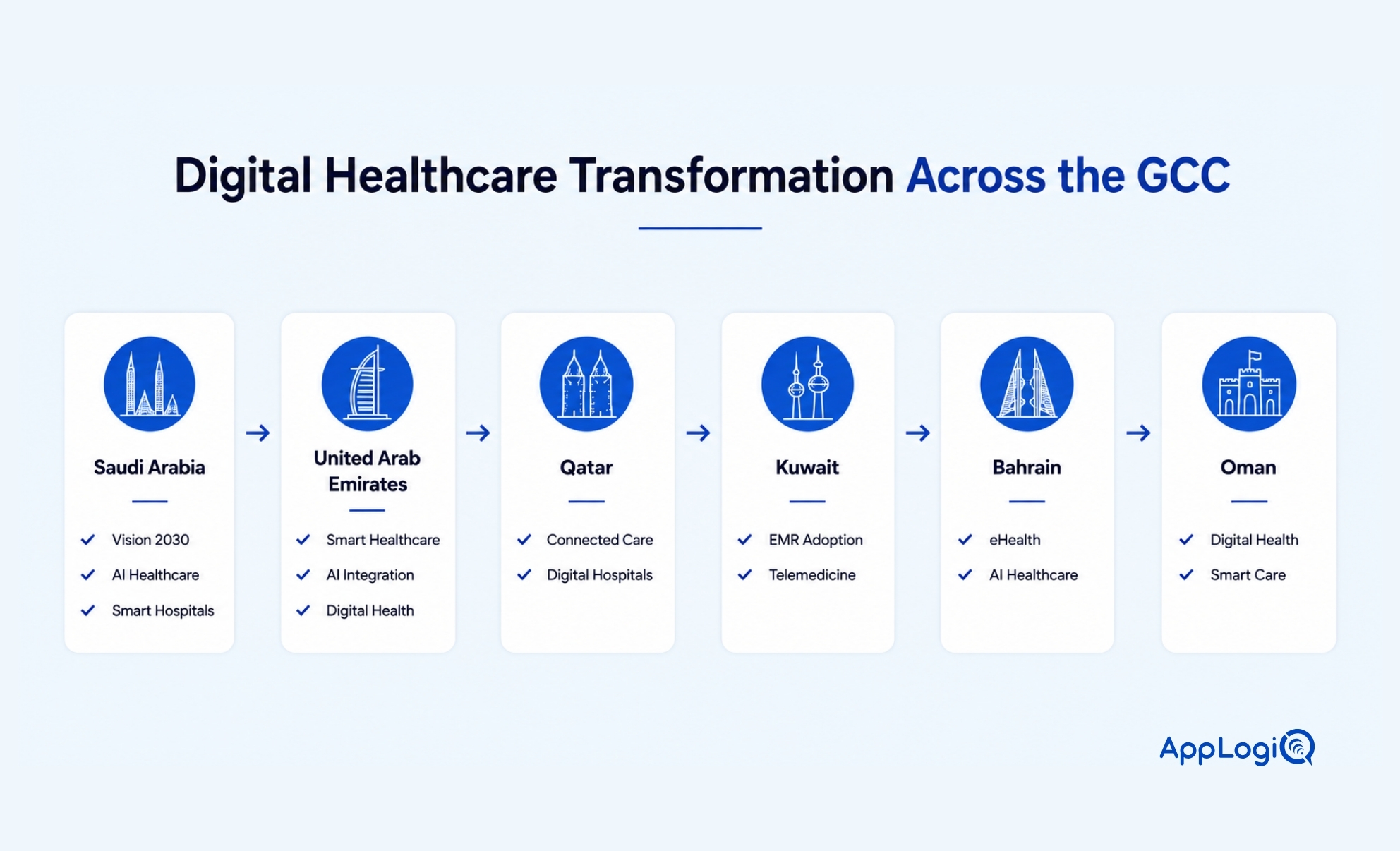
The Middle East is rapidly emerging as one of the world's fastest-growing digital healthcare markets. Governments across Saudi Arabia, the United Arab Emirates (UAE), Qatar, Kuwait, Bahrain, and Oman are investing heavily in digital transformation to improve healthcare accessibility, operational efficiency, and patient outcomes.
Healthcare providers are embracing technologies such as telemedicine, artificial intelligence (AI), electronic health records (EHR), remote patient monitoring (RPM), cloud computing, and mobile healthcare applications to modernize care delivery. These investments are creating significant opportunities for healthcare startups, hospitals, insurance providers, and technology companies looking to build innovative healthcare solutions.
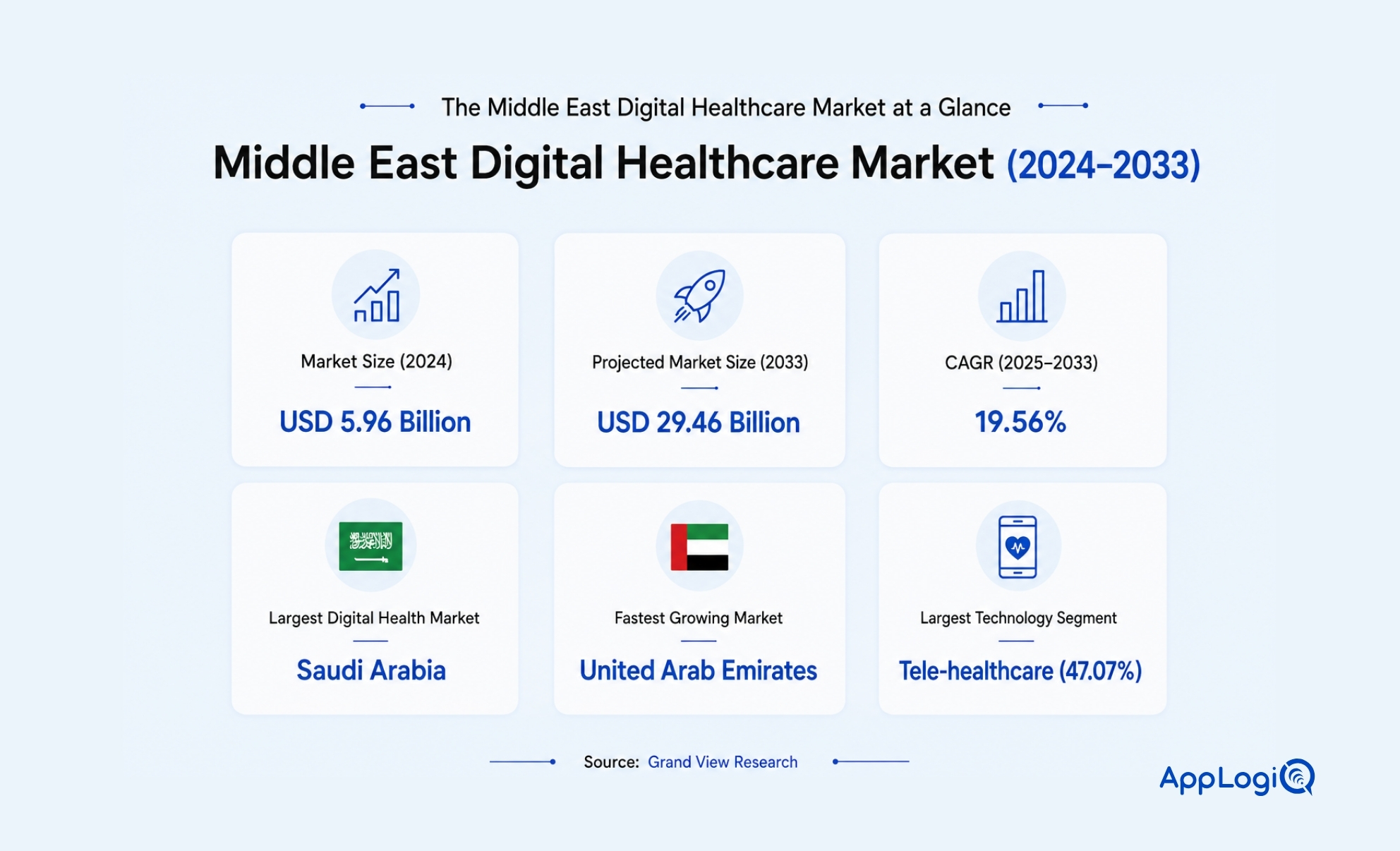
The Middle East digital health market was valued at USD 5.96 billion in 2024 and is projected to reach USD 29.46 billion by 2033, growing at a 19.56% CAGR from 2025 to 2033. The report also highlights Saudi Arabia as the largest digital health market in the region, while the United Arab Emirates (UAE) is expected to experience the fastest growth.
This remarkable growth reflects increasing government investment, widespread smartphone adoption, expanding internet connectivity, supportive healthcare policies, and growing demand for digital healthcare services throughout the GCC.
Whether you're planning to launch a telemedicine platform, develop an AI-powered healthcare application, build a hospital management system, or create a patient engagement platform, understanding healthcare app development costs is essential for planning your investment.
Middle East Healthcare Market Overview
Healthcare systems across the Middle East are undergoing a digital revolution. Governments are prioritizing healthcare modernization to address growing populations, increasing chronic disease rates, and rising expectations for accessible, technology-enabled care.
Digital transformation is no longer optional—it's becoming a strategic priority for healthcare organizations across the GCC.
According to Grand View Research, several factors are driving digital healthcare adoption throughout the Middle East:
National digital health strategies
Expansion of telemedicine services
AI-powered diagnostics
Smart hospital initiatives
Increasing chronic disease prevalence
Growing smartphone penetration
Cloud-based healthcare infrastructure
Healthcare data interoperability
Remote patient monitoring
Government-backed healthcare innovation programs
These initiatives are reshaping how healthcare services are delivered across the region.
Middle East Digital Healthcare by Country
🇸🇦 Saudi Arabia
Saudi Arabia is leading the Middle East's digital healthcare transformation through Vision 2030. The government continues to invest in AI, smart hospitals, electronic medical records, telemedicine, and digital patient services.
According to Grand View Research, Saudi Arabia accounted for 39.77% of the Middle East digital health market revenue in 2024, making it the largest market in the region.
The UAE has positioned itself as one of the region's most advanced healthcare technology markets. Government initiatives continue to encourage AI adoption, virtual healthcare, smart hospitals, and digital patient experiences.
According to Grand View Research, the UAE is expected to be the fastest-growing digital health market in the Middle East during the forecast period.
Qatar continues investing in healthcare innovation through digital transformation, connected care, and smart healthcare infrastructure. The country's healthcare providers increasingly rely on digital platforms to improve operational efficiency and patient engagement.
🇰🇼 Kuwait
Healthcare organizations in Kuwait continue modernizing hospital infrastructure through digital patient records, appointment management systems, telemedicine, and integrated healthcare platforms.
🇧🇭 Bahrain
Bahrain continues expanding digital healthcare by improving healthcare accessibility through AI-powered services, patient engagement platforms, and connected healthcare technologies.
🇴🇲 Oman
Oman is investing in healthcare modernization through digital health initiatives focused on improving healthcare accessibility, interoperability, and patient-centered care.
Why Healthcare Apps Are Growing in the Middle East
The healthcare industry is evolving beyond traditional hospital visits. Patients increasingly expect healthcare services that are accessible through smartphones, wearable devices, and digital platforms.
Healthcare providers are responding by investing in applications that improve patient engagement, automate administrative tasks, reduce operational costs, and enhance clinical decision-making.
According to Grand View Research, the Tele-healthcare segment accounted for 47.07% of the Middle East digital health market in 2024, making it the largest technology segment. Government investments, virtual care infrastructure, and remote patient monitoring are major contributors to this growth.
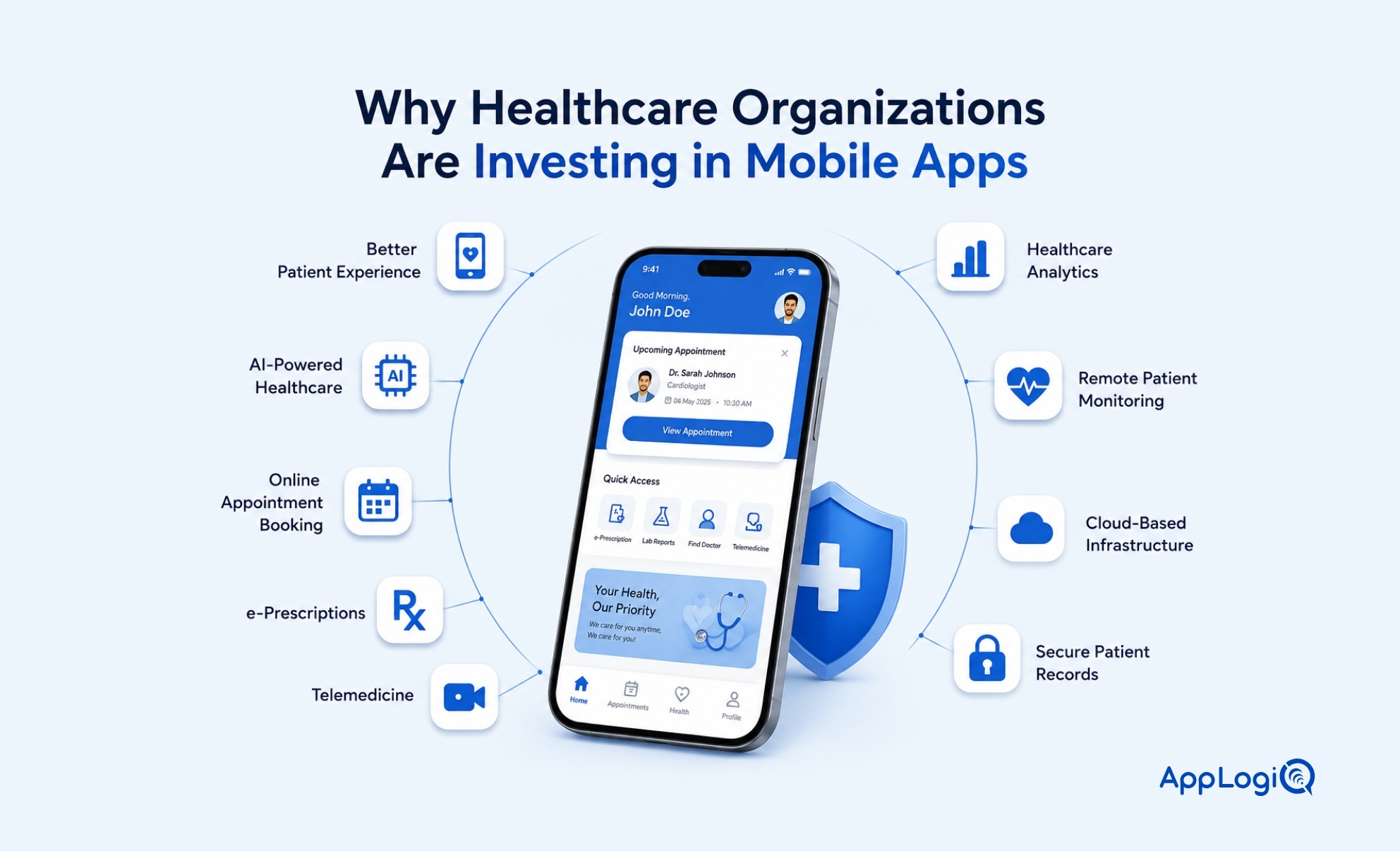
Healthcare organizations are building applications for:
Virtual consultations
Online appointment scheduling
Electronic prescriptions
Patient engagement
Remote patient monitoring
AI-powered diagnostics
Medical imaging
Electronic medical records
Healthcare analytics
These digital solutions not only improve patient experiences but also enable providers to scale services more efficiently.
Healthcare App Development Cost in the Middle East
One of the first questions healthcare organizations ask before starting a digital health project is: How much does it cost to develop a healthcare app in the Middle East?
The answer depends on your app's complexity, target users, regulatory requirements, integrations, and technology stack. A simple patient appointment application requires significantly less investment than an enterprise healthcare platform that integrates Electronic Health Records (EHR), AI-powered diagnostics, wearable devices, and hospital information systems.
Rather than focusing on a single number, it's more useful to understand the key factors that influence development costs. This helps healthcare organizations create realistic budgets and prioritize the features that deliver the greatest business value.
Healthcare App Development Cost in Saudi Arabia
The cost of developing a healthcare app in Saudi Arabia depends on the app's complexity, features, integrations, security requirements, and compliance needs. A basic patient appointment or healthcare information app may require a lower investment, while advanced platforms with telemedicine, EHR/EMR integration, AI, remote patient monitoring, or multiple user roles require significantly more development effort.
App Type
Estimated Development Cost
Basic Healthcare App
$12,000–$40,000
Mid-Level Healthcare App
$40,000–$80,000
Advanced Healthcare Platform
$80,000–$160,000+
Costs can also increase when the application requires integration with hospital systems, payment gateways, wearable devices, healthcare APIs, or other clinical platforms.
Healthcare App Development Cost in UAE
In the UAE, healthcare app development costs vary depending on the application's functionality, technology stack, integrations, security architecture, and regulatory requirements. A simple patient-facing application will generally cost less than a platform supporting telemedicine, digital health records, AI-powered features, and multiple healthcare providers.
App Type
Estimated Development Cost
Basic Healthcare App
$12,000–$40,000
Mid-Level Healthcare App
$40,000–$80,000
Advanced Healthcare Platform
$80,000–$160,000+
For UAE healthcare businesses, additional costs may come from integrations, data security, cloud infrastructure, multilingual support, and specialized healthcare workflows.
Healthcare App Development Cost in Dubai
The cost of healthcare app development in Dubai depends largely on the type of application and the features required. Apps with appointment booking, patient profiles, payments, and basic communication require less investment than telemedicine platforms or applications integrating AI, EHR/EMR systems, wearables, and advanced analytics.
App Type
Estimated Development Cost
Basic Healthcare App
$12,000–$40,000
Advanced Healthcare App
$60,000–$120,000+
Dubai-based healthcare startups and providers should also account for cloud hosting, third-party integrations, security, maintenance, and ongoing updates when calculating the total cost. Healthcare App Development Cost in Abu Dhabi
The cost of developing a healthcare app in Abu Dhabi varies according to the application's complexity, integrations, security requirements, and clinical functionality. A basic patient engagement app can have a relatively lower development cost, while platforms involving telemedicine, EHR/EMR integration, AI, or complex clinical workflows require a larger budget.
App Type
Estimated Development Cost
Basic Healthcare App
$12,000–$40,000
Mid-Level Healthcare App
$40,000–$80,000
Advanced Healthcare Platform
$80,000–$160,000+
Organizations should also consider integration, infrastructure, security, testing, maintenance, and compliance-related expenses when estimating the complete project budget.
Healthcare App Development Cost in Qatar
The cost of healthcare app development in Qatar depends on the application's features, complexity, integrations, security requirements, and scalability. Basic applications for appointments, patient communication, or healthcare information require less development effort, while telemedicine, EHR/EMR, AI, and remote monitoring platforms require a higher investment.
App Type
Estimated Development Cost
Basic Healthcare App
$12,000–$40,000
Mid-Level Healthcare App
$40,000–$80,000
Advanced Healthcare Platform
$80,000–$160,000+
Additional expenses may include healthcare system integrations, cloud infrastructure, security testing, multilingual functionality, maintenance, and third-party services.
" The figures below represent estimated industry ranges based on current healthcare software development benchmarks. Final costs vary depending on project scope, compliance requirements, integrations, development partner, and deployment strategy."
Estimated Healthcare App Development Cost by Complexity
These ranges align with several 2026 healthcare software development guides, which consistently show that compliance, integrations, and advanced clinical workflows are the primary drivers of cost.
Cost Breakdown by Development Stage
Healthcare application development involves multiple phases, each contributing to the overall investment.
Development Stage
Estimated Share of Budget
Discovery & Planning
5–10%
UI/UX Design
10–15%
Frontend Development
20–25%
Backend Development
25–30%
API & Third-Party Integrations
10–15%
Quality Assurance & Testing
10–15%
Deployment & DevOps
5–10%
Post-Launch Maintenance
15–20% annually
Each stage plays an important role in ensuring the application is secure, scalable, and compliant with healthcare regulations.
What Factors Influence Healthcare App Development Cost?
1. App Complexity
The number of modules, workflows, and user roles directly impacts development effort.
Examples of complexity:
Basic
Appointment scheduling
Notifications
Patient registration
Medium
Video consultations
Chat
Digital prescriptions
Payments
Advanced
Electronic Medical Records (EMR)
AI-powered diagnostics
Hospital Management
Insurance integrations
2. Platform Selection
Your platform choice significantly affects the overall budget.
Platform
Development Cost
Android
Lower
iOS
Lower
Cross-Platform (Flutter / React Native)
Moderate
Native Android + Native iOS
Higher
Many organizations launch with cross-platform development to reduce time-to-market while maintaining a consistent user experience.
3. UI/UX Design
Healthcare applications must prioritize accessibility, intuitive navigation, and ease of use for patients, doctors, and administrators.
Design costs increase when projects include:
Multiple dashboards
Custom animations
Interactive patient journeys
Accessibility requirements
Multi-language support (English & Arabic)
4. Third-Party Integrations
Healthcare applications rarely operate in isolation.
Common integrations include:
Electronic Health Records (EHR)
Electronic Medical Records (EMR)
Payment Gateways
Video Consultation APIs
Laboratory Systems
Pharmacy Systems
Wearable Devices
SMS & Email Services
Cloud Storage
Each integration requires additional development, testing, and maintenance.
5. Artificial Intelligence
AI has become one of the biggest investment areas in digital healthcare.
Common AI features include:
AI Symptom Checker
Clinical Decision Support
Medical Imaging Analysis
AI Chatbots
AI Voice Assistants
Predictive Analytics
Automated Medical Documentation
Industry guides note that adding AI capabilities can increase project budgets substantially because of model integration, data engineering, validation, and ongoing monitoring.
Healthcare App Development Cost by App Type
App Type
Estimated Cost (USD)
Patient Portal
$20,000–60,000
Telemedicine App
$40,000–80,000
Hospital Management System
$150,000–350,000
EMR / EHR Platform
$100,000–300,000
Pharmacy App
$50,000–150,000
Remote Patient Monitoring
$120,000–250,000
AI Healthcare Platform
$30,000–350,000+
These are indicative industry ranges. Projects involving extensive integrations, AI, or complex compliance requirements may exceed these estimates.
Development Timeline
Phase
Duration
Discovery
2–4 Weeks
UI/UX Design
4–6 Weeks
Development
12–28 Weeks
QA Testing
4–8 Weeks
Deployment
1–2 Weeks
Ongoing Maintenance
Continuous
A typical MVP can often be delivered within 4–6 months, while an enterprise healthcare platform with AI and multiple integrations may require 12–18 months.
"Organizations can reduce initial investment by launching a Minimum Viable Product (MVP) with core features such as appointment scheduling, telemedicine, patient registration, and secure messaging. Additional capabilities—AI diagnostics, wearable integrations, analytics, and advanced clinical workflows—can then be introduced in later development phases based on user feedback and business priorities."
Healthcare App Features That Influence Development Cost
The features you choose for your healthcare application have the biggest impact on the overall development cost. A simple appointment booking app requires far less time and investment than an enterprise healthcare platform with AI-powered diagnostics, Electronic Medical Records (EMR), telemedicine, remote patient monitoring, and hospital management capabilities.
When planning a healthcare application, it's important to prioritize features based on your business goals, target audience, and regulatory requirements. Most successful healthcare apps include separate modules for patients, healthcare providers, and administrators, each designed to streamline specific workflows and improve user experiences.
According to the World Health Organization (WHO), digital health technologies—including telemedicine, mobile health (mHealth), electronic medical records, and AI-assisted healthcare—are transforming how healthcare services are delivered globally, enabling providers to improve accessibility, efficiency, and patient outcomes.
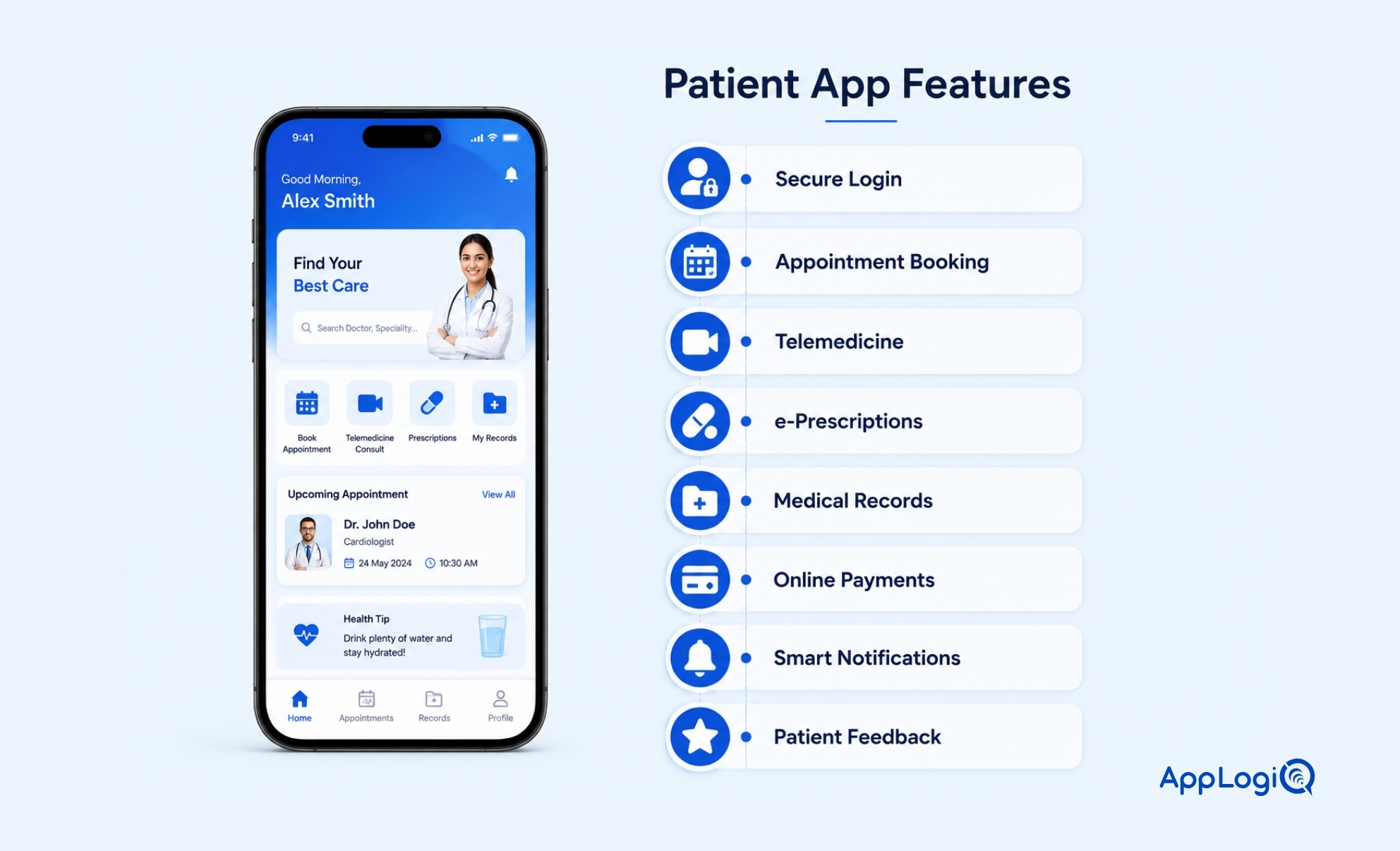
Patients expect healthcare applications to provide secure, convenient, and user-friendly experiences. Modern healthcare apps simplify communication with healthcare providers while improving access to medical services.
User Registration & Secure Login
Every healthcare application should offer secure authentication using:
Email
Mobile Number
OTP Verification
Biometric Authentication
Social Login (Optional)
Multi-factor authentication enhances security and helps protect sensitive patient information.
Profile Management
Patients should be able to manage:
Personal Information
Medical History
Allergies
Insurance Details
Emergency Contacts
Preferred Healthcare Provider
Appointment Booking
Appointment scheduling is one of the most frequently used healthcare app features.
Capabilities include:
Search Doctors
Select Specialization
Choose Date & Time
Real-Time Availability
Appointment Confirmation
Reschedule & Cancellation
Video Consultation (Telemedicine)
Telemedicine has become one of the fastest-growing healthcare technologies across the Middle East.
Key Features:
HD Video Calling
Audio Consultation
In-App Chat
File Sharing
Digital Prescriptions
Consultation Notes
Digital Prescriptions
Doctors can issue electronic prescriptions directly through the application.
Benefits:
Faster prescription delivery
Reduced paperwork
Pharmacy integration
Improved medication tracking
Online Payments
Healthcare apps should support secure digital payments through trusted payment gateways.
Secure access empowers patients while reducing administrative workload.
Essential Features for Doctors
Healthcare professionals require tools that improve clinical efficiency while reducing administrative burden.
Doctor Dashboard
The dashboard provides an overview of:
Today's Appointments
Patient Queue
Consultation History
Notifications
Revenue Summary
Patient Medical Records
Doctors should have secure access to:
Patient History
Allergies
Medications
Lab Reports
Imaging
Previous Consultations
Schedule Management
Healthcare providers can:
Configure Working Hours
Accept Appointments
Block Time Slots
Manage Leave
Handle Emergency Consultations
Clinical Notes
Doctors can record:
Diagnosis
Treatment Plans
Follow-Up Recommendations
Clinical Observations
Digital Prescription Management
Healthcare providers can:
Generate Prescriptions
Renew Medications
Send Prescriptions to Pharmacies
Track Medication History
Video Consultation Dashboard
Doctors can:
Start Secure Video Calls
Exchange Files
Review Patient Records
Generate Consultation Notes
Essential Features for Administrators
The Admin Panel serves as the operational hub of the healthcare platform, enabling organizations to manage users, monitor system performance, and ensure compliance.
User Management
Administrators can manage:
Patients
Doctors
Nurses
Staff
Healthcare Organizations
Appointment Management
Features include:
Appointment Monitoring
Schedule Adjustments
Resource Allocation
Consultation Analytics
Content Management
Administrators can update:
Healthcare Information
FAQs
Educational Content
Notifications
Policies
Analytics Dashboard
A centralized dashboard provides insights into:
Active Users
Appointment Volume
Revenue Trends
Consultation Statistics
User Engagement
System Performance
Reports
Generate reports for:
Patient Growth
Revenue
Doctor Performance
Appointment Trends
Platform Usage
Security Management
Healthcare administrators should be able to:
Manage User Permissions
Configure Access Levels
Monitor Audit Logs
Detect Suspicious Activity
Feature Comparison
Feature
Patient
Doctor
Admin
Registration
✅
✅
✅
Appointment Booking
✅
✅
✅
Video Consultation
✅
✅
❌
Medical Records
✅
✅
✅
e-Prescriptions
View
Create
Monitor
Payments
✅
❌
Monitor
Notifications
✅
✅
✅
Analytics
❌
Limited
✅
User Management
❌
❌
✅
How Features Affect Development Costs
Every additional feature increases the scope of development. Features such as secure messaging, telemedicine, AI-driven diagnostics, wearable device integration, multilingual support (English and Arabic), and healthcare compliance require more design, engineering, testing, and maintenance effort.
When planning your healthcare app, it's often best to start with a Minimum Viable Product (MVP) that includes the core features needed to solve your users' problems. More advanced capabilities—such as AI assistants, predictive analytics, and remote patient monitoring—can be introduced in later phases based on user feedback and business priorities.
AI Features and Technology Stack for Healthcare App Development
Artificial Intelligence (AI) is no longer an emerging trend—it has become a fundamental technology for modern healthcare applications. Across the Middle East, healthcare providers are leveraging AI to automate clinical workflows, improve diagnostic accuracy, personalize patient care, and enhance operational efficiency.
According to Grand View Research, AI adoption and tele-healthcare are among the major growth drivers accelerating the Middle East's digital health market, supported by government investments and healthcare modernization initiatives.
Healthcare organizations developing digital health solutions increasingly integrate AI technologies to reduce administrative workloads while delivering faster, data-driven healthcare experiences.
Why AI Matters in Healthcare
Artificial Intelligence enables healthcare organizations to process large volumes of medical data, support clinical decision-making, and improve patient engagement without increasing operational complexity.
Healthcare providers across Saudi Arabia, the UAE, Qatar, Kuwait, Bahrain, and Oman are implementing AI to:
Improve diagnostic accuracy
Automate repetitive administrative tasks
Deliver 24/7 patient support
Predict disease progression
Personalize treatment recommendations
Analyze medical imaging
Reduce hospital readmissions
Optimize appointment scheduling
As governments continue investing in smart hospitals and digital healthcare ecosystems, AI is expected to play an increasingly central role in healthcare innovation throughout the GCC.
AI Features That Add Business Value
AI Symptom Checker
AI-powered symptom checkers allow patients to enter symptoms and receive preliminary health guidance based on clinical knowledge bases.
Benefits include:
Faster triage
Improved patient engagement
Reduced call center workload
Better appointment prioritization
AI Healthcare Chatbot
Healthcare chatbots provide instant assistance by answering frequently asked questions, helping patients book appointments, sharing medication reminders, and guiding users through healthcare services.
Common use cases include:
Appointment booking
Hospital information
Prescription reminders
Frequently asked questions
Patient onboarding
Health education
Clinical Decision Support
Clinical Decision Support Systems (CDSS) assist physicians by analyzing patient records and recommending evidence-based treatment options.
These systems help healthcare providers:
Identify potential drug interactions
Reduce medical errors
Improve treatment planning
Support faster clinical decisions
Medical Imaging Analysis
AI models can analyze medical images such as X-rays, CT scans, MRI scans, and ultrasound images to identify patterns that may assist healthcare professionals during diagnosis.
Applications include:
Tumor detection
Fracture identification
Lung disease analysis
Cardiovascular imaging
Cancer screening
Predictive Analytics
Predictive analytics enables healthcare organizations to anticipate future events using historical and real-time patient data.
Examples include:
Predicting hospital readmissions
Identifying high-risk patients
Forecasting disease progression
Optimizing hospital resource allocation
AI Voice Assistants
Voice-enabled AI simplifies interactions for patients and clinicians.
Common capabilities include:
Voice appointment booking
Medical dictation
Voice navigation
Medication reminders
Accessibility support
Remote Patient Monitoring
Connected medical devices continuously transmit patient health data to healthcare providers.
Selecting the right technology stack is essential for building secure, scalable, and high-performing healthcare applications.
Frontend Technologies
Mobile Development
Flutter
React Native
Web Development
React.js
Next.js
Angular
These technologies support responsive user interfaces across Android, iOS, and web platforms while reducing development time.
Backend Technologies
A robust backend manages authentication, patient records, scheduling, integrations, and business logic.
Recommended technologies include:
Node.js
Python (FastAPI or Django)
Java (Spring Boot)
.NET
Database
Healthcare applications require secure and scalable databases.
Popular choices include:
PostgreSQL
MySQL
MongoDB
Firebase Firestore (for selected use cases)
Cloud Infrastructure
Cloud platforms provide scalability, high availability, backup, and disaster recovery.
Recommended providers:
Amazon Web Services (AWS)
Microsoft Azure
Google Cloud Platform (GCP)
Healthcare organizations often choose cloud environments that offer compliance tools, encryption, and secure identity management.
Video Consultation APIs
For telemedicine applications:
WebRTC
Agora
Twilio
Zoom SDK
These APIs enable secure, high-quality audio and video consultations.
Payment Gateway Integration
Healthcare apps commonly integrate:
Stripe
PayPal
HyperPay
Regional payment providers
Notification Services
Push notifications and messaging can be delivered using:
Firebase Cloud Messaging (FCM)
Apple Push Notification Service (APNs)
SMS gateways
Email services
Security Technologies
Healthcare applications should incorporate:
OAuth 2.0
OpenID Connect
Multi-Factor Authentication (MFA)
SSL/TLS encryption
AES-256 data encryption
Role-Based Access Control (RBAC)
These technologies help protect sensitive patient information and strengthen application security.
Third-Party Integrations
Healthcare applications often integrate with external systems to streamline operations and improve patient care.
Common integrations include:
Electronic Medical Records (EMR)
Electronic Health Records (EHR)
Laboratory Information Systems (LIS)
Radiology Information Systems (RIS)
Pharmacy Management Systems
Insurance Verification Services
Wearable Devices
Payment Gateways
SMS & Email Services
While these integrations add significant value, they also increase development effort, testing requirements, and overall project cost.
Future-Ready Healthcare Platforms
Healthcare organizations should design applications with scalability in mind. A modular architecture makes it easier to introduce new capabilities—such as AI-powered diagnostics, multilingual support, wearable integrations, or additional regional compliance features—without rebuilding the entire platform.
Building on a scalable technology foundation also helps reduce long-term maintenance costs and supports future expansion across Middle Eastern markets.
Why Choose AppLogiQ for Healthcare App Development in the Middle East?
Building a healthcare application requires more than technical expertise. It demands a deep understanding of healthcare workflows, data security, regulatory expectations, user experience, and scalable cloud architecture.
At AppLogiQ, we help healthcare providers, startups, hospitals, clinics, and enterprises build secure, scalable, and future-ready digital health solutions tailored to their business goals.
Our Healthcare App Development Expertise
We specialize in developing a wide range of healthcare solutions, including:
Telemedicine Applications
Patient Engagement Platforms
Electronic Medical Record (EMR) Systems
Electronic Health Record (EHR) Solutions
Hospital Management Systems
Pharmacy Management Applications
Remote Patient Monitoring (RPM) Platforms
AI-Powered Healthcare Applications
Healthcare CRM Solutions
Medical Billing & Revenue Cycle Management Software
Whether you're launching a new healthcare startup or modernizing an existing healthcare ecosystem, our team can help transform your vision into a high-performing digital product.
Our Healthcare Development Process
Our structured development methodology helps minimize risk while ensuring quality and scalability.
Step 1: Discovery & Strategy
We begin by understanding your business objectives, user requirements, and healthcare workflows to define a clear project roadmap.
Step 2: UI/UX Design
Our design team creates intuitive, accessible, and patient-friendly interfaces optimized for healthcare users.
Step 3: Agile Development
Using agile methodologies, we develop scalable mobile and web applications with regular sprint reviews and transparent communication.
Step 4: Security & Compliance
Security is integrated throughout the development lifecycle using encryption, secure authentication, role-based access control, and industry best practices.
Step 5: Testing & Quality Assurance
Comprehensive testing ensures application reliability, performance, usability, and security before launch.
Step 6: Deployment & Ongoing Support
We assist with deployment, monitoring, maintenance, feature enhancements, and long-term product evolution.
Industries We Serve
Our healthcare technology expertise supports organizations across multiple sectors, including:
Hospitals
Multi-Specialty Clinics
Diagnostic Laboratories
Telemedicine Providers
HealthTech Startups
Pharmaceutical Companies
Dental Clinics
Mental Health Platforms
Rehabilitation Centers
Home Healthcare Providers
Health Insurance Companies
Wellness & Fitness Platforms
Why Businesses Choose AppLogiQ
Healthcare organizations choose AppLogiQ because we focus on building solutions that are secure, scalable, and aligned with long-term business goals.
What Sets Us Apart?
Healthcare Domain Expertise
AI & Automation Capabilities
Secure Cloud Architecture
Cross-Platform Mobile Development
Scalable Enterprise Solutions
User-Centric Design
Agile Delivery Methodology
End-to-End Product Development
Transparent Communication
Post-Launch Support & Maintenance
Frequently Asked Questions
How much does it cost to develop a healthcare app in the Middle East?
Healthcare app development costs vary based on app complexity, features, integrations, compliance requirements, and development approach. Basic applications generally require a lower investment than enterprise platforms with AI, telemedicine, and EHR integrations.
How long does it take to build a healthcare app?
Development timelines typically range from 3–6 months for a Minimum Viable Product (MVP) to 12–18 months for enterprise-grade healthcare platforms.
What factors influence healthcare app development costs?
Major cost factors include:
Feature complexity
Platform selection
UI/UX design
Third-party integrations
AI capabilities
Security requirements
Compliance needs
Cloud infrastructure
Which countries are covered by this guide?
This guide focuses on healthcare app development across:
Saudi Arabia
United Arab Emirates (UAE)
Qatar
Kuwait
Bahrain
Oman
What technologies are commonly used for healthcare app development?
Common technologies include Flutter, React Native, React.js, Node.js, Python, Java, .NET, PostgreSQL, AWS, Azure, and Google Cloud Platform.
Is AI necessary for a healthcare app?
Not every application requires AI. However, AI can significantly enhance patient engagement, diagnostics, workflow automation, predictive analytics, and operational efficiency.
Can healthcare apps integrate with EMR and EHR systems?
Yes. Modern healthcare applications can integrate with Electronic Medical Records (EMR), Electronic Health Records (EHR), laboratory systems, pharmacy platforms, insurance providers, and wearable devices using secure APIs.
Why is data security important for healthcare apps?
Healthcare applications process sensitive patient information, making strong security practices—such as encryption, authentication, access controls, and monitoring—essential for protecting privacy and maintaining trust.
Should I build an MVP first?
Launching with an MVP allows organizations to validate their idea, gather user feedback, and reduce initial investment before expanding with advanced features.
How can AppLogiQ help my healthcare business?
AppLogiQ provides end-to-end healthcare software development services—from strategy and design to development, deployment, and long-term support—helping organizations build secure, scalable digital health solutions.
You May Also Like
More Related Articles
Discover our services designed for excellence in your product development journey.