Hospital Management Software Development Cost: Features, Factors & Pricing
15 mins read
|vicknesh
Key Takeaways
Hospital management software centralizes clinical, administrative, financial, and operational workflows across hospitals and clinics.
Custom HMS development can connect patient management, appointments, EMR/EHR, billing, pharmacy, laboratory, inventory, and reporting within a unified platform.
Healthcare integrations with EHR/EMR, HL7, FHIR, PACS, laboratory systems, payment gateways, and insurance platforms enable seamless data exchange.
AI-powered hospital solutions can automate repetitive tasks, support decision-making, improve scheduling, enhance patient engagement, and provide actionable insights.
Cloud-based hospital management systems improve accessibility, scalability, collaboration, and operational efficiency while supporting secure healthcare data management.Security and compliance should be built into the system architecture through access controls, encryption, audit trails, and applicable healthcare regulations.
Security and compliance should be built into the system architecture through access controls, encryption, audit trails, and applicable healthcare regulations.
Development cost depends on the software's features, integrations, technology stack, AI capabilities, deployment model, customization, and ongoing maintenance requirements.
What Is Hospital Management Software?
Hospital management software is a digital platform designed to help healthcare organizations manage clinical, administrative, financial, and operational activities through connected workflows. Instead of relying on disconnected systems, spreadsheets, or manual records, hospitals can use a centralized platform to coordinate processes such as patient registration, appointments, billing, pharmacy, laboratory operations, inventory, staff management, and reporting.
A well-designed system does more than digitize individual tasks. It connects information across departments so authorized staff can access relevant data when it is needed. This can help reduce repetitive data entry, improve operational visibility, and support more coordinated healthcare delivery. The World Health Organization (WHO) describes health information systems as important for collecting, analyzing, reporting, and using health data to support decision-making.
The exact scope of a hospital management platform varies according to the organization's size, specialties, workflows, and technology environment. A small clinic may need appointment, patient, billing, and prescription capabilities, while a multi-specialty hospital may require EHR/EMR integration, laboratory and pharmacy systems, revenue cycle management, patient portals, analytics, and interoperability with external healthcare systems.
The hospital information system market is experiencing significant growth, reaching $63.81 billion in 2024 and expected to hit $116.76 billion by 2030, at a 10.6% CAGR. This expansion highlights the rising need for digital hospital management solutions that streamline operations, connect healthcare data, and support more efficient care delivery.
Hospital Management System vs. Hospital Information System
Hospital Management System (HMS) and Hospital Information System (HIS) are closely related terms, and many healthcare technology providers use them interchangeably. However, their emphasis can differ based on the platform's scope and implementation.
An HMS generally focuses on managing the operational and administrative activities required to run a hospital or clinic. Common areas include:
Patient registration and appointment scheduling
Admission, discharge, and transfer management
Doctor and staff management
Billing and payment processing
Pharmacy and inventory management
Laboratory workflows
Bed and room management
Reporting and analytics
A HIS generally has a broader information-management role, connecting clinical and administrative data across hospital departments. WHO research describes hospital information systems as computer-based systems used to coordinate care and manage hospital data, while emphasizing interoperability between areas such as patient administration, pharmacy, laboratories, and EHRs.
Hospital Management System
Hospital Information System
Primarily emphasizes hospital operations and management
Focuses more broadly on hospital information and departmental connectivity
Often includes administrative and financial modules
Can connect clinical, administrative, and operational information
May be designed around specific hospital workflows
Can provide a wider information infrastructure
Can integrate with EHR/EMR and external systems
Often emphasizes information exchange across multiple systems
The distinction is not always absolute. A modern HMS can include many HIS capabilities, while an HIS may contain comprehensive hospital management functions. For organizations planning a new solution, the more important consideration is whether the system can support required workflows, integrate with existing technologies, and exchange information securely and reliably.
Interoperability is particularly important when multiple healthcare applications need to communicate. For example, HL7 FHIR provides a widely used framework for representing and exchanging health information through modern APIs.
How HMS Supports Hospitals and Clinics
Hospitals operate through interconnected clinical and administrative processes. A patient's journey can involve registration, consultation, diagnostics, pharmacy, billing, insurance, follow-up, and several internal departments. Hospital management software can bring these workflows into a coordinated digital environment.
1. Streamlines patient administration
HMS can organize patient registration, appointment scheduling, admissions, discharge, and other front-office activities. This helps staff manage routine processes from a centralized system rather than maintaining separate records for each activity.
2. Connects clinical and administrative workflows
Clinical services depend on administrative functions such as billing, insurance, scheduling, inventory, and resource allocation. Connecting these processes can reduce information silos and give authorized teams better visibility into the patient's overall journey.
3. Improves resource management
Hospitals need to continuously manage beds, rooms, medical equipment, medicines, supplies, and staff availability. Centralized operational data can help administrators monitor utilization and make more informed resource-allocation decisions.
4. Supports reporting and decision-making
HMS can consolidate operational information into dashboards and reports covering areas such as patient volumes, appointments, revenue, inventory, resource utilization, and departmental performance. Reliable health facility data is important for managing services, monitoring performance, and allocating resources effectively.
5. Enables system interoperability
Healthcare organizations rarely operate with a single application. An HMS may need to communicate with EHR/EMR platforms, laboratory information systems, PACS, pharmacies, insurance systems, payment providers, and medical devices.
Interoperability allows information to move between systems instead of remaining trapped in individual applications. WHO identifies integration and interoperability as important components of stronger health information systems, while ONC highlights interoperability's role in enabling access to and exchange of electronic health information.
6. Enhances patient engagement
Patient-facing capabilities can extend the value of an HMS beyond internal hospital operations. Depending on the implementation, patients may be able to schedule appointments, receive notifications, access selected health information, communicate with providers, and manage payments through web or mobile interfaces.
Ready to Upgrade Your Medical Operations with a Custom Hospital Management System?
Bring your hospital’s day-to-day operations together with a custom Hospital Management System designed to make work simpler, faster, and more connected.
Hospital management software can support different users across clinical, administrative, financial, and operational teams. Access should typically be controlled according to each user's responsibilities so that staff see the information and functions relevant to their roles.
Hospital administrators:
Monitor operations, resources, departmental performance, and organizational reports.
Access patient information and manage nursing, ward, medication-related, and monitoring workflows.
Reception teams:
Handle registration, appointments, admissions, and patient communication.
Billing and finance teams:
Manage charges, invoices, payments, insurance processes, and financial reporting.
Pharmacy teams: Manage prescriptions, dispensing workflows, medicine inventory, and stock levels.
Laboratory teams: Manage test requests, samples, results, and laboratory-related workflows.
Inventory and procurement teams: Track medicines, supplies, equipment, purchasing, and stock movement.
Patients: Interact with patient portals or mobile applications for appointments, communication, records, payments, and other self-service activities.
The size and complexity of the user base depend on the healthcare organization. A single-specialty clinic may require a focused solution, whereas a large hospital network may need a scalable platform with multiple departments, integrations, analytics, and role-based access.
Ultimately, hospital management software should be evaluated by how effectively it connects people, processes, data, and technology. The strongest solution is not necessarily the one with the most modules; it is the one that fits the organization's workflows, supports interoperability, protects sensitive information, and can evolve as healthcare operations change.
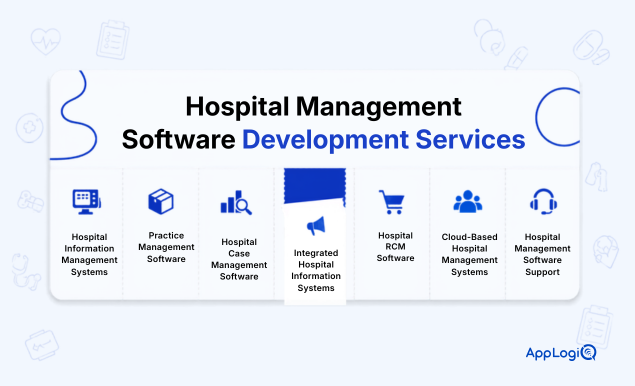
Hospital Management Software Development Services
Hospitals and healthcare providers have different operational needs, so a single off-the-shelf platform may not always fit every workflow. Hospital Management Software Development Services focus on designing and developing customized digital solutions that connect clinical, administrative, financial, and operational processes within a secure technology environment.
A well-planned HMS can be built around the organization's existing workflows, user roles, integration requirements, and scalability goals. Depending on the healthcare setting, the solution can include hospital information systems, practice management, case management, revenue cycle management, cloud infrastructure, and ongoing support.
Hospital Information Management Systems
Hospital Information Management Systems help healthcare organizations centralize and coordinate information generated across departments. These platforms can manage patient registration, appointments, medical records, billing, laboratory operations, pharmacy, inventory, and administrative workflows.
The system can also connect with EHR/EMR platforms and other healthcare applications to reduce information silos. Designing the solution around interoperability standards and clearly defined data flows is particularly important when multiple systems need to exchange patient or operational information.
Practice Management Software
Practice Management Software helps clinics, physician practices, and specialty healthcare providers manage their day-to-day administrative operations. Core capabilities can include patient registration, appointment scheduling, provider calendars, billing, insurance information, and communication workflows.
Custom development allows practices to configure workflows according to their specialties and operating models rather than adapting their processes to a generic application. Integration with clinical systems can further connect administrative activities with patient care workflows.
Hospital Case Management Software
Hospital Case Management Software supports the coordination of patient-related workflows across inpatient and outpatient settings. It can help healthcare teams organize admissions, room and bed assignments, diagnoses, treatment activities, follow-ups, and relevant case information.
A customized solution can also integrate with EMR/EHR platforms, laboratory systems, notification services, and other clinical applications. For complex care environments, centralized case information can give authorized teams better visibility into patient progress and help coordinate activities across departments.
Integrated Hospital Information Systems
Integrated Hospital Information Systems connect multiple hospital applications and operational functions through a unified technology environment. Depending on requirements, integrations may include EHR/EMR platforms, laboratory information systems, PACS, pharmacy applications, insurance systems, payment gateways, and medical devices.
Interoperability should be considered from the architecture stage rather than added as an afterthought. Standards such as HL7 and FHIR can support structured health information exchange between compatible systems. The appropriate integration approach depends on the systems involved, data requirements, security controls, and organizational workflows.
Hospital RCM Software
Hospital RCM Software helps healthcare organizations manage financial processes throughout the revenue cycle. A solution can support activities such as insurance verification, charge capture, claims workflows, payment processing, payment reconciliation, prior authorization, and financial reporting.
Automating repetitive revenue-cycle activities can reduce manual work and provide finance teams with greater visibility into outstanding payments and operational bottlenecks. The exact workflow should be configured around the hospital's billing model, payer relationships, regulatory environment, and existing financial systems.
Cloud-Based Hospital Management Systems
Cloud-Based Hospital Management Systems provide a scalable infrastructure for delivering hospital applications, data, integrations, and services through cloud environments. Depending on the architecture, healthcare organizations can support centralized access, system scalability, automated infrastructure management, backup strategies, and integration with other cloud services.
Cloud adoption should not be treated simply as moving an existing application to a hosted environment. Healthcare organizations need to evaluate identity management, encryption, access controls, data residency, disaster recovery, monitoring, compliance requirements, and integration architecture before selecting a deployment model.
Hospital Management Software Support
Healthcare software requires continuous attention after deployment. Hospital Management Software Support can include application monitoring, issue resolution, security updates, performance optimization, integration maintenance, database management, feature enhancements, and infrastructure support.
Ongoing maintenance is particularly important when the HMS connects with external healthcare systems because APIs, regulatory requirements, infrastructure components, and third-party services can change over time. A structured support strategy helps keep the platform reliable while allowing the organization to introduce new capabilities as its operational requirements evolve.
Key Modules of Hospital Management Software
A modern hospital management platform brings multiple clinical, administrative, and financial functions into a connected environment. Instead of treating every department as a separate system, the right combination of modules can create a unified workflow from patient registration through treatment, billing, discharge, and follow-up.
The exact modules required depend on the hospital's size, specialties, existing systems, and operational priorities. A scalable architecture also allows organizations to introduce additional capabilities as their needs evolve.
Patient Registration & Management
The patient management module creates and maintains a centralized profile containing relevant demographic, contact, appointment, and healthcare information. It can support registration, patient identification, admission details, visit history, and discharge workflows.
Automating registration can reduce repetitive data entry and help staff retrieve patient information more efficiently while maintaining appropriate access controls.
Doctor & Staff Management
Managing healthcare professionals involves more than maintaining employee records. The software can support doctor profiles, staff schedules, department assignments, availability, attendance, and workload management.
Role-based access can ensure that physicians, nurses, administrators, and other personnel access only the functions and information relevant to their responsibilities.
Appointment & Scheduling
Appointment management helps hospitals coordinate consultations, procedures, follow-ups, and provider availability. Scheduling capabilities can include calendar management, appointment reminders, rescheduling, cancellations, and queue management.
Connecting scheduling with patient and provider records can give front-office teams better visibility into daily workloads and reduce scheduling conflicts.
Inpatient & Outpatient Management
HMS can support both inpatient (IPD) and outpatient (OPD) workflows from registration through discharge or follow-up.
For inpatient care, the system can manage admissions, transfers, treatment-related information, and discharge processes. Outpatient workflows can cover consultations, diagnostic orders, prescriptions, follow-up appointments, and associated billing activities.
Clinical Management Software
Hospital management platforms are not limited to large healthcare facilities. Clinic Management System Software can help smaller clinics and specialty practices organize patient registration, appointments, billing, medical records, staff schedules, and daily administrative workflows within a centralized system.
For outpatient centers and independent practices, Clinic Management Software can provide a more focused approach to managing appointments, patient information, billing, prescriptions, and communication while allowing the platform to scale as the practice grows.
Bed & Room Management
Bed and room management provides visibility into hospital capacity and occupancy. Staff can monitor available, occupied, reserved, or maintenance-related beds and associate them with appropriate wards or departments.
When connected with admission and discharge workflows, the module can help reduce manual coordination and provide administrators with a clearer view of resource utilization.
EMR/EHR Management
EMR/EHR management enables authorized healthcare professionals to access and manage digital patient information within the appropriate clinical workflow. Depending on the implementation, this can include medical history, diagnoses, medications, clinical notes, laboratory results, and other relevant records.
Integration capabilities are important when an HMS needs to exchange information with external EHR systems. Interoperability standards such as HL7 FHIR can support structured health information exchange between compatible systems.
Pharmacy Management
Pharmacy management helps organize prescriptions, medicine dispensing, stock levels, purchase records, and inventory movement. Automated stock tracking can help pharmacy teams monitor availability and identify medicines that require replenishment.
Integration between pharmacy and clinical workflows can also reduce duplicate data entry and provide better visibility into prescription and dispensing activities.
Laboratory Management
A laboratory module can coordinate test requests, sample collection, processing, result entry, and report availability. Integration with laboratory information systems can allow relevant results to move between systems without relying entirely on manual transcription.
For hospitals handling high volumes of diagnostic testing, connected laboratory workflows can improve operational visibility and make results more accessible to authorized clinical teams.
Inventory Management
Inventory management covers medicines, medical supplies, equipment, consumables, and other resources required for daily hospital operations. The system can track stock levels, purchase orders, suppliers, consumption, transfers, and replenishment requirements.
Real-time inventory visibility can help organizations identify shortages, reduce unnecessary overstocking, and improve procurement planning.
Billing & Payments
The billing module connects services delivered to their corresponding financial transactions. Depending on the hospital's requirements, it can support consultation charges, procedures, room charges, pharmacy expenses, laboratory services, invoices, discounts, payments, and receipts.
Integration with payment gateways and financial systems can further streamline collection and reconciliation workflows.
Insurance Management
Insurance management can help hospitals organize payer-related information and support processes such as eligibility verification, authorization, claim preparation, claim tracking, and payment reconciliation.
Connecting insurance workflows with patient records and billing data can reduce repeated information entry and give finance teams better visibility into claim status.
Reporting & Analytics
Reporting and analytics transform operational data into information that hospital administrators can use for monitoring and planning. Dashboards can cover areas such as patient volumes, appointment performance, bed occupancy, revenue, inventory, staff utilization, and departmental activity.
More advanced analytics can help identify operational patterns and bottlenecks. However, the usefulness of these insights depends on the quality, consistency, security, and governance of the underlying data.
Hospital Information System (HIS) and Practice Management System (PMS)
Hospitals and healthcare practices manage a combination of clinical, administrative, and financial activities. A Hospital Information System (HIS) and Practice Management System (PMS) address different operational needs, but they can work together to create a more connected healthcare environment.
While HIS is generally designed for broader hospital operations, PMS focuses more specifically on the administrative and operational requirements of medical practices. The right approach depends on the organization's size, specialties, workflows, existing technology, and integration requirements.
HIS for Hospital-Wide Operations
A Hospital Information System (HIS) provides a centralized environment for coordinating information and workflows across multiple hospital departments. It can connect areas such as patient registration, appointments, inpatient services, laboratory operations, pharmacy, billing, inventory, and reporting.
A well-designed HIS can help authorized users access relevant information across departments while reducing reliance on disconnected processes. Depending on the implementation, it may also integrate with EHR/EMR platforms, PACS, laboratory information systems, insurance applications, and other healthcare technologies.
For larger hospitals and healthcare networks, an HIS can provide a foundation for managing complex workflows across multiple departments and locations. Its effectiveness depends heavily on data quality, interoperability, security, and how well the system reflects the organization's actual operational processes.
PMS for Clinical Practice Management
A Practice Management System (PMS) is designed primarily for the operational and administrative needs of clinics, physician practices, specialty centers, and outpatient facilities.
Typical PMS capabilities include:
Patient registration and demographic management
Appointment scheduling
Provider calendar management
Billing and payment processing
Insurance information management
Patient communication
Staff and resource scheduling
Operational reporting
For example, a multi-specialty clinic can use PMS to coordinate provider availability, manage appointments, maintain patient information, and streamline billing activities from a centralized platform.
A PMS can also integrate with clinical systems such as EHR/EMR platforms. This allows administrative workflows and clinical information to work together without requiring staff to repeatedly enter the same information into separate applications.
HIS vs. PMS
Although HIS and PMS can overlap in certain functions, their primary focus is different.
Aspect
HIS
PMS
Primary purpose
Manage and connect hospital-wide information and workflows
Manage clinical practice and administrative operations
EHR/EMR, PACS, LIS, pharmacy, insurance, medical devices
EHR/EMR, payment systems, insurance, communication tools
Scalability
Suitable for complex hospital environments
Suitable for individual or multi-location practices
The distinction is not always absolute. Some modern PMS platforms include extensive clinical capabilities, while HIS platforms may incorporate sophisticated practice-management functions. Therefore, organizations should evaluate the actual modules, integrations, workflows, and scalability of a platform instead of choosing a solution based only on its name.
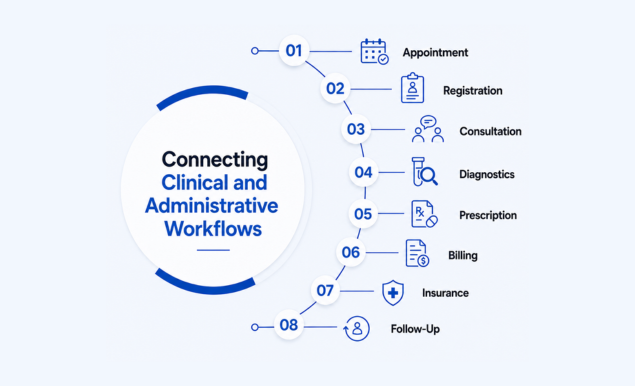
Connecting Clinical and Administrative Workflows
Clinical care and administration are closely connected. A patient's appointment can lead to registration, consultation, diagnostic testing, prescription, billing, insurance processing, and follow-up. If each activity operates independently, healthcare staff may have to enter or verify the same information across multiple systems.
Connecting HIS and PMS capabilities with other healthcare applications can create a more continuous workflow.
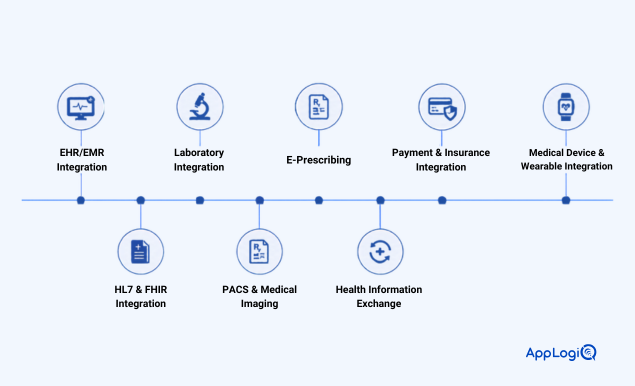
Modern hospitals rarely operate with a single software platform. Patient information, diagnostic results, prescriptions, billing, insurance, medical imaging, and monitoring data may exist across different applications and devices. Hospital Management Software Integrations connect these systems so relevant information can move between authorized users and applications with less manual intervention.
A strong integration strategy should consider interoperability, data quality, security, API capabilities, workflow requirements, and the hospital's existing technology landscape. Rather than connecting every available system, healthcare organizations should prioritize integrations that solve specific operational or clinical gaps.
EHR/EMR Integration
EHR/EMR integration connects hospital management software with electronic health record systems to provide authorized users with relevant patient information across clinical and administrative workflows.
Depending on the implementation, integration can support the exchange of patient demographics, appointments, diagnoses, medications, clinical documentation, laboratory results, and other healthcare information. This can reduce duplicate data entry and help clinicians and administrative teams work from more consistent information.
For organizations already using an EHR or EMR platform, the integration approach should be planned around existing APIs, data models, access controls, and interoperability capabilities rather than attempting to replace the existing system unnecessarily.
HL7 & FHIR Integration
HL7 and FHIR integration supports communication between healthcare applications that need to exchange structured information.
HL7 standards have been widely used for exchanging healthcare data between systems, while FHIR (Fast Healthcare Interoperability Resources) provides a modern, API-oriented approach to representing and exchanging health information. FHIR uses standardized resources and RESTful APIs, making it suitable for many modern healthcare integration scenarios.
For example, a hospital platform may use FHIR-based APIs to exchange patient, appointment, medication, observation, or diagnostic information with compatible healthcare applications.
The appropriate standard depends on the systems involved, the information being exchanged, organizational requirements, and the capabilities of existing infrastructure.
Laboratory Integration
Laboratory integration connects the hospital management platform with laboratory information systems and diagnostic workflows. It can help coordinate test orders, specimen information, result processing, and report delivery.
A typical workflow may look like:
Doctor Orders Test → Laboratory Receives Request → Sample Processing → Result Generated → Result Available to Authorized Clinician
Automating these exchanges can reduce manual transcription and make diagnostic information available more efficiently within the appropriate clinical workflow.
PACS & Medical Imaging
PACS (Picture Archiving and Communication System) integration enables hospital software to work with medical imaging environments used for storing, managing, and accessing diagnostic images.
Depending on the organization's requirements, integration may connect workflows involving X-rays, CT scans, MRI, ultrasound, and other imaging services. DICOM, a widely adopted medical imaging standard, supports the communication and management of medical imaging information.
Connecting imaging workflows with patient and clinical systems can help authorized healthcare professionals locate relevant studies and associate imaging information with the appropriate patient record.
E-Prescribing
E-prescribing integration enables prescriptions to move digitally between healthcare providers, pharmacy systems, and other authorized services.
A connected workflow can allow clinicians to create prescriptions electronically and transmit relevant information to participating pharmacy systems. Depending on the implementation and jurisdiction, additional capabilities may include medication history, refill requests, prescription status, and medication-related alerts.
The integration should include appropriate authentication, authorization, auditability, and data protection controls because medication information is sensitive clinical data.
Health Information Exchange
Health Information Exchange (HIE) enables authorized healthcare organizations and systems to exchange relevant patient information across organizational boundaries.
HIE can be particularly valuable when patients receive care from multiple providers, hospitals, laboratories, or specialist facilities. Instead of relying entirely on patients to carry information between providers, interoperable systems can facilitate appropriate access to available health information.
Successful HIE implementation requires more than technical connectivity. Organizations also need appropriate governance, consent mechanisms, identity management, security controls, data standards, and policies governing how information can be accessed and shared.
Payment & Insurance Integration
Payment and insurance integrations connect clinical and administrative workflows with financial systems. Depending on the healthcare organization's requirements, these integrations can support:
Insurance eligibility verification
Prior authorization workflows
Claims processing
Invoice generation
Payment gateway integration
Electronic payment processing
Payment reconciliation
Insurance claim status tracking
Connecting billing information with patient and service records can reduce repetitive data entry and give finance teams better visibility into outstanding transactions and claims.
Medical Device & Wearable Integration
Hospitals increasingly use connected medical devices and wearable technologies to collect health and operational data. Medical devices and wearable integration can connect appropriate device-generated information with hospital platforms and clinical applications.
Examples can include:
Patient vital-sign monitoring
Blood pressure measurements
Pulse and oxygen saturation data
Glucose monitoring
Activity and wearable health data
Connected bedside equipment
The value of device integration depends on data accuracy, device compatibility, connectivity, clinical validation, and how the resulting information is presented to healthcare professionals. Not every device needs to be directly connected to the HMS; integration should be based on a defined clinical or operational requirement.
Building an Interoperable Hospital Software Ecosystem
Integrations are most valuable when they support a clearly defined healthcare workflow. An effective architecture can connect EHR/EMR, laboratory, imaging, pharmacy, insurance, payment, and medical devices while maintaining appropriate security and access controls.
For hospitals planning a new platform, integration requirements should be considered during the architecture and discovery stages. This helps development teams identify required APIs, data standards, authentication mechanisms, transformation logic, monitoring, and error-handling processes before implementation begins.
Ultimately, the objective of hospital management software integration is not simply to connect more systems. It is to create secure, reliable, and meaningful information flow that reduces fragmentation, supports healthcare professionals, and improves operational efficiency.
Let’s Build a Smarter Hospital Ecosystem
Connect hospital operations, patient care, clinical workflows, and data through secure software built to improve efficiency and support better healthcare delivery.
A patient portal extends hospital management software beyond internal operations by giving patients a secure digital channel to interact with healthcare providers. Instead of depending entirely on phone calls, in-person visits, or manual paperwork, patients can use web or mobile interfaces for selected administrative and care-related activities.
The exact capabilities depend on the healthcare organization's workflows, technology environment, and privacy requirements. A well-designed portal should make common interactions easier while ensuring that sensitive health information remains protected through appropriate authentication, authorization, and security controls.
Online Appointment Scheduling
Online appointment scheduling allows patients to view available slots and request or book appointments through a digital portal. Depending on the implementation, patients may be able to select a physician, specialty, appointment type, date, and preferred time.
Integration with the hospital's scheduling system helps keep provider calendars synchronized and reduces the risk of duplicate or outdated availability. Automated confirmations and reminders can also help patients keep track of upcoming appointments.
Prescription Refill Requests
Patient portals can provide a convenient way for eligible patients to request prescription refills without contacting the hospital manually for every request.
The request can be routed to the appropriate healthcare professional or pharmacy workflow for review. Rather than automatically approving every request, the system can support a controlled process in which authorized clinicians assess the request according to the organization's policies and applicable requirements.
Access to Medical Records
A patient portal can provide patients with secure access to selected health information, depending on the healthcare organization's policies and applicable regulations.
Information may include:
Patient demographics
Visit summaries
Diagnoses
Medications
Allergies
Clinical documents
Selected test results
Care instructions
Providing patients with appropriate access to their information can support greater involvement in their healthcare and reduce the need for staff to manually provide documents for routine requests.
Lab Results
Integrating the patient portal with laboratory systems can allow patients to view eligible test results digitally once they have been reviewed and released according to the provider's workflow.
The portal can present results alongside relevant dates, test names, reference information, and other contextual details. For sensitive or clinically significant results, healthcare organizations may choose to include review workflows or provider communication options rather than simply releasing information without context.
Online Billing and Payments
Digital billing capabilities allow patients to review eligible charges, invoices, payment status, and outstanding balances through the portal.
Integration with secure payment gateways can enable online payment without requiring patients to visit the billing department or make a separate phone call. Payment workflows can also provide digital receipts and help hospital finance teams maintain more consistent transaction records.
Doctor-Patient Communication
Secure messaging can create a controlled communication channel between patients and healthcare teams. Depending on the organization's policies, patients may use the portal to ask non-urgent questions, receive care instructions, request information, or communicate about follow-up activities.
A secure messaging system should clearly distinguish routine digital communication from emergency care. Features such as role-based access, message history, authentication, and audit trails can help organizations manage patient communications responsibly.
Remote Patient Monitoring
Patient portals can also serve as an interface for remote patient monitoring (RPM) when integrated with appropriate healthcare platforms and connected devices.
Depending on the use case, information such as blood pressure, blood glucose, oxygen saturation, heart rate, or other measurements may be collected through approved devices and transmitted to a healthcare platform. Authorized care teams can then review relevant information and identify patients who may require follow-up.
For RPM to be effective, integration should address device compatibility, data accuracy, patient consent, alert thresholds, data security, and clinical workflows. Simply collecting large amounts of device data does not improve care unless healthcare teams have an appropriate process for interpreting and acting on it.
Hospital Revenue Cycle Management Software
Hospital Revenue Cycle Management (RCM) Software helps healthcare organizations manage the financial journey that begins when a patient schedules or receives a service and continues through billing, claims, payments, and reconciliation. By connecting revenue-related workflows with patient, clinical, and administrative systems, RCM technology can reduce manual work and provide finance teams with better visibility into the status of healthcare transactions.
A modern RCM solution should be designed around the hospital's payer mix, billing processes, regulatory environment, existing healthcare systems, and financial workflows. Automation can improve efficiency, but human review remains important for exceptions, complex claims, and decisions that require professional judgment.
Insurance Verification
Insurance verification helps hospitals confirm a patient's coverage information before eligible services are delivered or billed. The workflow can check details such as payer information, coverage status, eligibility, and other relevant insurance data through connected systems.
Automating routine verification can reduce manual calls and data entry while helping front-office and billing teams identify potential coverage issues earlier in the patient journey.
Medical Billing
Medical billing software connects healthcare services with the appropriate financial records and billing workflows. Depending on the organization's requirements, it can support charge capture, invoice generation, coding-related workflows, payment tracking, and patient billing.
When billing is connected with patient registration, clinical systems, pharmacy, laboratory, and other hospital modules, organizations can reduce the need to manually transfer information between departments.
Prior Authorization
Certain healthcare services may require authorization from an insurance payer before they can be covered. Prior authorization workflows can help staff identify applicable requirements, collect supporting information, submit requests, and monitor authorization status.
A centralized workflow can also provide visibility into pending requests and help teams follow up on cases that require additional information or payer action.
Claims Processing
Claims processing involves preparing and submitting billing information to payers and tracking the resulting status. An RCM platform can help organize claim data, identify missing information, manage submission workflows, and monitor responses.
Automated validation can help detect certain data inconsistencies before submission. This can reduce avoidable errors, although complex claims may still require manual review by experienced billing or revenue-cycle professionals.
Payment Processing
Payment processing allows hospitals to manage financial transactions from patients, insurers, or other approved sources. Depending on the implementation, the software can integrate with payment gateways, financial systems, and hospital billing platforms.
A connected payment workflow can support online payments, transaction status tracking, digital receipts, and reconciliation. Strong authentication and appropriate security controls are essential when handling financial and healthcare information.
ERA and Payment Reconciliation
Electronic Remittance Advice (ERA) provides electronic information about how a healthcare claim was processed by a payer, including payment and adjustment details.
Integrating ERA data with the hospital's billing and accounting workflows can help finance teams compare expected and received payments, identify adjustments, track outstanding amounts, and reconcile transactions more efficiently.
Automated reconciliation can reduce spreadsheet-based work and make it easier to identify discrepancies that require investigation.
Audit Trails
Audit trails provide a record of relevant activities performed within the RCM system. Depending on the platform, they can capture events such as changes to billing information, claim updates, authorization activity, payment actions, and user access.
A properly designed audit trail can help organizations investigate discrepancies, monitor system activity, support internal controls, and demonstrate accountability. Access to audit information should itself be appropriately controlled to protect sensitive financial and healthcare data.
Connecting RCM With Hospital Operations
Revenue cycle management becomes more effective when financial workflows are connected with the wider hospital ecosystem. For example:
Connecting these stages can reduce information gaps between clinical, administrative, and finance teams. It also gives organizations a clearer view of where delays or exceptions occur within the revenue cycle.
The objective of Hospital Revenue Cycle Management Software is not simply to automate billing. A well-integrated solution can help hospitals create a more consistent financial workflow, improve transaction visibility, reduce repetitive administrative tasks, and support timely revenue collection while maintaining appropriate security and auditability.
Healthcare organizations generate large volumes of operational, clinical, financial, and patient-related data every day. Hospital Management Software Reporting & Analytics helps turn this information into structured insights that administrators and authorized teams can use to monitor performance, identify bottlenecks, and make informed decisions.
Rather than relying on disconnected spreadsheets and manually prepared reports, an integrated analytics layer can bring relevant information from hospital departments into centralized dashboards. The quality of these insights depends on accurate data, consistent definitions, appropriate access controls, and reliable integration between source systems.
Operational Dashboards
Operational dashboards provide a consolidated view of day-to-day hospital activities. Administrators can monitor metrics such as patient volumes, appointment schedules, bed occupancy, department activity, waiting times, and resource utilization.
Real-time or regularly refreshed dashboards can help teams identify operational bottlenecks earlier and prioritize areas that require attention.
Financial Reporting
Financial reporting provides visibility into the hospital's financial activities and performance. Depending on the system, reports can cover billing, payments, outstanding balances, insurance claims, expenses, and departmental revenue.
Connecting financial data with billing and revenue-cycle workflows can reduce manual reporting and help finance teams identify discrepancies or changes in financial performance.
Patient Satisfaction
Patient experience data can provide valuable insight into how patients perceive healthcare services. Reporting capabilities can consolidate information from surveys, feedback forms, complaints, service ratings, and other approved sources.
Hospitals can use these insights to identify recurring concerns around waiting times, communication, facilities, appointment processes, or other aspects of the patient journey. The objective should be to identify actionable patterns rather than focusing only on individual scores.
Treatment Outcomes
Treatment outcome reporting can help healthcare organizations evaluate the results of care delivered across appropriate patient populations and clinical services.
Depending on the specialty and data available, organizations may track measures such as recovery patterns, readmissions, complications, follow-up adherence, or other clinically relevant outcomes. These metrics should be interpreted by qualified healthcare professionals and considered alongside patient characteristics and clinical context.
Staff Performance
Staff performance analytics can provide operational visibility into workload, scheduling, attendance, appointment volumes, productivity, and resource utilization.
For example, administrators may use dashboards to identify scheduling imbalances or areas where staffing levels do not align with demand. Performance reporting should be designed carefully so that metrics are interpreted within the context of clinical responsibilities, patient complexity, and organizational policies.
Inventory Analytics
Hospitals depend on medicines, medical supplies, equipment, and consumables to maintain daily operations. Inventory analytics can help teams monitor stock levels, consumption patterns, purchase activity, expiry risks, and replenishment requirements.
Historical usage data can support better procurement planning and help organizations identify unusual consumption patterns or potential shortages before they affect operations.
Revenue Analytics
Revenue analytics provides a more detailed view of the financial performance of healthcare services. It can combine information from billing, insurance, claims, payments, and revenue-cycle workflows.
Healthcare organizations may analyze metrics such as revenue by department, payer performance, claim status, outstanding balances, collection patterns, and payment timelines. These insights can help finance teams identify where revenue may be delayed or where operational improvements are needed.
Clinical Quality Reporting
Clinical quality reporting focuses on measurable indicators related to healthcare delivery and service quality. Depending on the organization's specialty, reporting may cover areas such as patient safety, care processes, outcomes, readmissions, infection-related measures, or other approved quality indicators.
A strong reporting framework should use clearly defined metrics and consistent data sources. Where reporting is required for regulatory, accreditation, or quality-improvement purposes, organizations should align the system with the applicable standards and reporting requirements.
Turning Hospital Data Into Actionable Insights
Reporting and analytics are most valuable when they connect information from different parts of the hospital rather than presenting isolated numbers.
For example:
Patient Data → Clinical Activity → Operational Metrics → Billing Data → Financial Insights → Management Decisions
AI Solutions for Hospital Management
Artificial intelligence is increasingly being incorporated into healthcare software to support administrative efficiency, patient engagement, operational planning, and clinical workflows. AI solutions for hospital management can analyze large volumes of structured and unstructured information, identify patterns, automate repetitive tasks, and provide decision-support capabilities.
However, AI should complement healthcare professionals rather than replace clinical judgment. Hospitals should evaluate accuracy, data quality, privacy, security, bias, explainability, and human oversight before deploying AI in patient-facing or clinical environments.
AI-Powered Patient Support
AI-powered patient support can help hospitals handle routine patient interactions through conversational interfaces available on websites, mobile applications, or patient portals.
Depending on the use case, AI can help patients:
Find relevant hospital services
Check appointment information
Receive general administrative guidance
Understand preparation instructions
Navigate hospital processes
Receive reminders and notifications
For clinical questions, AI systems should operate within clearly defined boundaries and direct patients to qualified healthcare professionals when human assessment is required. This approach helps hospitals use automation without presenting AI-generated information as a substitute for professional medical advice.
AI Healthcare Assistants
AI healthcare assistants can support patients, clinicians, and administrative teams by retrieving relevant information, summarizing approved data, or assisting with routine workflows.
For example, an assistant integrated with hospital systems could help authorized staff locate appointment information, summarize relevant records, or answer operational questions based on approved data sources.
When generative AI is used, techniques such as retrieval-augmented generation (RAG), access controls, source validation, and human review can help reduce the risk of unsupported responses. The assistant should also respect user permissions so that sensitive patient information is only available to authorized users.
Predictive Analytics
Predictive analytics uses historical and current data to identify patterns that may help hospitals anticipate operational or patient-related events.
Potential applications include:
Patient volume forecasting
Bed demand prediction
Appointment no-show analysis
Inventory demand forecasting
Readmission risk assessment
Resource planning
Revenue forecasting
Predictions should be treated as decision-support information rather than guaranteed outcomes. Hospitals need to validate models against appropriate datasets and continuously monitor performance to identify changes in accuracy or unintended bias.
Intelligent Scheduling
AI can support scheduling by analyzing factors such as provider availability, appointment types, historical demand, resource capacity, and patient preferences.
An intelligent scheduling system can help identify suitable appointment slots, balance workloads, reduce scheduling conflicts, and improve resource utilization. Hospitals can also use predictive models to anticipate periods of higher demand and adjust scheduling strategies accordingly.
Human oversight remains important for complex appointments, urgent cases, specialist availability, and situations where clinical priorities should take precedence over automated recommendations.
Clinical Decision Support
AI-enabled clinical decision support can assist healthcare professionals by analyzing relevant patient information and presenting evidence-based insights, alerts, or recommendations within appropriate workflows.
Potential applications include identifying patterns in clinical data, supporting risk assessment, highlighting potential medication-related concerns, and assisting with diagnostic or treatment-related decision-making.
Because clinical decisions can have significant consequences, these systems require rigorous validation, appropriate clinical oversight, transparent limitations, and carefully controlled access. AI-generated recommendations should support—not independently determine—clinical decisions.
Automated Administrative Workflows
A significant opportunity for AI in hospital management lies in repetitive administrative processes. AI-powered automation can assist with tasks such as document classification, data extraction, appointment communication, claims-related workflows, patient inquiries, and information routing.
For example, an AI system can extract relevant information from structured or unstructured documents and route it to the appropriate workflow for review. Automation can reduce repetitive manual work while allowing staff to focus on activities that require judgment and human interaction.
The best candidates for automation are usually processes with high volume, predictable rules, measurable outcomes, and clearly defined exception-handling procedures.
AI-Powered Hospital Reporting
Traditional hospital reporting often requires teams to collect information from multiple systems and manually prepare reports. AI can add a more interactive layer by helping authorized users explore operational and business data through natural-language queries, automated summaries, anomaly detection, and predictive insights.
For example, an administrator could investigate changes in patient volume, bed utilization, inventory consumption, or revenue performance and receive a structured summary based on approved hospital data.
AI reporting still depends on the quality of the underlying information. Strong data governance, standardized definitions, access controls, and validation processes are essential to prevent misleading insights.
Building Responsible AI Into Hospital Management
AI can make hospital software more intelligent, but successful implementation requires more than adding an AI model to an existing application. Healthcare organizations should establish clear objectives, identify appropriate data sources, validate model performance, protect sensitive information, and define where human review is mandatory.
A practical AI architecture may combine AI models, healthcare data platforms, APIs, workflow automation, RAG, analytics, and existing hospital systems to create targeted capabilities rather than one generalized AI layer.
The most effective approach is to use AI where it can deliver measurable value while maintaining clinical oversight, data privacy, security, transparency, and accountability. This allows hospitals to pursue automation and intelligent decision support without compromising the standards required for responsible healthcare technology.
Smart Hospital Management Solutions
Smart hospital technology connects software, connected devices, data platforms, and automated workflows to create a more responsive healthcare environment. Instead of managing clinical operations, equipment, and resources through isolated systems, hospitals can use connected technologies to collect information, monitor activities, and coordinate workflows more efficiently.
A smart hospital does not necessarily mean that every process needs to be automated. The objective is to apply connected technology where it can improve operational visibility, support healthcare professionals, optimize resources, and create a better experience for patients and staff.
IoT-Enabled Hospitals
Internet of Things (IoT) technology allows connected devices and equipment to exchange data with hospital software platforms. IoT-enabled hospitals can use sensors and connected systems to monitor environmental conditions, equipment status, patient-related information, and resource utilization.
For example, IoT sensors can support monitoring of temperature-sensitive storage areas, equipment locations, room occupancy, or other operational conditions. The data can then be incorporated into dashboards or workflows where authorized teams can take appropriate action.
Connected Medical Devices
Connected medical devices can exchange relevant information with healthcare applications and hospital management platforms. Depending on the device and use case, this can include information from patient monitors, diagnostic equipment, infusion systems, wearable devices, and other connected technologies.
Integrating devices with hospital software can reduce manual transcription and provide healthcare teams with more timely access to relevant information. However, device integration requires careful consideration of compatibility, data accuracy, cybersecurity, clinical validation, and applicable standards.
Real-Time Patient Monitoring
Real-time monitoring solutions can collect information from connected devices and present relevant data to authorized healthcare professionals through centralized interfaces.
Depending on the clinical environment, monitoring may include vital signs, oxygen saturation, heart rate, blood pressure, glucose levels, or other approved measurements. Automated alerts can help bring attention to predefined conditions, but clinical teams should determine how alerts are interpreted and acted upon.
The goal is not to generate as many alerts as possible. Effective monitoring systems should prioritize relevant, actionable information while reducing unnecessary alert fatigue.
Smart Bed Management
Smart bed management combines hospital software with bed status information to improve visibility into available capacity. Staff can track whether beds are occupied, available, reserved, undergoing cleaning, or unavailable for another operational reason.
When integrated with admission, discharge, and transfer workflows, bed management technology can help administrators coordinate patient movement and understand capacity across wards or departments.
For larger hospitals, analytics can also help identify occupancy patterns and support capacity planning.
Asset Tracking
Hospitals manage a wide range of mobile assets, including medical equipment, wheelchairs, infusion pumps, diagnostic devices, and other high-value resources. Asset tracking technologies can help organizations identify where equipment is located and whether it is available, in use, or undergoing maintenance.
Depending on the implementation, technologies such as RFID, Bluetooth Low Energy (BLE), GPS, or other location technologies can be used for different tracking requirements.
Better asset visibility can reduce time spent searching for equipment, support maintenance planning, and improve resource utilization.
Automated Workflows
Smart hospital platforms can automate repetitive operational activities by connecting events, data, and predefined workflows.
For example, a system could trigger a notification when equipment requires maintenance, update a resource status after a patient transfer, or route information to the appropriate department when a predefined event occurs.
Automation should be introduced selectively. Processes involving clinical judgment, patient safety, or exceptional circumstances should include appropriate human oversight and clearly defined escalation procedures.
Cloud-Based Hospital Operations
Cloud-based hospital operations provide an infrastructure foundation for connecting applications, data, integrations, analytics, and connected technologies. Depending on the organization's requirements, cloud environments can support scalability, centralized application management, remote access, backup strategies, monitoring, and integration with other digital healthcare services.
Moving hospital operations to the cloud requires more than hosting an application externally. Healthcare organizations should evaluate identity and access management, encryption, data protection, availability, disaster recovery, monitoring, integration architecture, and applicable regulatory requirements.
Creating a Connected Smart Hospital
The real value of smart hospital technology comes from connecting individual capabilities into meaningful workflows. For example:
Connected Device → Data Collection → Hospital Platform → Analytics → Alert/Workflow → Human Action
A reliable hospital management platform needs an architecture that can handle sensitive healthcare data, multiple departments, external integrations, concurrent users, and evolving clinical workflows. The technology stack should therefore be selected around security, interoperability, scalability, performance, and maintainability rather than simply choosing the newest technologies.
A typical architecture can combine cloud infrastructure, secure APIs, scalable databases, AI services, and web and mobile applications into a connected healthcare ecosystem.
Cloud Architecture
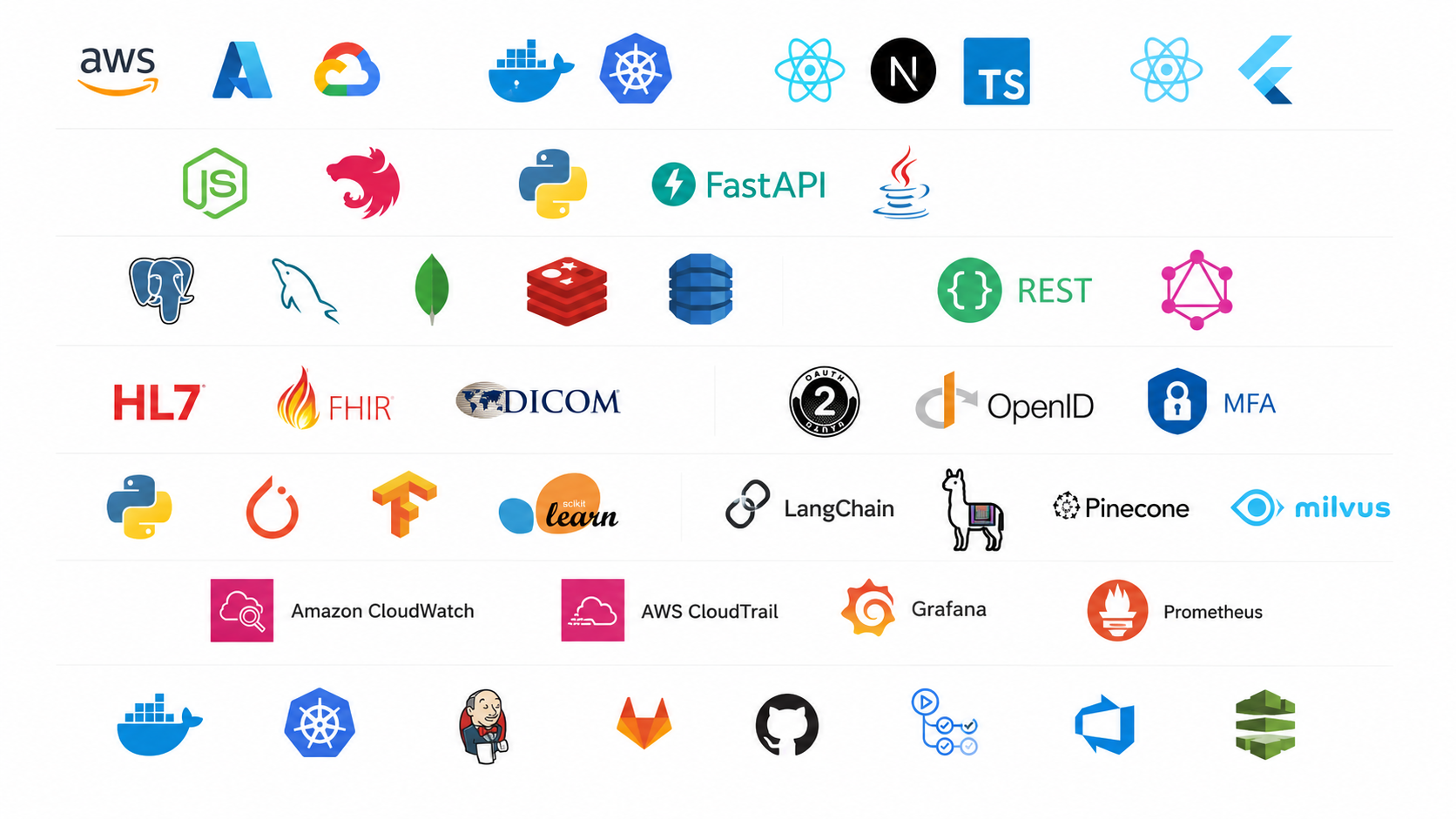
Cloud infrastructure provides the foundation for deploying and scaling hospital management applications. Depending on the organization's requirements, platforms such as AWS, Microsoft Azure, and Google Cloud Platform (GCP) can support application hosting, storage, networking, monitoring, backup, and disaster-recovery capabilities.
A cloud-based architecture can use services such as:
AWS EC2 for application workloads
Amazon RDS for managed relational databases
Amazon S3 for object storage
AWS Lambda for event-driven workloads
Amazon CloudWatch for monitoring
AWS IAM for identity and access management
Docker can package applications and their dependencies into portable containers, while Kubernetes can orchestrate containerized workloads when the scale and operational requirements justify it.
For healthcare environments, cloud architecture should also incorporate encryption, access management, network segmentation, backup strategies, monitoring, and disaster recovery from the beginning.
Database Systems
Hospital applications handle different types of information, including patient records, appointments, billing transactions, inventory data, clinical observations, and reporting datasets. Choosing the right database architecture depends on the data model, transaction requirements, scale, and access patterns.
Common technologies include:
PostgreSQL – relational healthcare and transactional data
MySQL – structured application data
MongoDB – flexible document-oriented data
Redis – caching and high-speed temporary data access
Amazon DynamoDB – scalable NoSQL workloads on AWS
For sensitive healthcare information, database design should incorporate encryption, access controls, backup and recovery mechanisms, auditability, and appropriate data-retention policies.
APIs and Interoperability
APIs form the communication layer between the hospital management platform and external healthcare applications. A modern HMS may need to connect with EHR/EMR systems, laboratories, pharmacies, PACS, payment providers, insurance platforms, medical devices, and patient applications.
A typical API stack can include:
REST APIs for application-to-application communication
GraphQL where flexible data querying is appropriate
HL7 for healthcare information exchange
FHIR for modern, structured healthcare data exchange
DICOM for medical imaging workflows
OAuth 2.0 / OpenID Connect for secure authorization and authentication
Backend frameworks such as Node.js, NestJS, Express.js, Python, FastAPI, or Java Spring Boot can be used to develop healthcare APIs depending on system requirements and the development team's expertise.
Interoperability should be planned at the architecture stage so that data mapping, authentication, error handling, monitoring, and integration governance are addressed before individual connections are implemented.
Security Architecture
Healthcare applications process sensitive information, making security a core architectural requirement rather than a feature added after development.
A secure HMS architecture can combine:
AWS IAM / Azure Entra ID for identity and access management
OAuth 2.0 and OpenID Connect for authentication and authorization
TLS/HTTPS for data transmission
AES-256 encryption for appropriate data-at-rest protection
Role-Based Access Control (RBAC) for permissions
Multi-Factor Authentication (MFA) for additional account protection
Audit logging for tracking relevant system activity
AWS CloudTrail / CloudWatch or equivalent monitoring services
Web Application Firewalls (WAF) for additional application protection
Security architecture should also consider vulnerability management, secrets management, network controls, backup protection, incident response, and applicable healthcare and privacy requirements.
AI/ML Technologies
AI and machine learning can extend hospital management software with capabilities such as predictive analytics, intelligent scheduling, patient support, document processing, clinical decision support, and operational forecasting.
Depending on the use case, the technology stack may include:
Python for AI/ML development
PyTorch and TensorFlow for machine learning
Scikit-learn for traditional ML workflows
LangChain for LLM application orchestration
LlamaIndex for connecting LLM applications with enterprise data
Vector databases such as Pinecone or Milvus for semantic search and RAG architectures
OpenAI, Anthropic Claude, or other enterprise LLM platforms for appropriate generative AI use cases
AI systems handling healthcare information should incorporate appropriate access controls, data governance, validation, monitoring, human oversight, and safeguards against unreliable or unsupported outputs.
Mobile and Web Applications
Web and mobile interfaces provide different user groups with access to the hospital ecosystem. Administrators may require comprehensive dashboards, while clinicians may need fast access to patient and workflow information. Patients may interact through mobile applications or patient portals.
A modern frontend stack can include:
React.js for web applications
Next.js for full-stack React applications and web experiences
TypeScript for type-safe application development
Tailwind CSS or Material UI for interface development
React Native for cross-platform mobile applications
Flutter as an alternative cross-platform mobile framework
The frontend should communicate with backend services through secure APIs and enforce appropriate role-based permissions. User experience is particularly important in clinical environments, where interfaces need to be intuitive and efficient without overwhelming healthcare professionals with unnecessary information.
Security & Compliance in Hospital Management Software
Hospital management software handles sensitive information such as patient identities, medical records, prescriptions, diagnostic results, insurance details, and payment information. Security therefore needs to be considered throughout the software lifecycle—from architecture and development to deployment, monitoring, and ongoing maintenance.
Compliance requirements depend on where the healthcare organization operates, what information it processes, and which services it provides. Regulations and standards should be evaluated with qualified legal, compliance, and security professionals rather than treated as a checklist. A secure hospital platform combines technical safeguards with appropriate policies, access controls, monitoring, staff practices, and data governance.
HIPAA
For organizations operating in the United States, the Health Insurance Portability and Accountability Act (HIPAA) establishes requirements for protecting certain individually identifiable health information handled by covered entities and business associates.
A hospital software environment may need safeguards covering areas such as access control, authentication, transmission security, audit controls, risk management, and protection of electronic protected health information (ePHI).
Technical measures can include:
Role-based access controls
Multi-factor authentication
Encryption in transit and at rest
Audit logging
Secure backups
Vulnerability management
Access monitoring
HIPAA compliance is broader than implementing a specific technology. Organizations need appropriate administrative, physical, and technical safeguards based on their specific environment and responsibilities.
GDPR
The General Data Protection Regulation (GDPR) applies to certain organizations processing personal data of individuals in the European Union and European Economic Area, subject to its scope and applicability rules. Healthcare information can fall within the regulation's special categories of personal data and therefore requires particular care.
A hospital management platform serving applicable European users should consider areas such as:
Lawful processing of personal data
Data minimization
Purpose limitation
Appropriate retention practices
Data subject rights
Privacy by design
Security of processing
Breach response procedures
GDPR compliance should be assessed according to the organization's specific processing activities, legal basis, roles, and geographic scope.
Role-Based Access
Role-Based Access Control (RBAC) limits system functionality and information access according to a user's responsibilities. In a hospital environment, a doctor, nurse, pharmacist, billing specialist, administrator, and patient may all require different levels of access.
For example, a billing employee may need access to financial and insurance information but not unrestricted access to clinical records. Similarly, a patient should only be able to access information associated with their own account.
A robust access-control architecture can combine:
User roles and permissions
Least-privilege principles
Multi-factor authentication
Session management
Privileged-access controls
Periodic access reviews
Automatic account deactivation where appropriate
Access permissions should be reviewed regularly because staff responsibilities and organizational roles can change.
Data Encryption
Encryption helps protect sensitive information from unauthorized access when data is transmitted or stored.
A hospital management platform should typically consider encryption at multiple layers:
Data in transit: TLS/HTTPS can protect information exchanged between browsers, mobile applications, APIs, and backend services.
Data at rest: Encryption can protect databases, storage systems, backups, and other persistent data.
Cloud environments such as AWS, Microsoft Azure, and Google Cloud provide encryption and key-management capabilities that can be incorporated into a healthcare architecture. The exact implementation should be based on the organization's risk assessment, data classification, infrastructure, and compliance requirements.
Encryption alone does not secure a healthcare system. Key management, authentication, access controls, endpoint security, monitoring, and secure application development are equally important.
Audit Logs
Audit logs provide a record of relevant activities performed within the hospital management platform. They can help organizations understand who accessed information, what actions were performed, and when those activities occurred.
Depending on the system, audit events may include:
User authentication
Patient record access
Data creation or modification
Prescription updates
Billing changes
Permission changes
Administrative actions
API activity
Audit logs can support security monitoring, incident investigation, compliance activities, and accountability. Logs should be protected from unauthorized modification and retained according to applicable organizational and regulatory requirements.
Secure Data Exchange
Hospital software frequently exchanges information with EHR/EMR systems, laboratories, pharmacies, PACS, insurance providers, payment services, medical devices, and other healthcare platforms. Secure data exchange is therefore essential for maintaining confidentiality and integrity across system boundaries.
Healthcare integrations may use technologies and standards such as:
HTTPS/TLS for secure communication
OAuth 2.0 / OpenID Connect for authentication and authorization
HL7 and FHIR for healthcare information exchange
DICOM for medical imaging workflows
API gateways and access controls for integration management
Encryption and integrity controls for sensitive data
FHIR, for example, provides a standardized framework for exchanging healthcare information through modern APIs. However, implementing a healthcare interoperability standard does not automatically make an integration secure or compliant; authentication, authorization, consent, logging, data validation, and governance must also be addressed.
Building Security Into the HMS Architecture
Security should be incorporated from the beginning rather than added after the hospital management software has been developed. A comprehensive approach can include secure architecture, identity management, encryption, vulnerability testing, audit logging, monitoring, backup protection, incident response, and continuous security reviews.
Hospital Management Software Development Cost
The cost of developing hospital management software varies based on the organization's workflows, number of users, required modules, integrations, security requirements, AI capabilities, and deployment model. A small clinic platform and an enterprise HMS serving multiple facilities can have vastly different budgets.
For planning purposes, a custom HMS can range from approximately $30,000 to $1M+, depending on its complexity and geographic development market. These figures are indicative estimates, not fixed quotations.
Hospital Management Software Development Cost by Location
Development Location
Estimated Cost
Typical Hourly Rate
United States
$150,000 – $600,000+
$100 – $250/hour
United Kingdom
$120,000 – $500,000+
$80 – $180/hour
Europe
$100,000 – $500,000+
$70 – $160/hour
UAE
$100,000 – $450,000+
$50 – $160/hour
India
$50,000 – $300,000+
$25 – $80/hour
Note: These are approximate planning ranges. Actual pricing depends on project scope, team composition, technology choices, integrations, compliance requirements, and development timelines.
Multi-hospital operations, extensive integrations, AI, advanced security and cloud infrastructure
Key Factors That Affect HMS Development Cost
Features and Modules
The scope of your Hospital Management System is one of the biggest cost drivers. A platform containing only patient registration and appointment scheduling requires significantly less development than one incorporating:
Patient management
Doctor and staff management
Inpatient and outpatient workflows
Bed and room management
EHR/EMR
Pharmacy
Laboratory
Inventory
Billing and payments
Insurance
Revenue Cycle Management
Patient portal
Reporting and analytics
The complexity of each workflow also matters. Highly customized clinical or financial processes require additional analysis, development, testing, and validation.
Healthcare Integrations
Integrations can add considerable development effort because the HMS may need to communicate with existing healthcare and financial systems.
The cost depends on API availability, data formats, authentication requirements, data mapping, third-party documentation, testing, and the complexity of the information being exchanged.
AI Implementation
AI introduces another cost layer when hospitals require intelligent capabilities such as:
AI healthcare assistants
Patient support
Predictive analytics
Intelligent scheduling
Document processing
Clinical decision support
Automated reporting
Expenses may include AI model/API usage, data preparation, RAG infrastructure, evaluation, integration, monitoring, security, and ongoing optimization.
AI should be implemented around a defined healthcare or operational use case rather than added simply as a technology feature.
Cloud Infrastructure
Cloud infrastructure affects both initial setup and recurring operating expenses. Platforms such as AWS, Microsoft Azure, and Google Cloud can support application hosting, databases, storage, monitoring, backups, networking, and disaster recovery.
For larger deployments, Docker and Kubernetes can support containerized applications and scalable infrastructure.
Cloud costs can increase with:
Number of users
Data volume
Medical image storage
Database requirements
API traffic
Backup requirements
High-availability architecture
Disaster recovery
Monitoring and security services
Development Team
The team required to build an HMS also affects the overall budget. Depending on the project's scope, it may involve:
Business analysts
UI/UX designers
Frontend developers
Backend developers
Mobile developers
QA engineers
DevOps engineers
Security specialists
AI/ML engineers
Project managers
Healthcare expertise is particularly valuable because the team needs to understand clinical workflows, interoperability, sensitive data handling, and operational requirements.
Maintenance and Support
HMS development does not end at deployment. Ongoing maintenance helps keep the platform secure, compatible, and reliable as hospital requirements and connected systems change.
Typical activities include:
Security updates
Bug fixes
Performance optimization
Cloud infrastructure management
API and integration updates
Database maintenance
Backup monitoring
Technical support
New feature development
AI service updates
A practical budgeting approach is to reserve approximately 15–25% of the initial development investment annually for maintenance and support, although the actual amount will depend on the application's complexity and support agreement.
Build a Custom Hospital Management System with ApplogiQ
Build a scalable Hospital Management System with ApplogiQ, designed around your hospital's clinical, administrative, financial, and operational workflows. Our HMS based healthcare software development service helps healthcare organizations connect patients, providers, departments, and third-party healthcare systems through a unified digital platform.
Look for a development partner that understands hospital workflows From patient registration and appointment scheduling to EHR/EMR integration, pharmacy, laboratory, billing, RCM, analytics, and AI-powered automation, we can tailor the platform to your organization's specific requirements.
Why Choose ApplogiQ For Your Custom Hospital Management System?
A custom HMS Software Development allows hospitals to design workflows around their actual operational requirements rather than adapting processes to the limitations of an off-the-shelf product.
With the right architecture, your platform can support:
Clinical Operations — Connect EHR/EMR, laboratory, pharmacy, medical imaging, and other clinical systems.
Revenue Cycle Management — Support billing, insurance verification, claims, payments, and reconciliation.
Hospital Analytics — Monitor operational, financial, inventory, and clinical quality metrics through centralized dashboards.
AI-Powered Capabilities — Introduce AI healthcare assistants, predictive analytics, intelligent scheduling, and administrative automation where appropriate.
Frequently Asked Questions
What is hospital management software?
Hospital management software is a digital platform that helps hospitals manage patient care, appointments, clinical workflows, billing, inventory, pharmacy, laboratory operations, reporting, and other administrative activities from a connected system.
What are the key modules of a hospital management system?
Common modules include patient registration, appointment scheduling, inpatient and outpatient management, bed management, EMR/EHR, pharmacy, laboratory, inventory, billing, insurance, RCM, reporting, analytics, and patient portals.
Can hospital management software integrate with EHR and EMR systems?
Yes. Hospital management software can integrate with existing EHR/EMR platforms through APIs and healthcare interoperability standards such as HL7 and FHIR, depending on the systems and integration requirements.
Can hospital management software be customized for clinics?
Yes. A custom solution can support hospitals, clinics, specialty practices, and outpatient centers. Clinic Management Software can include appointments, patient records, billing, provider management, prescriptions, and patient communication.
How does AI improve hospital management software?
AI can support patient assistance, intelligent scheduling, predictive analytics, document processing, administrative automation, clinical decision support, and AI-powered reporting. Clinical applications should include appropriate validation and professional oversight.
Is hospital management software secure?
A properly designed HMS can incorporate role-based access control, encryption, authentication, audit logs, secure APIs, monitoring, and backup protection. Security requirements should be defined according to the organization's data and regulatory environment.
What technology stack is used to build hospital management software?
Depending on project requirements, developers may use AWS, Azure, Docker, Kubernetes, React.js, Node.js, Python, PostgreSQL, MongoDB, REST APIs, HL7, FHIR, and DICOM.
How much does hospital management software development cost?
Hospital management software costs $20,000 to $1M+, based on modules, customization, integrations, technology stack, security requirements, deployment model, and development complexity. A detailed estimate requires a assessment of your needs.
How long does it take to develop a hospital management system?
Development time depends on the solution's scope and complexity. A basic HMS can be developed faster than an enterprise platform requiring EHR integration, laboratory, PACS, pharmacy, insurance, RCM, AI capabilities, and multi-location support.
Why choose a custom hospital management system?
A custom Hospital Management System can be designed around an organization's workflows, user roles, integrations, security requirements, and long-term goals. This provides greater flexibility when standard software cannot adequately meet specific operational needs.
You May Also Like
More Related Articles
Discover our services designed for excellence in your product development journey.