Skinive’s AI Expansion Could Transform Digital Dermatology in Europe
15 mins read
|vicknesh
Key Takeaways
Skinive's latest expansion demonstrates that AI-powered skin health platforms are evolving beyond basic image analysis into comprehensive digital healthcare ecosystems.
Europe continues to accelerate investments in AI-driven preventive healthcare, supported by digital transformation initiatives and emerging regulatory frameworks such as the EU AI Act and the European Health Data Space (EHDS).
Modern AI dermatology platforms increasingly combine computer vision, clinical decision support, telemedicine, cloud infrastructure, and electronic health record integrations to deliver more connected patient experiences.
Healthcare providers, insurers, startups, and MedTech companies have growing opportunities to develop GDPR-ready AI healthcare solutions that improve accessibility, operational efficiency, and early disease detection.
For technology companies, the larger opportunity extends beyond skin health—it lies in building scalable AI-powered healthcare platforms that support diagnostics, patient engagement, and personalized care across multiple specialties.
Artificial intelligence is transforming healthcare faster than ever before. From medical imaging and predictive analytics to clinical decision support and remote patient monitoring, AI is becoming a core component of modern digital healthcare.
One area experiencing rapid innovation is AI-powered dermatology. Smartphone cameras, cloud computing, and computer vision models are enabling users to perform skin assessments from virtually anywhere, while helping healthcare professionals prioritize care more efficiently.
This trend became even more apparent with Skinive's latest platform expansion, which extends its AI-powered skin health capabilities beyond traditional skin checks. The company's recent updates emphasize continuous skin health support through features such as UV monitoring, personalized protection guidance, and smarter preventive care experiences. According to Skinive, its platform now serves more than 1 million users worldwide and has completed over 6 million AI skin analyses.
However, the real story extends beyond one company's product announcement.
Skinive's expansion reflects a broader transformation across Europe's digital healthcare ecosystem, where AI is increasingly being integrated into preventive medicine, patient engagement, and intelligent healthcare software.
Understanding Skinive's Latest AI Healthcare Expansion
Skinive recently announced new capabilities that expand its platform beyond AI-assisted skin analysis. The latest release introduces UV Protection & Monitoring, including real-time UV monitoring, personalized sun protection recommendations, smart exposure timers, and SPF reminders. This represents a shift from standalone skin scanning toward a more comprehensive digital skin health companion.
According to the company, the platform has grown substantially since its launch, with more than 1 million users and 6 million completed skin analyses, illustrating the increasing demand for AI-supported skin health applications.
Why This Matters Beyond Skinive
While the announcement focuses on Skinive's product evolution, it also highlights a much larger shift in healthcare technology.
Digital health companies are no longer building applications that simply detect a condition. Instead, they are developing connected healthcare ecosystems that combine AI analysis, patient education, preventive care, personalized recommendations, and continuous engagement.
This evolution aligns with broader healthcare priorities across Europe, where governments and healthcare organizations are investing in digital transformation to improve access, efficiency, and patient outcomes.
The World Health Organization (WHO) recognizes digital health technologies as an important enabler of universal healthcare, while the European Commission continues to promote trustworthy artificial intelligence through its Digital Strategy and AI policy initiatives.
Europe Is Building the Future of AI Healthcare
Europe has become one of the world's most active regions for digital healthcare innovation.
Several initiatives are accelerating AI adoption across healthcare:
The EU AI Act introduces a risk-based framework for trustworthy AI, including requirements for high-risk healthcare applications.
Healthcare providers are increasing investments in AI-assisted diagnostics, remote patient monitoring, and clinical decision support systems.
Together, these developments create a favorable environment for companies building compliant AI healthcare platforms that balance innovation with patient safety.
Building the Next Generation of AI Healthcare Solutions?
Transform healthcare with secure AI solutions designed for growth and compliance.
Why Europe Is Becoming the Global Hub for AI Healthcare
The expansion of Skinive's AI platform reflects a much broader transformation taking place across Europe. Governments, healthcare providers, insurers, and digital health startups are increasingly investing in AI technologies that improve patient outcomes, reduce healthcare costs, and enable earlier disease detection.
Rather than treating artificial intelligence as a standalone innovation, European healthcare organizations are integrating AI into clinical workflows, preventive care programs, remote patient monitoring, and digital diagnostics.
This shift is creating one of the world's fastest-growing healthcare technology ecosystems.
Europe's Digital Health Strategy Is Accelerating AI Adoption
The European Union has made digital health one of its long-term strategic priorities. Through initiatives such as the European Health Data Space (EHDS) and the EU AI Act, policymakers are establishing frameworks that encourage innovation while emphasizing transparency, patient safety, and responsible AI deployment.
The European Health Data Space aims to improve secure access to electronic health records, making healthcare data more interoperable across EU member states. This can support AI-powered diagnostics, medical research, and cross-border healthcare services.
The EU AI Act introduces a risk-based regulatory framework for artificial intelligence systems. Healthcare applications are classified among the highest-risk AI use cases, meaning developers must meet strict requirements for transparency, quality management, risk assessment, and human oversight.
For AI healthcare companies, compliance is becoming a competitive advantage rather than just a legal requirement.
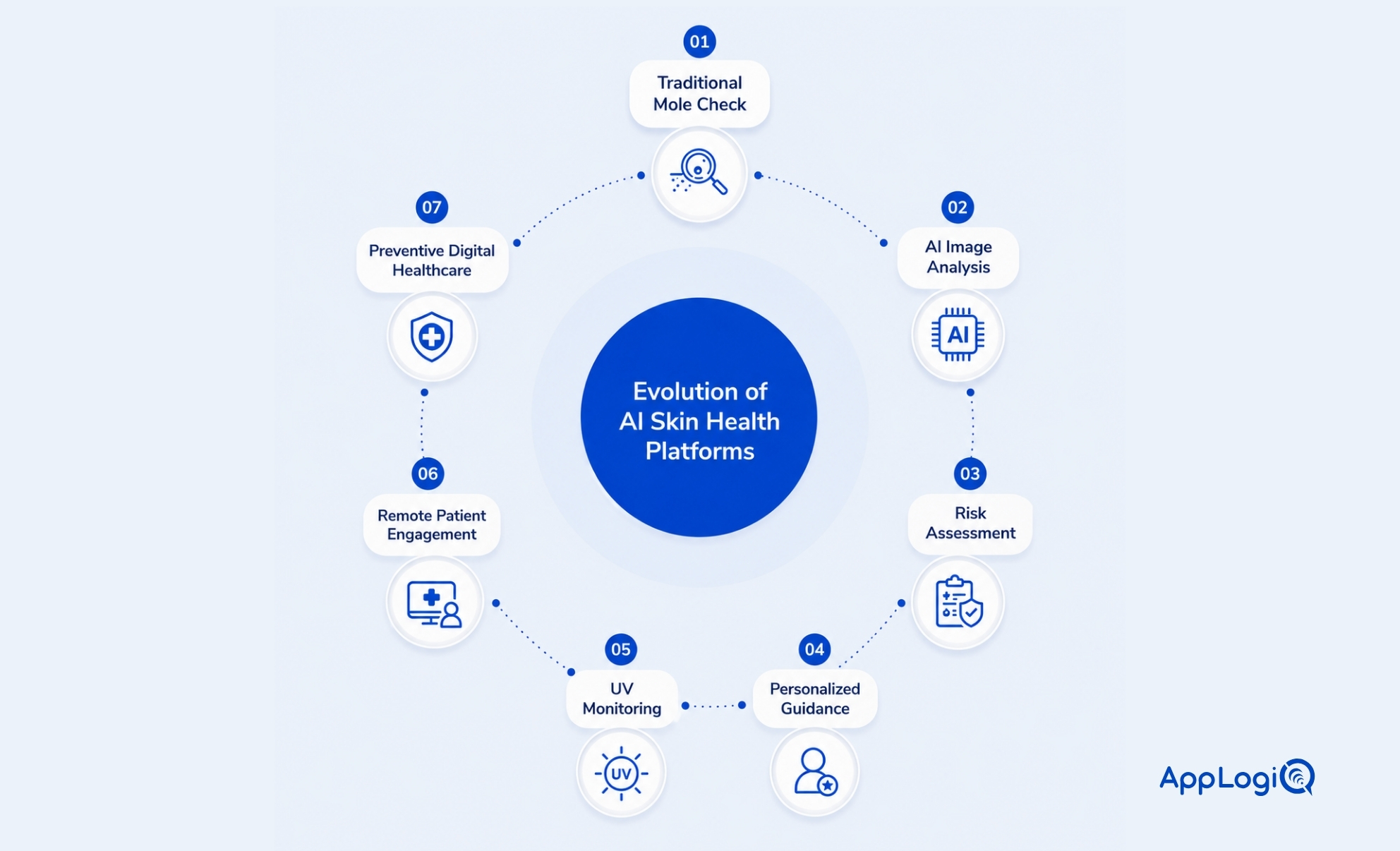
AI Dermatology Is Moving Beyond Image Recognition
The first generation of AI dermatology applications primarily focused on answering one question:
"Does this skin lesion require medical attention?"
Today's platforms are evolving into comprehensive digital healthcare ecosystems.
Modern AI skin health platforms increasingly combine:
AI-powered image recognition
Mole monitoring
UV exposure tracking
Personalized skincare guidance
Remote follow-up
Telemedicine integration
Clinical referral recommendations
Skinive's latest platform expansion demonstrates this evolution. According to the company, the updated platform now includes UV monitoring, sun exposure guidance, vitamin D exposure estimates, and enterprise APIs for healthcare organizations and telemedicine providers.
The Technology Behind Modern AI Skin Health Platforms
Building an AI-powered skin health platform requires much more than a machine learning model.
A modern architecture typically includes several intelligent components working together.
Computer Vision
Computer vision algorithms analyze high-resolution smartphone images to detect visible skin abnormalities, lesion boundaries, pigmentation changes, texture variations, and asymmetry.
Skinive states that its AI has been trained using millions of skin images while employing dermatologist-validated datasets to improve model performance.
Deep Learning Models
Most AI dermatology platforms rely on deep learning architectures capable of identifying subtle visual patterns that may not be immediately noticeable during self-examinations.
As AI models mature, improvements focus on balancing:
Sensitivity
Specificity
Precision
Clinical usefulness
According to Skinive's published methodology, its 2026 evaluation reported continued improvements in overall accuracy while reducing false-positive alerts.
Skinive's enterprise API is designed for telemedicine providers, insurers, healthcare organizations, and mobile application developers, allowing AI skin analysis to be integrated into third-party healthcare platforms.
Why This Creates New Opportunities for Healthcare Businesses
The expansion of AI skin health platforms illustrates a broader market opportunity.
Organizations no longer need to build AI systems from scratch.
Instead, healthcare companies can develop intelligent digital products that combine:
AI diagnostics
Mobile healthcare
Remote patient monitoring
Clinical decision support
Electronic Health Record integration
Telemedicine
Preventive healthcare
Patient engagement
This approach helps organizations improve accessibility while supporting clinicians with intelligent software rather than replacing medical expertise.
The World Health Organization continues to recognize digital health technologies as an important tool for strengthening healthcare systems and expanding access to care.
Build the Future of AI Healthcare with ApplogiQ?
Build secure, GDPR-ready AI healthcare solutions with ApplogiQ's expert team.
The Business Opportunity Behind AI Skin Health Platforms
Skinive's latest expansion reflects a much larger shift occurring across digital healthcare.
Healthcare providers are increasingly moving away from reactive treatment models toward continuous preventive care, where artificial intelligence helps patients monitor their health between medical appointments.
According to the latest announcement, Skinive has expanded its platform with mole monitoring, UV index tracking, sun exposure guidance, vitamin D exposure estimates, and an enterprise API for healthcare organizations. This illustrates how AI platforms are evolving into comprehensive digital health ecosystems rather than standalone diagnostic tools.
AI Healthcare Market Opportunities for European Organizations
The rapid evolution of AI-powered skin health platforms presents significant opportunities across multiple sectors.
Healthcare Providers
Hospitals and clinics can integrate AI-powered skin analysis into their digital patient journeys, enabling faster triage, better documentation, and improved access to specialist care.
Health Insurance Companies
Insurers can encourage preventive care through AI-assisted health assessments, helping identify potential concerns earlier while supporting healthier member engagement.
Telemedicine Platforms
Telehealth providers can embed AI skin analysis into virtual consultations, allowing clinicians to review structured image assessments before appointments.
HealthTech Startups
Startups can accelerate product development by integrating AI capabilities into mobile applications instead of building computer vision models from scratch.
Pharmaceutical & Skincare Companies
Brands focused on dermatology and skin wellness can provide personalized digital experiences, helping users track skin changes and receive educational guidance over time.
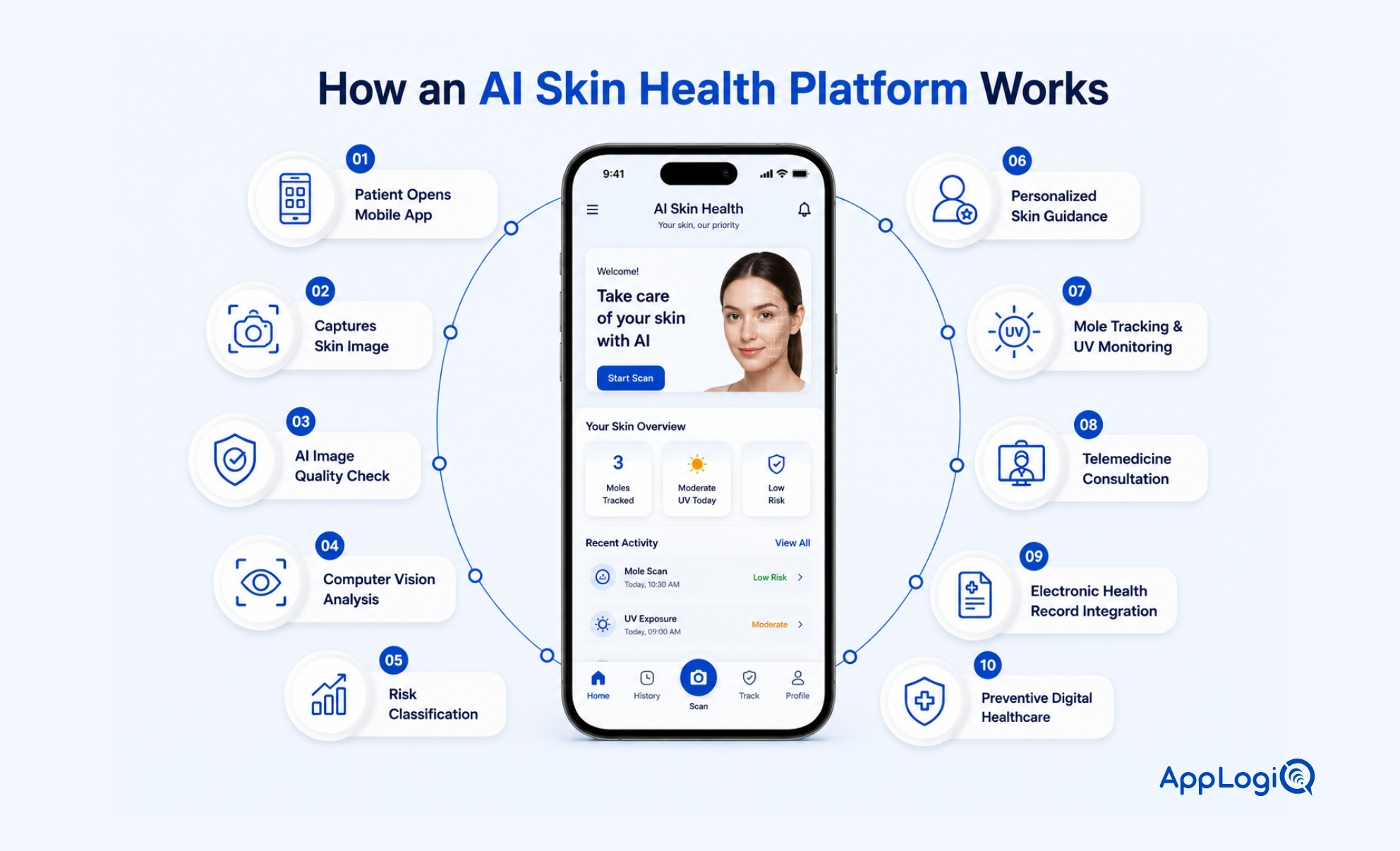
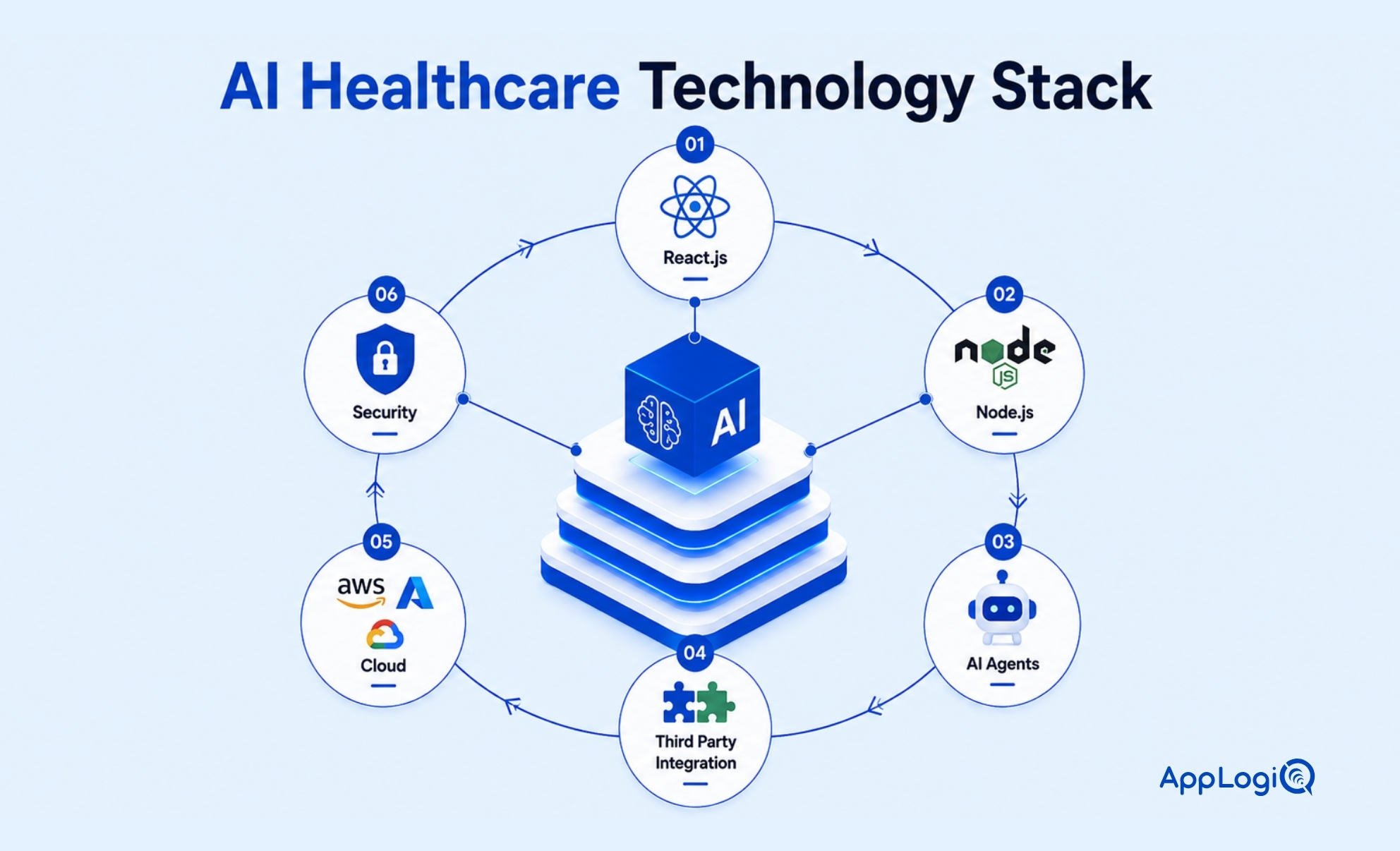
How Modern AI Skin Health Platforms Are Built
Developing an enterprise-grade AI healthcare platform requires a combination of advanced technologies working together.
1. AI Computer Vision
Computer vision algorithms analyze photographs captured using smartphone cameras to identify visual characteristics associated with common skin conditions.
Skinive states that its AI models have been trained using more than 3.5 million skin images, with 250,000 dermatologist-validated images forming a clinically reliable training dataset.
2. Mobile Healthcare Applications
Patients interact through mobile applications that allow them to:
Capture skin images
Monitor mole changes
Track UV exposure
Receive educational recommendations
Store historical assessments
This enables continuous monitoring instead of one-time assessments.
3. Cloud Infrastructure
Healthcare AI platforms require scalable cloud architecture supporting:
Secure APIs
Encrypted storage
High availability
GDPR compliance
Audit logging
Multi-region deployments
Enterprise APIs also allow hospitals, insurers, and telemedicine providers to integrate AI functionality into existing healthcare systems.
Why Accuracy Matters in AI Healthcare
Healthcare AI must prioritize clinical reliability.
According to Skinive's published 2026 evaluation, its AI algorithm achieved:
97.4% Sensitivity
93.1% Specificity
94.2% Overall Accuracy
89.1% F1 Score
The company notes these improvements were achieved while reducing false-positive alerts and maintaining strong detection performance.
Why This Matters for Digital Healthcare Companies
The next generation of healthcare software will not simply identify diseases.
Instead, AI platforms will increasingly help users:
Monitor health continuously
Detect early warning signs
Improve preventive care
Support clinician decision-making
Increase patient engagement
Reduce unnecessary healthcare visits
Skinive's product evolution reflects this industry-wide transition toward connected digital healthcare experiences rather than isolated diagnostic tools.
How ApplogiQ Helps Healthcare Innovators
Healthcare organizations require more than an AI model—they need secure, scalable, and compliant digital platforms that integrate seamlessly into clinical workflows.
At ApplogiQ, we help healthcare providers, HealthTech startups, insurers, and enterprise organizations develop intelligent digital health solutions that combine:
Whether you're building an AI dermatology platform, a digital diagnostics solution, or a preventive healthcare ecosystem, our engineering teams deliver scalable products designed for long-term growth.
Frequently Asked Questions
What is an AI skin health platform?
An AI skin health platform uses artificial intelligence, computer vision, and machine learning to analyze skin images, identify potential abnormalities, monitor skin changes over time, and provide personalized health insights. These platforms are designed to support—not replace—medical professionals by helping users detect potential concerns earlier and encouraging timely consultations.
How does AI analyze skin conditions?
AI-powered skin analysis combines computer vision with deep learning models trained on large datasets of dermatologist-reviewed skin images. When a user uploads a photo, the AI evaluates visual characteristics such as color, texture, asymmetry, border irregularity, and lesion size before generating a risk assessment or recommendation.
Is AI skin analysis accurate?
AI skin analysis has improved significantly in recent years, but it should not be considered a definitive medical diagnosis. Most AI skin platforms are intended to assist with early detection and help users decide when to seek professional medical advice.
Healthcare providers should validate AI-assisted assessments through qualified clinicians before making treatment decisions.
Why is Europe investing heavily in AI healthcare?
Europe is investing in AI healthcare to improve patient outcomes, support healthcare professionals, strengthen preventive care, and enable secure health data sharing across member states.
Major initiatives include:
European Health Data Space (EHDS)
EU AI Act
Digital Europe Programme
Horizon Europe
These initiatives promote responsible AI innovation while maintaining high standards for patient privacy and safety.
What technologies power modern AI dermatology platforms?
Modern AI healthcare platforms typically combine multiple technologies, including:
Computer Vision
Deep Learning
Vision Transformers
Cloud Computing
Electronic Health Record (EHR) Integration
APIs
Mobile Healthcare Applications
Predictive Analytics
Large Language Models (LLMs)
Secure Cloud Infrastructure
Together, these technologies enable scalable digital healthcare experiences.
You May Also Like
More Related Articles
Discover our services designed for excellence in your product development journey.